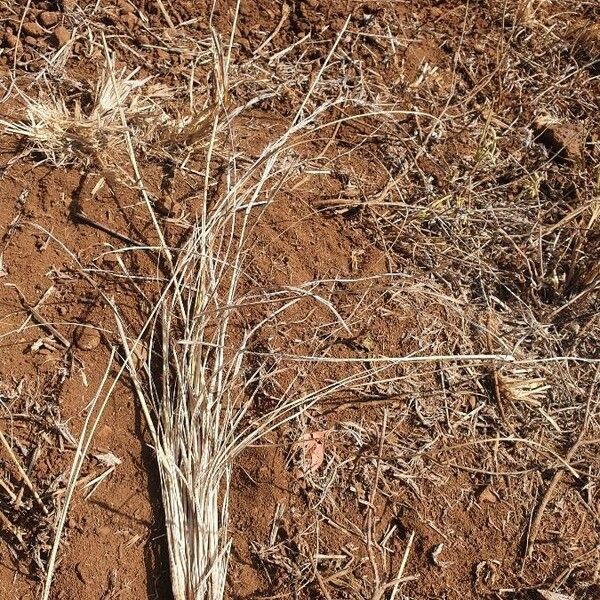
Plant Overview
Commonly known as the Adoensis Three-awn, this hardy perennial grass is a master of survival in the rocky highlands of Eastern and Southern Africa. Named after the Adwa region of Ethiopia, it belongs to a genus famous for its "three-pronged spears" that hitchhike on passing animals to find new homes. While it may look like a simple tuft of green, it is a resilient pioneer that thrives where softer grasses fail.
🔍 How to Identify
- 🌾 The "Three-Awn" Seed: The most iconic feature is the seed head; each grain has three distinct, needle-like bristles (awns) that spread out like a tiny tripod.
- 🌱 Tufted Growth: It grows in dense, wiry clumps known as tussocks, standing upright and reaching heights of up to 60 centimeters.
- 🍃 Inrolled Leaves: The leaf blades are narrow and often roll inward, a clever adaptation to prevent water loss in dry, windy environments.
🏡 In Your Garden & Landscape
- 🪨 Rocky Specialist: In its native habitat, Aristida adoensis is often found on shallow, stony soils or disturbed ground where other plants struggle to take root.
- 🐂 Grazing Indicator: For farmers and land managers, the dominance of this grass can be a sign of overgrazing. Because it is tough and fibrous, livestock tend to avoid it once it matures, allowing it to take over pastures where tastier grasses have been eaten away.
⚠️ Safety & Toxicity
- 🌵 Physical Hazard: While the plant is not chemically toxic to humans or pets, the sharp, stiff awns are "mechanical irritants."
- 🐕 Pet Warning: The needle-like seeds are designed to pierce and cling. They can easily become lodged in a dog’s fur, ears, or between paw pads, occasionally leading to skin punctures or infections if not removed.
✨ Fun Fact
The "three-awn" design isn't just for hitchhiking! These bristles are hygroscopic, meaning they move and twist in response to changes in humidity. This movement actually helps the seed "drill" itself into the cracks of the soil, ensuring it is buried and ready to grow when the rains return.

Detailed Care Instructions
To water the plant, gently lift the leaves and examine the soil around the base of the stem. If the soil feels dry to the touch, it is time to water. Slowly pour water over the soil, making sure to saturate all areas around the base of the stem. Do not over-water, as this can cause the roots to rot. Let the soil dry out slightly before watering again, and avoid getting water on the leaves of the plant.
The ideal soil for this plant is a well-draining soil with a high sand content. It should be slightly acidic to neutral in pH, with a range of 5.5 to 7.5 being optimal. The soil should be nutrient-rich, with a good balance of organic matter, nitrogen, phosphorus, and potassium. It is also important that the soil be free from heavy metals and other contaminants, as this plant is sensitive to pollution. Additionally, it should be watered regularly, but not excessively, to prevent waterlogging and root rot.








