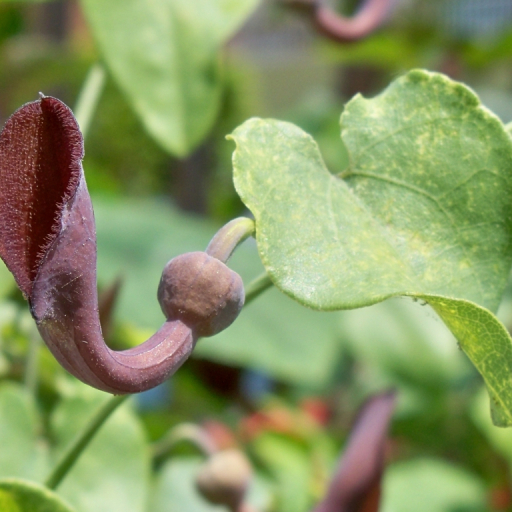
Plant Overview
Known as the Andalusian Birthwort or Pipevine, Aristolochia baetica is a Mediterranean climber that feels like something straight out of a gothic novel. Native to the cork forests and rocky scrublands of Southern Spain and North Africa, it weaves its way through shrubs with dark, moody blooms. While its pipe-shaped flowers look like they belong in a Victorian smoking room, they are actually sophisticated biological traps designed to "kidnap" pollinators for a day.
🔍 How to Identify
- 🍃 The Foliage: Dark, leathery, heart-shaped (cordate) leaves that are evergreen and often have a slightly glaucous or bluish-green tint.
- 🎺 The "Pipe": Bizarre, U-shaped flowers that resemble an old-fashioned tobacco pipe. They are typically a deep, velvety brownish-purple or mahogany, often with a hairy "mouth" to entice insects.
- 🧗 The Habit: A woody, twining vine that lacks tendrils; instead, it tightly wraps its slender stems around nearby trees or trellises to climb toward the light.
🏡 In Your Garden
- 🌱 Mediterranean Roots: This plant thrives in well-draining, slightly gritty soil that mimics its native limestone habitats. It is remarkably drought-tolerant once established but appreciates a "cool foot"—meaning its roots should stay shaded while its foliage reaches for the sun.
- 🦋 Butterfly Sanctuary: It is a vital host plant for the stunning Spanish Festoon butterfly (Zerynthia rumina). The caterpillars feed on the leaves, absorbing the plant's toxins to make themselves distasteful to birds, effectively becoming "poisonous" themselves.
⚠️ Safety & Toxicity
- 🚫 Highly Toxic: All parts of this plant contain aristolochic acid, a potent toxin that is extremely dangerous to humans and animals.
- 🧪 The Risk: Ingestion can cause severe kidney damage and is linked to long-term health risks. It should be grown as an ornamental plant only, kept well out of reach of curious pets and children. Some gardeners also report skin irritation when handling the sap, so gloves are recommended during pruning.
✨ Fun Fact
The Andalusian Birthwort doesn't "eat" bugs like a Venus Flytrap, but it does hold them hostage! Downward-pointing hairs inside the flower trap flies in a temporary prison. Once the fly is thoroughly dusted with the plant's pollen, the hairs wither away, "releasing" the insect to fly to the next flower and complete the pollination cycle.

Detailed Care Instructions
To grow Aristolochia baetica (Spanish Dutchman's pipe) plant, follow these steps:
- Climate and soil requirements: This plant is native to Mediterranean regions and prefers warm climates. It grows well in full sunlight or partial shade. The soil should be well-draining and rich in organic matter.
- Propagation: Aristolochia baetica is usually propagated by seeds or stem cuttings. Seeds can be soaked in warm water for 24 hours before sowing. Stem cuttings should be taken in spring or early summer from healthy plants.
- Planting: Choose a suitable location in your garden that receives adequate sunlight or partial shade. Dig a hole in the soil, slightly larger than the root ball of the seedling or cutting. Place the seedling or cutting in the hole and gently fill it with soil, ensuring the plant is firmly rooted.
- Watering: Provide consistent moisture to the plant, especially during the initial stages of growth. Water the plant deeply whenever the top inch of soil feels dry. Avoid overwatering to prevent root rot.
- Fertilization: Apply a balanced liquid fertilizer during the growing season to promote healthy growth. Follow the manufacturer's instructions for the appropriate dosage and frequency.
- Trellis or support: Aristolochia baetica is a climbing plant, so it requires support to grow vertically. Install a trellis or provide a framework against which the plant can climb and spread.
- Pruning: Regular pruning helps maintain the shape of the plant and encourages new growth. Prune any dead or damaged branches and trim back excessive growth to prevent the plant from becoming too unruly.
- Pests and diseases: This plant is relatively resistant to pests and diseases. However, keep an eye out for common garden pests like aphids, mealybugs, or spider mites. Treat any infestations promptly with organic or chemical pest control methods.
Remember that Aristolochia baetica is considered toxic if ingested, so keep it away from children and pets. With proper care and suitable growing conditions, your Aristolochia baetica plant should thrive and produce beautiful blooms.

Place in a bright room that is sun drenched almost all day. Or directly in a south-facing window.

Aristolochia Baetica plant requires regular watering, but it is important not to over-water it as it can lead to root rot. The frequency of watering should be adjusted according to the weather conditions and season. In the summer months, the plant will require more frequent watering, while in the winter months, it can go for longer periods without water.
It is recommended to water the Aristolochia Baetica plant deeply, allowing the water to soak into the soil and reach the roots. Ensure that the soil is moist but not saturated. You can also check the soil moisture level by inserting your finger into the soil up to your second knuckle. If the soil feels dry, it is time to water the plant.
Water the plant in the morning or evening to prevent evaporation and minimize water loss. Use room temperature water and avoid using chlorinated water as it can harm the plant's roots. Additionally, avoid splashing water onto the leaves as it can lead to fungal diseases.
During the winter months, it is important to reduce the amount of water given to the plant as it goes into a period of dormancy and does not require as much hydration.
To fertilize this plant, use a balanced fertilizer with equal parts nitrogen, phosphorous, and potassium. Apply the fertilizer in the early spring and again in the mid-summer. Use a granular fertilizer and apply it at the base of the plant, making sure to water it in thoroughly. Avoid getting fertilizer on the leaves or stems of the plant. Over-fertilizing can cause damage to the roots, so be careful not to apply too much.
The soil recommended for Aristolochia Baetica plant should be of a well-draining type that is enriched with organic matter. The soil pH should be slightly acidic and range between 5.5 and 7.5. It should be a loose soil type with good water retention capacity, having a moderate to high fertility level. Using a soil mix with perlite or vermiculite is also suggested for optimal drainage and root aeration. The soil should not be compacted, as it can affect the growth and development of the plant. It is essential to avoid using heavy clay or sandy soils as they may not provide the necessary nutrients to the plant and could have poor water retention. The plant can thrive in soil that is rich in nutrients and maintains good drainage and moisture levels. It is recommended to test the soil before planting the Aristolochia Baetica plant or use a premium quality potting mix.
There are a few different methods for propagating this plant. One way is by taking stem cuttings in the spring or summer. Choose healthy, mature stems and cut them at a 45-degree angle, making sure each cutting has at least one node (where new roots and leaves will grow from). Dip the cut ends in rooting hormone and plant them in a well-draining soil mix. Keep the soil moist and the cuttings in a warm, bright location, but out of direct sunlight. After a few weeks, you should see new growth and roots forming. Another method is by division, where you carefully separate the plant into smaller sections, making sure each section has roots and a healthy amount of foliage. Plant each divided section in a new pot or area of the garden. Finally, you can also propagate Aristolochia Baetica by collecting and planting its seeds. Wait until the seed pods have dried and turned brown, and then collect the seeds. Plant them in a well-draining soil mix and keep them moist and warm until they germinate.








