Plant Overview
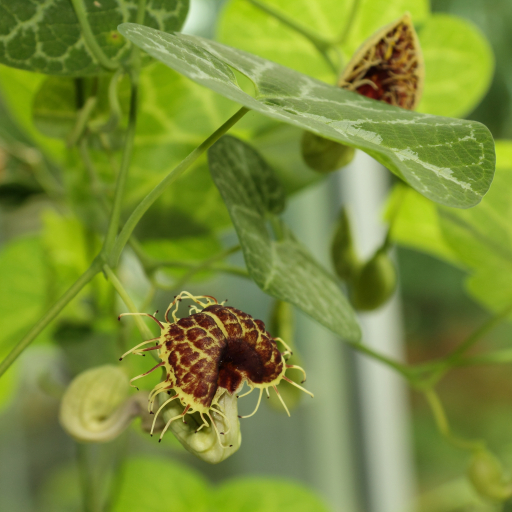
Often called the White-veined Dutchman’s Pipe, this South American native is a miniature masterpiece of the plant world. While most of its relatives are massive, aggressive climbers, Aristolochia fimbriata is a charming, low-growing vine that looks like it crawled straight out of a botanical illustration. It is cherished by gardeners not just for its "alien" flowers, but as a crucial sanctuary for rare butterflies.
🔍 How to Identify
- 🌿 Intricate Foliage: The heart-shaped (cordate) leaves are soft to the touch and feature a stunning network of silver-white veins that contrast sharply against the matte green surface.
- 🎷 The "Pipe" Bloom: The flowers are small, curved tubes resembling an old-fashioned tobacco pipe, patterned with mottled burgundy, yellow, and brown.
- 🕸️ Fringed Edges: Look closely at the flower's mouth; it is lined with long, hair-like "fimbriae" (fringes) that give the plant its species name and a distinct, lace-like appearance.
🏡 In Your Garden
- 🦋 Butterfly Buffet: This plant is the primary host for the Pipevine Swallowtail butterfly. If you notice "friendly monsters" (spiky black caterpillars) eating the leaves, celebrate! The plant is designed to be eaten and will rapidly regrow once the caterpillars pupate.
- 🌱 Groundcover Magic: Because it only grows about 6 inches tall but spreads horizontally, it makes an excellent groundcover for shady spots or a cascading "spiller" for hanging baskets and containers.
- 💤 Winter Dormancy: In many climates, this plant will completely disappear in the winter. Don't dig it up—it stores energy in underground tubers and will pop back up with more vigor once the spring sun warms the soil.
⚠️ Safety & Toxicity
- 🚫 Strictly Ornamental: WARNING. All members of the Aristolochia genus contain aristolochic acid. This compound is a potent nephrotoxin (kidney-damaging) and a known carcinogen if ingested.
- 🐾 Keep Away from Pets: While the bitter taste usually prevents animals from eating much, it is toxic to dogs, cats, and horses. Ensure it is planted in an area where curious pets won't decide to sample the foliage.
✨ Fun Fact
The "fringe" and the musky scent of the flower aren't just for decoration—they are part of a clever trap! The plant lures small gnats inside the tube, holding them captive with downward-pointing hairs until they are dusted with pollen. Once the job is done, the hairs wither, and the gnats are released to go pollinate the next "pipe."

Detailed Care Instructions
To grow Aristolochia fimbriata, follow these steps:
- Choose a suitable location: Find a spot in your garden that receives full to partial sunlight, preferably with well-drained soil. The plant can tolerate a range of soil types, including loamy, sandy, or clayey soils.
- Prepare the soil: Ensure the soil is loose and well-draining. If the soil is heavy or compacted, you can amend it with organic matter like compost or well-rotted manure to improve drainage and fertility.
- Obtain the plant: You can purchase Aristolochia fimbriata as seeds or young seedlings from a reputable nursery or online garden store. Alternatively, you can propagate the plant from stem cuttings.
- Planting: If growing from seeds, sow them directly into the prepared soil. Cover them lightly with a thin layer of soil, and water gently. If using seedlings or cuttings, dig a hole slightly larger than the container or root system and place the plant in it. Fill in the hole with soil, gently firming it around the base of the plant. Water thoroughly after planting.
- Watering: Keep the soil consistently moist but not waterlogged, especially during the plant's initial growth phase. Water deeply whenever the top inch of soil feels dry. Adjust the watering frequency based on rainfall, temperature, and soil conditions.
- Mulching and fertilizing: Apply a layer of organic mulch around the base of the plant to help conserve moisture and suppress weed growth. Use well-rotted compost or leaf mulch. Feed the plant with a balanced, slow-release fertilizer once or twice a year, following the package instructions.
- Support: Aristolochia fimbriata is a vine that climbs with the help of tendrils. Provide a trellis, arbor, or other support structure for the plant to grow on. Make sure the support is sturdy and can withstand the weight of the vines.
- Pruning: Trim back any dead or damaged growth to maintain the health and shape of the plant. You can also prune to control its size or to shape it as desired.
- Pest and disease control: Aristolochia fimbriata is generally resistant to pests and diseases. However, keep an eye out for common garden pests like aphids or spider mites. If an infestation occurs, treat it with an appropriate organic pesticide or insecticidal soap.
- Enjoy the blooms: Aristolochia fimbriata produces beautiful, exotic-looking blooms that resemble a Dutchman's pipe. As the flowers fade, they are followed by green, pod-like fruits containing seeds. Allow the pods to dry on the vine before harvesting the seeds for propagating future plants if desired.
Remember to research any specific care requirements for Aristolochia fimbriata in your region, as climate and environmental conditions can vary.

Place in a bright room that is sun drenched almost all day. Or directly in a south-facing window.

To water this plant, ensure that you wait until the top inch of soil is dry before watering. Avoid overwatering, and make sure that excess water is able to drain out of the pot. When watering, make sure to water the soil directly rather than the leaves or flowers. Ensure that the water is at room temperature and not too cold or hot. Water more frequently during warmer seasons and less during the cooler months.
- Use a balanced fertilizer that contains nitrogen, phosphorus, and potassium.
- Dilute the fertilizer to half strength.
- Apply the fertilizer to the soil around the base of the plant.
- Water the plant thoroughly after fertilizing to ensure that the nutrients are absorbed into the soil.
- Fertilize once every two weeks during the growing season, and stop fertilizing during the winter months.
The Aristolochia Fimbriata is a flowering plant that requires a specific type of soil to thrive. It needs well-draining soil, which means the soil must be porous enough for water to easily move through and not get stagnant around the roots. The soil also needs to be rich in nutrients and organic matter, such as compost or peat moss. The pH level of the soil should be slightly acidic, around 6.0 to 6.8, to facilitate proper growth and development. It is important to ensure that the soil is not too compact, as this can hinder root growth and lead to various plant diseases. Additionally, the soil should be moist but not saturated to prevent rotting of the plant's roots.
To propagate this plant, start by taking a cutting from the stem of a healthy mature plant. The cutting should be at least 4-6 inches in length and have at least two leaves attached. Remove the bottom leaves from the cutting and dip the cut end into a rooting hormone, then plant the cutting in a well-draining potting mix. Place the pot in a warm and well-lit area, but not in direct sunlight. Water the cutting regularly, keeping the soil moist but not waterlogged. After a few weeks, roots should begin to develop, and new growth will start to appear. Once the new plant is established, it can be transplanted into a larger pot or planted in the garden.








