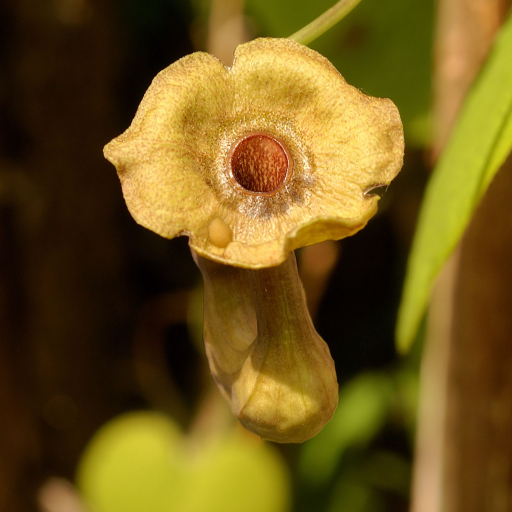
Plant Overview
Nicknamed the "Dutchman’s Pipe" for its curious, pipe-shaped flowers, this vigorous woody vine is a heritage favorite for creating living privacy screens. Native to the Appalachian mountains, it has been used for centuries to shade Victorian porches, wrapping structures in a dense cloak of massive, overlapping leaves that look like green shingles.
🔍 How to Identify
- 🍃 Heart-Shaped Leaves: The foliage is the star—huge, heart-shaped (cordate) leaves that can grow up to 12 inches long, creating a solid wall of green.
- 🎷 The "Pipe" Flower: Tucked behind the leaves are yellowish-green and brownish-purple flowers shaped like a curved meerschaum pipe.
- 🌿 Woody Vine: Unlike delicate annual vines, this is a heavy-duty climber with thick, twining stems that turn grayish and bark-like as they age.
🏡 In Your Garden
- 🏗️ Support is Key: Because of its massive leaf weight and vigorous growth, this plant requires a sturdy trellis or arbor. It is too heavy for flimsy plastic netting.
- 🦋 Butterfly Sanctuary: This plant is the primary host for the Pipevine Swallowtail butterfly. The caterpillars feed exclusively on the leaves, sequestering toxins from the plant to make themselves distasteful to predators.
- 🌑 Shade Specialist: While many vines crave blistering sun, the Dutchman’s Pipe thrives in partial to full shade, making it perfect for those tricky "north-facing" garden spots.
⚠️ Safety & Toxicity
- 🚫 Toxic if Ingested: All parts of the plant contain aristolochic acid, a potent toxin that is harmful to humans and pets if eaten.
- 🐕 Pet Awareness: Keep this plant away from curious dogs or cats who might chew on low-hanging foliage, as it can cause significant kidney issues and gastrointestinal distress.
✨ Fun Fact
The Dutchman's Pipe doesn't "eat" bugs, but it is a temporary prison! To ensure pollination, the flower uses a foul scent (like decaying organic matter) to lure small flies inside. Tiny downward-pointing hairs trap the flies overnight; once the fly is covered in pollen, the hairs wither, and the "prisoner" is released to fly to the next flower.

Detailed Care Instructions
This vine produces some unique flowers that look like small pipes, which for the most part, stay hidden behind the heart-shaped leaves.
How fast does Dutchman's pipe vine grow?
This is a very fast-growing vine that can grow up to six feet a year. Regulate its growth with annual pruning.
Is Dutchman's pipe vine deer resistant?
While this vine is attractive to butterflies, it is deer resistant, and pest resistant.
| Color | Yellow, Green, Purple |
| Soil Ph | Neutral To Acidic |
| Humidity | Normal |
| Lighting | Full Sun |
| Soil Type | Moist But Well-Drained |
| Bloom Time | Summer |
| Difficulty | Easy |
| Plant Type | Vine |
| Hibernation | Cold Period |
| Mature Size | 15–30 Ft. Tall, 15–20 Ft. Wide |
| Native Area | North America |
| Sun Exposure | Full, Partial |
| Hardiness Zones | 4-8 |
To grow Aristolochia Macrophylla (also known as Dutchman's pipe) plant, follow these steps:
- Choose a suitable location: Find a location in your garden that receives partial shade to full sun. Ensure the soil is well-draining and rich in organic matter.
- Planting: Dig a hole that is slightly wider and deeper than the root ball of the plant. Place the Aristolochia Macrophylla in the hole, making sure that the top of the root ball is level with the soil surface. Backfill the hole with soil and gently firm it around the plant.
- Watering: Water the plant thoroughly after planting to settle the soil and ensure good root contact. Afterward, water the plant regularly, keeping the soil consistently moist but not waterlogged.
- Mulching: Apply a layer of organic mulch around the base of the plant, leaving a gap around the stem to prevent rot. Mulching helps retain moisture, suppress weed growth, and protect the roots during extreme temperatures.
- Fertilizing: Feed Aristolochia Macrophylla with a slow-release, balanced fertilizer in early spring. Follow the package instructions for dosage and application. Additionally, you can supplement with compost or organic matter to enrich the soil.
- Pruning: Prune the plant in late winter or early spring before new growth emerges. Trim any dead or damaged stems and thin out any congested areas to improve airflow.
- Support: Aristolochia Macrophylla is a vine-like plant that can grow up to 20 feet or more. Provide a sturdy trellis, fence, or other support structure for it to climb on.
- Pest and disease control: Monitor the plant regularly for pests like aphids or spider mites. Apply appropriate organic insecticides or insecticidal soaps as needed. To prevent diseases, avoid overwatering, provide good air circulation, and remove any diseased foliage promptly.
- Propagation: Aristolochia Macrophylla can be propagated through softwood stem cuttings or layering. Take cuttings of healthy new growth in early summer, dip the cut ends in rooting hormone, and plant them in a well-draining potting mix. Keep the cuttings in a warm, moist environment until they establish roots.
- Patience: Aristolochia Macrophylla is known to grow slowly, especially during the first few years. Be patient and provide the necessary care, and the plant will gradually develop into a beautiful, climbing vine.
Remember to research any specific guidelines or considerations based on your climate and region to ensure the plant's success.

Place in a window with dappled sun or a spot in the middle of a room. Or directly in a window facing west or east.

1. Understand the watering needs: It is important to understand the watering needs of Aristolochia Macrophylla before watering it. Overwatering or underwatering can harm the plant.
2. Check the soil: Before watering, check the soil moisture with a moisture meter or by touching the soil surface. If the soil is dry to touch, it's time to water the plant.
3. Watering frequency: This plant requires moderate watering, which means watering once a week during summers and twice a month during winters.
4. Watering technique: When watering, take care not to wet the leaves or stem of the plant as it may lead to fungal diseases. Direct the water towards the base of the plant and let it soak in.
5. Avoid standing water: Always make sure there is no standing water in the pot or container as waterlogging can damage the roots and lead to root rot.
6. Amount of water: Water the plant until the soil is moist but not waterlogged. Add water until it starts coming out of the drainage holes of the container, which indicates that the soil has absorbed adequate water.
7. Humidity: Aristolochia Macrophylla requires high humidity levels. Mist the plant regularly to maintain high humidity levels or place a humidifier in the room.
8. Adjust watering during seasons: During dry summers, the plant may require more frequent watering, while during winters, reduce the watering to ensure the soil is moist but not soaking wet.
The Aristolochia Macrophylla plant should be fertilized in the early spring, using a slow-release fertilizer. Apply the fertilizer around the base of the plant, taking care not to let it touch the leaves or stem. Water the plant thoroughly after fertilizing, and repeat every 6 to 8 weeks throughout the growing season. Avoid fertilizing in the fall, as this can encourage tender new growth that may be damaged by winter weather.
The best soil for Aristolochia Macrophylla plant is well-draining soil that is loamy, rich in organic matter, and slightly acidic. The pH level of the soil should be between 5.5 and 6.5. The plant requires a moist soil, but it should not be waterlogged, as this can lead to root rot. Adding humus or compost to the soil can help retain moisture without causing it to become waterlogged. The soil also needs to be able to keep the plant steady as it can grow quite tall and have a heavy stem. It is important to keep the soil healthy by regularly adding organic matter.
Aristolochia Macrophylla is a plant that can be propagated through several methods. One way to propagate this plant is by taking stem cuttings from a mature plant. To do this, choose a healthy stem that is free of disease and pests and cut it to about 4-6 inches. Remove the leaves from the lower half of the stem and dip the cut end in rooting hormone.
Place the cutting in a pot with moist, well-draining soil and cover it with a plastic bag to create a humid environment. Keep the soil moist and placed the pot in indirect light. After 2-3 weeks, check the cutting for root growth by gently tugging on it. If resistance is felt, roots have formed, and the plastic bag can be removed.
Another method of propagating Aristolochia Macrophylla is by layering. This method involves partially burying a low-hanging stem or branch from a mature plant into soil. The area of the stem that is buried will eventually develop roots and can be cut and transplanted once they have developed.
Lastly, Aristolochia Macrophylla can be propagated through seeds. Collect dry, mature seeds from a previous growing season and place them into moist soil. Cover the soil with a plastic bag and place the pot in indirect light. The seeds will germinate in about 2-3 weeks, and the plastic bag can be removed once this occurs.
Common pests of the dutchman's-pipe include Spider mites, aphids. Make a habit of checking your dutchman's-pipe frequently for pests so that any infestations can be caught and managed early.








