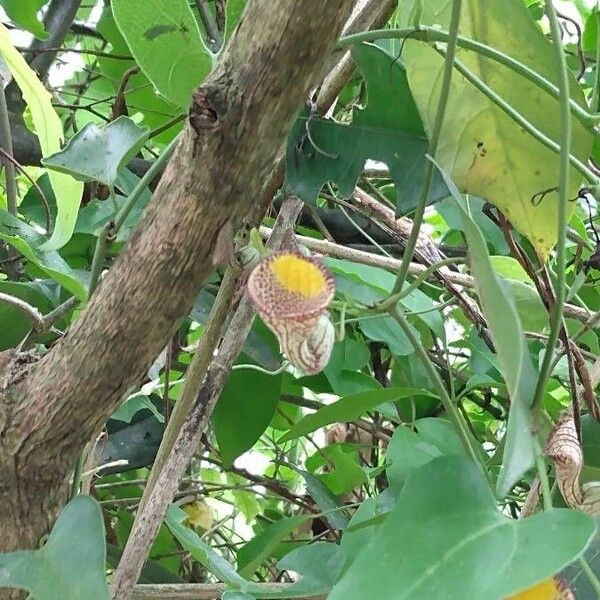
Plant Overview
Known as a striking variation of the "Dutchman’s Pipe," Aristolochia triangularis is a master of botanical curiosity. Originating from the lush subtropical regions of South America, this vigorous vine is famous for its bizarre, pipe-shaped flowers that look like they were plucked from a Victorian mystery novel. While it adds an exotic, jungle-like feel to any space, it carries a secret "trap-and-release" mechanism for its insect visitors.
🔍 How to Identify
- 📐 Triangular Foliage: True to its name, the leaves are distinctly deltoid or heart-shaped, featuring a smooth texture and a vibrant, deep green hue.
- 🎷 The "Pipe" Flower: The plant produces unusual, curved floral tubes that resemble a tobacco pipe. These are typically mottled with dark purplish-brown spots on a creamy yellow background.
- 🧶 Woody Twining: As a perennial liana, it doesn't use tendrils to climb; instead, the entire stem wraps tightly around supports, spiraling upward with surprising strength.
🏡 In Your Garden
- 🦋 A Butterfly Nursery: This plant is a vital host for the Pipevine Swallowtail butterfly family. While the caterpillars will munch on the leaves, the plant is evolved to handle this "pruning" in exchange for pollination.
- 🧱 Structure is Key: Because of its heavy, woody growth habit, it requires a sturdy trellis or a stone wall. It is excellent for creating "living curtains" on porches, but avoid planting it near delicate saplings that it might accidentally smother.
- 💧 Thirst for Humidity: It thrives in moist, well-draining soil and loves a humid environment. If the air is too dry, the edges of those beautiful triangular leaves may begin to crisp and brown.
⚠️ Safety & Toxicity
- 🚫 Dangerously Toxic: WARNING. All parts of this plant contain Aristolochic acid, a potent toxin that is highly carcinogenic and can cause permanent kidney failure if ingested.
- 🐾 Pets & Children: This plant should be kept strictly out of reach of curious pets and toddlers. Even small amounts of the leaves or seeds can be extremely dangerous.
- 🧤 Skin Sensitivity: Some gardeners report mild skin irritation when pruning the vine; it is best to wear gloves when handling the sap.
✨ Fun Fact
Aristolochia triangularis is a "prison warden" for flies! The flower uses a foul, decay-like scent to lure flies into its tube, where downward-pointing hairs trap them overnight. Once the fly is covered in pollen, the hairs wither, and the flower "releases" the insect to go and fertilize the next "pipe."

Detailed Care Instructions
To grow Aristolochia triangularis, also known as the Giant Dutchman's pipe or the elegans, you can follow these steps:
- Obtain a cutting or seeds: You can either purchase a cutting or seeds. Cuttings are a faster way to establish a plant, but growing from seeds is also possible.
- Prepare the soil: The plant prefers well-draining soil that is rich in organic matter. Mix equal parts garden soil, compost, and sand to create a loose, fertile soil mixture.
- Sow the seeds or plant the cuttings: If using seeds, sow them about 1/4 inch deep in small pots or seed trays filled with moistened soil. Gently press the seeds into the soil and keep them at a consistent temperature of around 70-75°F (21-24°C). Water regularly to keep the soil moist but not soggy.
If using cuttings, dip the cut end in rooting hormone powder and plant it in a container filled with moist soil. Place the container in a warm, bright location but avoid exposing it to direct sunlight.
- Provide the right conditions: Aristolochia triangularis prefers bright, indirect sunlight. Place the pots or containers near a sunny window or provide filtered sunlight outdoors. The optimal temperature range is between 65-80°F (18-27°C).
- Watering: Keep the soil consistently moist but not overly wet. Water deeply when the top inch of soil feels dry, but do not allow the plant to sit in standing water as it can lead to root rot.
- Support: As the plant grows, it will require a support structure to climb on. You can provide a trellis or install a support system like a wire frame for the plant to cling to.
- Pruning: Trim back any dead, damaged, or overcrowded growth regularly to promote a bushier and healthier plant.
- Fertilization: Feed the plant with a balanced, water-soluble fertilizer once every two weeks during the growing season (spring and summer).
- Pests and diseases: Monitor the plant for common pests like aphids and spider mites. Treat any infestations promptly with an appropriate insecticidal soap or neem oil spray. Ensure good air circulation around the plant to prevent fungal diseases.
- Transplanting: If the plant outgrows its container, transplant it into a larger pot or into the ground in a suitable location. Ensure the new location provides enough space for the vine to grow and climb.
By following these steps and providing optimal care, you should be able to successfully grow Aristolochia triangularis.
To water Aristolochia triangularis effectively, follow these guidelines:
- Observe the soil moisture: Check the soil regularly to determine if it needs watering. Aristolochia triangularis prefers slightly moist soil, so it is important to avoid both overwatering and allowing the soil to completely dry out.
- Stick to a watering schedule: Generally, it is recommended to water the plant every 7-10 days during the growing season. However, adjust the frequency based on your specific growing conditions, such as temperature, humidity, and type of potting mix.
- Water thoroughly: When watering, ensure that water reaches the root zone. Use a watering can or a hose with a gentle spray to avoid damaging the plant or displacing the soil. Water until you see water draining from the bottom of the pot.
- Avoid waterlogging: While these plants appreciate moist soil, they are not tolerant of waterlogged conditions. To prevent waterlogging, ensure that the pot has proper drainage holes to allow excess water to escape. If the plant is in the ground, make sure the soil has good drainage properties.
- Consider the environmental conditions: Factors such as temperature, humidity, and sunlight influence the plant's water requirements. In warmer and drier conditions, the plant may require more frequent watering, whereas in cooler and more humid conditions, it may need less water. Adjust your watering schedule accordingly.
- Monitor the plant's response: Pay attention to signs of either overwatering or underwatering. Overwatering can lead to yellowing leaves, root rot, or the appearance of fungus gnats. Underwatering, on the other hand, may cause wilting, drooping leaves, or leaf curling. Adjust your watering practices if any of these signs are observed.
- Consider the plant's growth stage: The water needs of Aristolochia triangularis may vary during different growth stages. When the plant is actively growing or flowering, it will generally require more frequent watering compared to when it is dormant or in winter.
Remember, these guidelines are general recommendations, and it is essential to adapt them to your specific growing conditions and observe the plant's response for optimal watering.
To fertilize Aristolochia Triangularis, use a balanced liquid fertilizer that is diluted to half strength. Apply the fertilizer every four to six weeks during the growing season, which is typically from spring to fall. Dilute the fertilizer according to the instructions provided on the packaging. Take care not to over-fertilize, as it may lead to excessive leaf growth at the expense of flowering. Additionally, always water the plant thoroughly before applying fertilizer to prevent burning the roots.
Aristolochia Triangularis, a perennial climbing vine, thrives in specific soil conditions. The ideal soil composition for this plant is well-draining, loose, and fertile. It prefers soil that is slightly acidic to neutral in pH.
To meet the soil requirements of Aristolochia Triangularis, consider using a mixture containing organic matter such as peat moss, compost, or well-rotted manure. These additives enhance the soil's fertility and improve its water retention capabilities while allowing excess moisture to drain away.
Additionally, you may incorporate perlite or vermiculite into the soil mixture to enhance its drainage. These additives aid in preventing waterlogging and root rot, which can be detrimental to the health of the plant.
It is essential to ensure that the soil is not compacted, as compacted soil can inhibit proper root growth and restrict nutrient uptake. Regularly loosen the soil around the plant to promote better aeration and root development.
Remember, maintaining appropriate soil moisture is crucial for Aristolochia Triangularis. It is recommended to water the plant moderately, allowing the soil to partially dry out between waterings to prevent overwatering, which may lead to root rot.
By providing the correct soil conditions, you can encourage healthy growth and development of the Aristolochia Triangularis plant.
To propagate Aristolochia triangularis, follow these steps:
- Select a healthy parent plant: Choose a mature and disease-free Aristolochia triangularis plant from which to take cuttings.
- Prepare the cutting: Using a clean, sharp pair of pruning shears or scissors, cut a stem from the parent plant that is at least 4-6 inches (10-15 cm) long. Make the cut just below a node, which is where the leaves attach to the stem.
- Remove lower leaves: Strip away any leaves from the bottom two-thirds of the cutting. This will minimize moisture loss during the propagation process.
- Prepare a rooting medium: Fill a small pot or container with a well-draining rooting medium, such as a mixture of equal parts perlite and peat moss. Moisten the mixture slightly, ensuring it is evenly damp.
- Dip the cutting in rooting hormone (optional): To enhance rooting success, you can dip the cut end of the stem into a rooting hormone powder or gel. This step is optional but may increase your chances of successful propagation.
- Insert the cutting in the rooting medium: Make a small hole in the rooting medium using a pencil or finger, and gently place the cut end of the stem into the hole. Firmly press the medium around the cutting to ensure good contact.
- Provide proper conditions: Place the potted cutting in a warm, brightly lit location, away from direct sunlight. Maintain a temperature of around 70-75°F (21-24°C) and ensure the medium remains evenly moist but not soggy. You can cover the pot with a clear plastic bag or use a propagator to create a humid environment.
- Monitor and care for the cutting: Check the cutting regularly to ensure a moist but not waterlogged rooting medium. Mist the leaves occasionally to maintain humidity. Avoid overwatering, as this can lead to rot. It may take several weeks or even months for roots to develop.
- Transplanting the cutting: Once you observe signs of root growth, such as new leaf growth or resistance when gently tugging the stem, the cutting is ready for transplanting. Carefully transfer it into a larger pot with well-draining soil suitable for Aristolochia triangularis.
By following these steps, you can successfully propagate Aristolochia triangularis and expand your plant collection.








