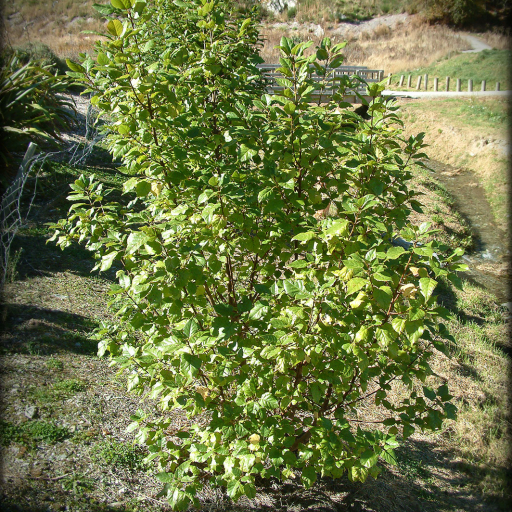
Plant Overview
Known to the Māori people of New Zealand as Makomako, the Wineberry is a vibrant, fast-growing "pioneer" tree that breathes life back into cleared forests. Often seen shimmering with its distinctively serrated leaves, it earned its English name from the deep-red juice of its berries, which early settlers once fermented into a sweet, potent wine.
🔍 How to Identify
- 🍃 Saw-Toothed Leaves: The leaves are large, heart-shaped, and famously "serrated" (jagged edges) with prominent veins. On younger plants, the undersides often glow with a beautiful purple or burgundy hue.
- 🌸 Bell-Shaped Blooms: In spring, the tree is covered in delicate clusters of tiny flowers that shift in color from a pale cream to a deep, rosy pink.
- 🍒 The Berries: Following the flowers, small, fleshy berries appear. they transition from bright red to a glossy, dark black when fully ripe.
🏡 In Your Garden
- 🌱 Rapid Growth: This is a "racehorse" in the garden world. It’s perfect for those who want quick privacy or a fast canopy, though its wood can be somewhat brittle in high winds because it grows so quickly.
- 💧 Thirsty Roots: The Wineberry is a moisture-lover. Because its leaves are thin and large, it transpires water quickly; it will be the first plant to "wilt" as a dramatic signal that your garden needs a drink.
- 🦋 Pollinator Magnet: If you want to attract biodiversity, this is the tree for you. It is a primary food source for honeybees and native birds, who feast on the nectar and the berries.
⚠️ Safety & Toxicity
- ✅ Safe & Edible: The berries are non-toxic and traditionally consumed by humans. They have a sweet, watery flavor, though they are quite small.
- 🐾 Pet Friendly: There are no known toxic effects for cats, dogs, or horses. However, as with any garden plant, keep an eye on pets to ensure they don't ingest large quantities of foliage, which can cause mild digestive upset.
✨ Fun Fact
In traditional Māori medicine, the leaves of the Makomako were boiled to create a soothing wash for skin complaints and burns, while the wood was so light and uniform that it was once prized for making high-quality gunpowder charcoal!

Detailed Care Instructions
To grow an Aristotelia Serrata plant, also known as wineberry or makomako, follow these steps:
- Climate and Location: Determine if your climate is suitable for growing Aristotelia Serrata. This plant is native to New Zealand and thrives in temperate regions with mild winters and moderate rainfall. It prefers well-draining soil.
- Propagation: The most common way to propagate Aristotelia Serrata is through seeds. Collect fresh seeds or purchase them from a reputable source. Soak the seeds in water for 24 hours to improve germination.
- Germination: Sow the seeds in seed trays or pots filled with a mixture of compost and sandy soil. Bury the seeds about 1/4 inch deep and cover lightly with soil. Place the trays in a warm, well-lit area, such as a greenhouse or a sunny windowsill.
- Watering: Keep the soil consistently moist but not waterlogged. Water the seed trays from below to prevent disturbing the seeds. Avoid overwatering, as it may cause root rot.
- Transplanting: Once the seedlings have developed their second set of true leaves, they can be transplanted into larger pots or directly into the garden. Choose a location with full sun or partial shade. Space the plants at least three to four feet apart.
- Soil and Fertilizer: Aristotelia Serrata prefers fertile soil with good drainage. If the soil is poor, amend it with compost or well-rotted manure. Fertilize the plants annually with a balanced organic fertilizer in spring.
- Maintenance: Keep the plant well-watered, especially during dry periods. Mulch around the base of the plant to retain moisture and suppress weeds. Prune lightly to maintain shape and remove any dead or damaged branches.
- Harvesting: Wineberries will typically start to produce fruits two to three years after planting. Harvest the berries when they turn dark purple or black. They should be soft and easily detach from the plant.
Remember to research any specific requirements or additional care information for Aristotelia Serrata in your particular region, as conditions may vary.

Place in a bright room that is sun drenched almost all day. Or directly in a south-facing window.

To water this plant, wait for the top layer of soil to dry out before watering again. Water deeply, saturating the entire root system, then allow excess water to drain from the bottom of the pot. Avoid overwatering, as this can cause root rot.
To promote healthy growth and vigor, apply an all-purpose fertilizer to the soil around the base of the plant in early spring before new growth begins. Use a balanced fertilizer with equal amounts of nitrogen, phosphorus, and potassium, and follow the manufacturer's instructions for application rates. Avoid over-fertilization, which can lead to excessive vegetative growth and reduced fruit production. Water the plant thoroughly after fertilizing to help distribute the nutrients evenly throughout the soil. Repeat the application of fertilizer every 4-6 weeks throughout the growing season.
The ideal soil for the Aristotelia Serrata plant is a well-draining, fertile soil that is rich in organic matter. The soil should be slightly acidic with a pH range of 5.5 to 6.5. The plant prefers moist soil conditions but does not tolerate waterlogging. A soil mix consisting of peat moss, perlite, vermiculite, and loam in equal proportions is suitable for growing the Aristotelia Serrata plant. This soil mix provides good drainage and aeration while retaining enough moisture for the plant's needs. It is important to avoid using heavy clay soils or sandy soils that do not hold moisture and nutrients well. A regular application of balanced fertilizers can also improve the quality of the soil and promote healthy growth of the plant.
To propagate the Aristotelia Serrata plant, you will need to:
- Obtain healthy and mature stems from the parent plant.
- Prepare a clean and sharp cutting tool, such as pruning shears or scissors.
- Cut a stem from the parent plant, making sure it is around 5-10cm long and has enough leaves and nodes to grow roots.
- Remove the lower leaves from the stem, leaving around 2-3 sets of leaves near the top.
- Dip the cut end of the stem into rooting hormone powder to encourage faster root growth.
- Prepare a pot filled with fresh and well-draining soil, such as a mixture of sand and peat moss.
- Make a hole in the soil and insert the stem into it, pressing the soil around the stem to secure it in place.
- Water the cutting thoroughly, making sure the soil is moist but not waterlogged.
- Cover the pot with a plastic wrap or a clear plastic bag to create a humid environment for the cutting.
- Place the pot in a bright and warm spot, such as near a window or under a grow light.
- Check the cutting regularly and mist it with water if it looks dry. Also, remove any dead or yellowing leaves.
- After a few weeks, the cutting should start to develop roots and new leaves. You can gently tug on the stem to check if it has rooted.
- Once the cutting has established roots and new growth, you can transplant it into a larger pot or into your garden bed.








