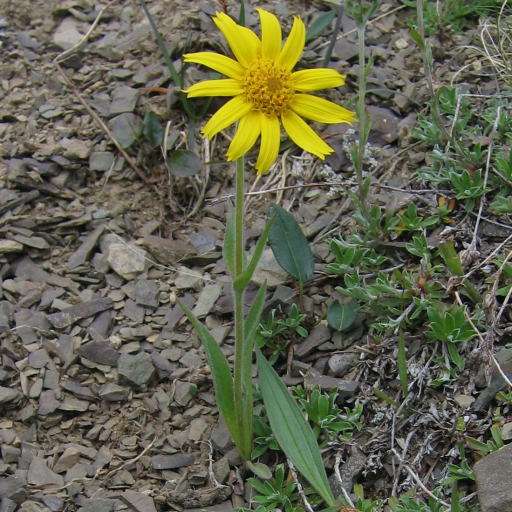
Plant Overview
Often called the Alpine Arnica or Narrowleaf Arnica, this resilient golden beauty thrives where most plants fail—high in the freezing peaks of the Arctic and subarctic mountains. It acts as a sun-bright beacon in the tundra, standing tall against harsh winds and rocky terrain. While it looks like a delicate wildflower, it is a rugged survivor with a history deeply rooted in traditional mountain medicine.
🔍 How to Identify
- 🌼 The Bloom: Large, solitary flower heads that look like bright yellow, slightly disheveled daisies with pointed ray petals.
- 🍃 Slender Foliage: True to its name (angustifolia means narrow-leaf), look for long, lance-shaped leaves that grow in opposite pairs along the stem.
- 🧶 Wooly Texture: The stems and leaves are often covered in fine, silvery hairs. This "fuzz" acts like a tiny sweater, trapping heat and protecting the plant from intense alpine UV rays.
🏡 In Your Garden
- 🏔️ Mountain Spirit: This isn't your average garden daisy; it craves well-draining, gritty, or sandy soil that mimics its rocky home. It struggles in heavy clay or high humidity, as it is hardwired for the crisp, dry air of the north.
- ⚓ Deep Anchorage: It develops a sturdy rhizome system to anchor itself against mountain gusts. Because it invests so much energy into its root structure, it hates being transplanted—pick its "forever home" carefully!
⚠️ Safety & Toxicity
- 🚫 Toxic if Ingested: While Arnica is famous in commercial gels and ointments for bruises, the raw plant contains helenalin, a compound that is highly irritating to the digestive tract.
- 🐾 Pet & Child Safety: It should never be eaten. Ingestion can cause stomach pain, vomiting, or heart palpitations. It is best kept as an ornamental beauty safely out of reach of curious nibblers.
✨ Fun Fact
🧊 Arctic Survivor: This plant is a true "extremophile." It can survive temperatures as low as -40°F (-40°C)! It spends most of the year dormant under a thick blanket of snow, waiting for the briefest window of summer to burst into its golden glory.

Detailed Care Instructions

Place in a bright room that is sun drenched almost all day. Or directly in a south-facing window.

Some plants require more regular watering than others, which should be done every few days. It's critical to maintain the soil moist all of the time. The water requirements of the same plant placed in pots with varying sizes will differ. Because the water in the smaller pot evaporates faster than the water in the larger pot, it will require more watering. Regardless of pot size, the surface should constantly be maintained moist.








