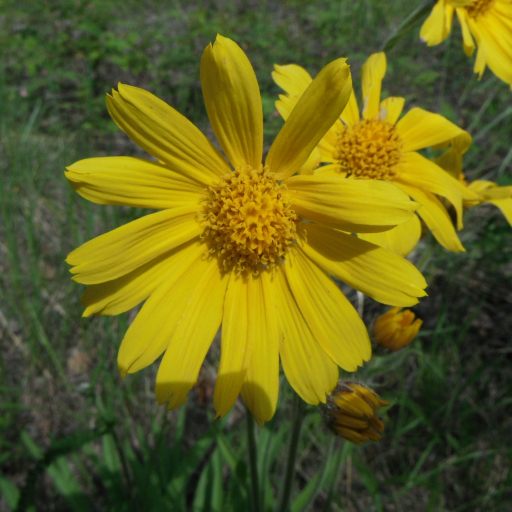
Plant Overview
Often called the Spearleaf Arnica, this resilient wildflower is the hardy northern cousin of the famous medicinal Arnica montana. It thrives in the rugged boreal forests and open meadows of North America, standing as a bright, golden beacon against the cool northern landscape.
🔍 How to Identify
- 🍃 The Foliage: The name lonchophylla translates to "spear-leaf." Look for narrow, lance-shaped leaves that are significantly longer than they are wide, mostly clustering at the base of the plant.
- 🌼 The Blooms: It features classic daisy-like flower heads with sunny yellow "petals" (ray florets) surrounding a dense, golden center.
- 📏 The Stem: The stalks are slender and often covered in tiny, sticky hairs. Unlike some other Arnica species, this one typically carries fewer flower heads per stem, giving it a more delicate appearance.
🏡 In Your Garden
- 🏔️ Northern Soul: This plant is a specialist for cooler, temperate climates. It struggles in humid, tropical heat and prefers the well-drained, slightly acidic soils found in its native alpine or northern forest habitats.
- 🌱 Rhizome Growth: Because it spreads via underground rhizomes, it is excellent for naturalizing a wild corner of the garden. It prefers to stay put once established, as its root system can be sensitive to frequent moving.
⚠️ Safety & Toxicity
- 🚫 Not for Ingestion: While Arnica is famous in the homeopathic world, the raw plant is toxic. It contains helenalin, a compound that can cause severe gastrointestinal distress and internal bleeding if eaten.
- 🐾 Pets & Children: Keep this plant away from curious pets and toddlers. Ingesting any part of the plant can lead to vomiting, weakness, or more serious heart-related issues in small animals.
- 🖐️ Skin Irritation: Some gardeners may develop a red, itchy rash (contact dermatitis) after handling the leaves. It is always a good idea to wear gloves when pruning.
✨ Fun Fact
The genus name Arnica is believed to be derived from the Greek word arnakis, which means "lamb’s skin." This is a nod to the soft, velvety, and slightly woolly texture found on the leaves of many species in this family!

Detailed Care Instructions

Some plants require more regular watering than others, which should be done every few days. It's critical to maintain the soil moist all of the time. The water requirements of the same plant placed in pots with varying sizes will differ. Because the water in the smaller pot evaporates faster than the water in the larger pot, it will require more watering. Regardless of pot size, the surface should constantly be maintained moist.








