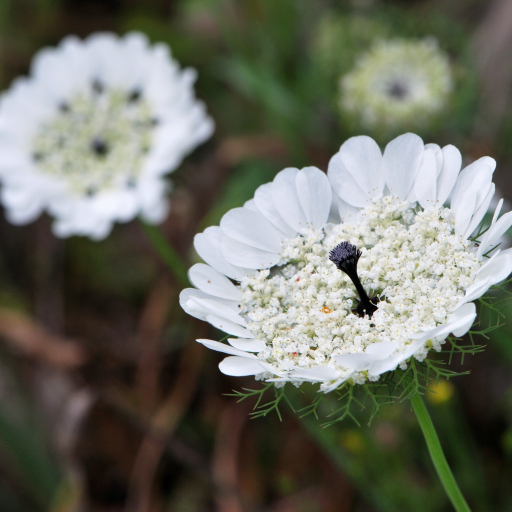
Plant Overview
Often called the "Fried Egg Plant" or the "Starry Laceflower," Artedia squamata is a Mediterranean gem that looks like it belongs in a Victorian lace shop. This elegant annual is a member of the carrot family, producing delicate, airy white blooms that seem to float above its feathery foliage. It is a favorite in wildflower meadows across the Levant, where it blankets hillsides in a soft, snowy texture during the spring.
🔍 How to Identify
- 🌼 The "Fried Egg" Blooms: The most striking feature is the large, flat-topped flower clusters (umbels). The outer petals are significantly larger and heart-shaped, surrounding a dark center, which gives the appearance of a sunny-side-up egg or a lace doily.
- 🌿 Fern-like Foliage: The leaves are finely divided, thin, and feathery, closely resembling the foliage of a carrot or dill plant.
- 📏 Upright Habit: It grows on slender, wiry stems that typically reach between 12 to 24 inches in height, giving it a dainty but architectural presence.
🏡 In Your Garden
- 🌱 Look but Don't Touch (The Roots): This plant develops a long, sensitive taproot very quickly. It absolutely hates being transplanted; for the best results, you should sow the seeds directly into the garden soil where you want them to stay.
- ☀️ Sun Seeker: To get those iconic wide blooms, it needs a position in full sun. In the shade, the stems tend to get "leggy" and may flop over without the support of neighboring plants.
- 🦋 The Pollinator Landing Pad: The flat, wide shape of the flower heads acts as a perfect landing platform for beneficial insects like hoverflies and ladybugs, making it an excellent companion for organic vegetable patches.
⚠️ Safety & Toxicity
- 🐾 Pet & Child Safety: Artedia squamata is generally considered non-toxic to humans and pets. However, as with any ornamental plant, ingestion should be discouraged to avoid mild stomach upset.
- ☀️ Sap Sensitivity: Some members of the carrot family (Apiaceae) contain compounds that can make skin sensitive to sunlight. While Artedia is much safer than its "Giant Hogweed" cousins, sensitive individuals should wear gloves when handling broken stems to avoid potential irritation.
✨ Fun Fact
The genus name Artedia was created by the famous botanist Carl Linnaeus to honor his close friend, Peter Artedi. Interestingly, Artedi is known as the "Father of Ichthyology" (the study of fish), proving that even fish experts can have beautiful flowers named after them!

Detailed Care Instructions
To grow an Artedia Squamata, also known as the snake plant or mother-in-law's tongue, you can follow these steps:
- Choose a healthy snake plant: Look for a snake plant with strong, firm leaves and without any signs of pests or diseases.
- Potting mix: Use a well-draining potting mix suitable for succulents or cacti. Snake plants prefer slightly sandy soil that allows excess water to drain easily.
- Choose the right pot: Select a pot that has drainage holes at the bottom, as snake plants do not tolerate excess water. A larger pot with room for growth is ideal, but avoid using a pot that is excessively large for the plant.
- Place the plant in a suitable location: Snake plants can tolerate a wide range of light conditions but prefer bright, indirect light. They can also grow in low light conditions, but their growth may be slower. Avoid exposing the plant to direct sunlight as it may scorch the leaves.
- Watering: Allow the soil to dry out between waterings as snake plants are drought-tolerant. Typically, you should water them once every 2-3 weeks, depending on the environmental conditions and potting mix used. Do not overwater as it can lead to root rot.
- Temperature and humidity: Snake plants prefer average room temperatures of around 60-85°F (15-29°C). They can tolerate a range of humidity levels but do not like extremely humid conditions.
- Fertilization: Snake plants don't require frequent fertilizing, but you can use a balanced houseplant fertilizer once every 2-4 months during the growing season. Avoid over-fertilization as it can harm the plant.
- Propagation: Snake plants can be propagated through division. To do this, carefully remove the plant from its pot, separate the rhizomes, and replant them in well-draining potting mix. Ensure each division has a good amount of roots and a few healthy leaves.
- Maintenance: Trim any damaged or yellowing leaves to improve the overall appearance of the plant. Regularly dust the leaves to keep them clean and increase their ability to photosynthesize.
By following these guidelines, you can grow and maintain a healthy Artedia Squamata plant in your home or garden.

Place in a bright room that is sun drenched almost all day. Or directly in a south-facing window.

Artedia Squamata plant requires regular watering to keep the soil moist, especially during the growing season. However, it is important to avoid over-watering as it can lead to root rot and other water-related problems. Before watering the plant, it is recommended to check the top inch of the soil for dryness. If the soil feels dry to the touch, then it is time to water the plant. When watering, it is best to use a watering can with a thin spout to direct the water towards the base of the plant, avoiding the leaves and stems. Watering the plant early in the morning is ideal as this allows any excess water on the leaves and stems to dry during the day, reducing the risk of fungal diseases. Additionally, it is important to use room temperature water when watering the plant. Cold water can shock the roots while hot water can scald them. Lastly, it is important to provide good drainage for the plant to prevent water from accumulating around the roots.
To fertilize this plant, mix a well-balanced fertilizer with water at half the recommended strength. Apply the fertilizer solution to the soil around the plant every four weeks during its growing season. Do not fertilize during the dormant season. Ensure that the soil is moist before applying the fertilizer solution and avoid over-fertilization, which may cause damage to the plant.
The most suitable type of soil to use for this particular plant is a well-draining soil that is slightly acidic with a pH of around 6.0 to 6.5. The soil should also be rich in organic matter and have good water retention properties, but not be waterlogged. A sandy loam soil with perlite or pumice added for good drainage works well. Fertilizer should be used sparingly, and only during the growing season. It's important to avoid overwatering as it can lead to root rot.
To propagate this plant, you will need to take stem cuttings that are about 4 inches long. Make sure to choose a healthy stem that has several leaves attached. Using a clean, sharp pair of scissors, cut the stem just below a node (where the leaves meet the stem).
Remove the lower leaves from the stem, leaving only two or three leaves at the top. Dip the cut end of the stem into rooting hormone and plant it in a mixture of perlite and peat moss. Keep the soil moist but not waterlogged, and place the cutting in a warm, bright location with indirect sunlight.
After a few weeks, roots should begin to form from the cut end of the stem. Once the roots are several inches long, the new plant can be potted into soil and cared for like a mature plant.








