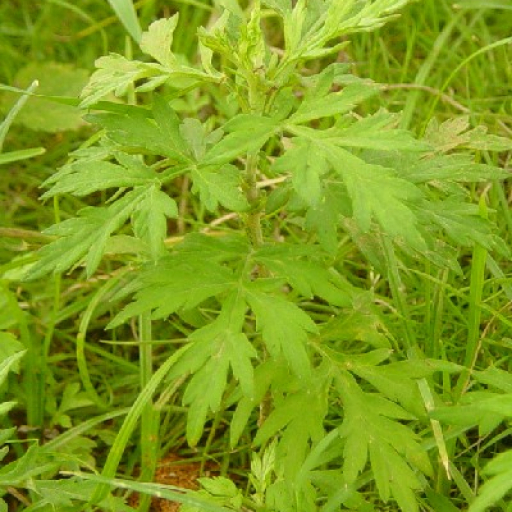
Plant Overview
Often called the "Healing Herb of the East" or simply Chinese Mugwort, Artemisia argyi is a powerhouse of folklore and traditional medicine. In East Asia, it is much more than a garden plant; it is a spiritual protector often hung over doorways during the Dragon Boat Festival to ward off malevolent spirits and pests. Its silver-sheined leaves carry a potent, spicy aroma that has defined its use in healing rituals for millennia.
🔍 How to Identify
- 🌿 Foliage Texture: The leaves are deeply lobed and grayish-green on the surface, but the true giveaway is the underside, which is covered in a dense, white-silvery down that looks almost like felt.
- 👃 Aromatic Signature: When the leaves are bruised or crushed, they release an intense, pungent fragrance—a mix of camphor, sage, and spice.
- 📏 Growth Habit: This is an upright, bushy perennial that can stand nearly a meter tall, often appearing in dense, silvery clumps that shimmer when the wind catches the pale leaf undersides.
🏡 In Your Garden
- 🌱 Rhizome Runner: Be warned that this plant is a vigorous traveler. It spreads through underground rhizomes and can quickly dominate a garden bed. It is often best grown in large containers or "sunk" pots to keep its wandering roots in check.
- ☀️ Hardy Disposition: It is exceptionally "low-maintenance" because it thrives in poor, well-drained soil and full sun. It is remarkably drought-tolerant once established, making it a great choice for xeriscaping or rocky garden corners.
⚠️ Safety & Toxicity
- 🐾 Pet Alert: Like many members of the Artemisia family, this plant contains essential oils and thujone, which are toxic to dogs, cats, and horses if eaten in significant quantities.
- 🧴 Skin Sensitivity: The fine hairs on the leaves and the potent oils can cause contact dermatitis or allergic reactions in sensitive individuals. It is wise to wear gloves when pruning or harvesting large amounts.
✨ Fun Fact
The dried leaves of Artemisia argyi are the primary ingredient in "moxa wool." This fluff is used in Moxibustion, a traditional therapy where the herb is burned near specific acupuncture points to warm the body and stimulate the flow of vital energy, or "Qi."

Detailed Care Instructions
To grow Artemisia Argyi, also known as Chinese wormwood or mugwort, follow these steps:
- Choose a suitable location: Artemisia Argyi prefers well-draining soil and full sun to partial shade. Select a spot in your garden or in a container with these conditions.
- Prepare the soil: Improve the soil by mixing compost or organic matter to enhance drainage and fertility. Artemisia Argyi does best in slightly acidic to neutral soil with a pH of 6.0 to 7.0.
- Start from seeds: If starting from seeds, sow them indoors in early spring, about 8 to 10 weeks before the last frost date. Sprinkle the seeds on top of moist seed-starting mix and gently press them into the soil. Keep the soil consistently moist and warm until germination occurs, which usually takes around 2 weeks. After germination, thin out the seedlings, leaving one strong plant per pot.
- Transplanting seedlings: Transplant the seedlings outdoors once the danger of frost has passed and the seedlings are about 2 to 3 inches tall. Space the plants at least 18 inches apart to allow room for their mature growth.
- Watering: Water the Artemisia Argyi plants regularly, keeping the soil consistently moist but avoiding overwatering, as it can lead to root rot.
- Mulching and weed control: Apply a layer of organic mulch around the plants to help retain moisture in the soil and prevent weed growth. Be careful not to mulch too closely to the stems, as it can promote rotting.
- Pruning and maintenance: Prune Artemisia Argyi regularly to promote bushier growth and prevent the plants from becoming leggy. Pinch back the stems when they reach about 6 to 8 inches in height. Additionally, deadhead any spent flowers to encourage continued blooming.
- Protecting from pests: Artemisia Argyi is relatively resistant to pests and diseases. However, if you notice any issues, such as aphids or powdery mildew, treat them promptly with organic insecticidal soap or fungicide if necessary.
- Harvesting: Harvest the leaves of Artemisia Argyi as needed for their culinary or medicinal uses. For optimal flavor and potency, harvest the leaves in the morning after the dew has dried. Hang the cut stems upside down in a dry, well-ventilated area to dry them thoroughly before storage.
Remember to research the specific regulations and guidelines for growing Artemisia Argyi in your region, as it might be classified as invasive in some areas.

Place in a bright room that is sun drenched almost all day. Or directly in a south-facing window.

To water this plant, make sure the soil is completely dry before watering again. When watering, give the plant a good soak but make sure not to overwater as this can lead to root rot. Water at the base of the plant, avoiding getting water on the leaves as the plant is sensitive to moisture on its foliage. It is best to water in the morning or evening to avoid water evaporation during the day. During winter months, reduce watering to once a week or less.
To fertilize the Artemisia Argyi plant, follow these instructions:
- Choose a balanced, slow-release fertilizer that is suitable for herbaceous plants or perennials. Select a formula with equal nitrogen (N), phosphorus (P), and potassium (K) ratios (e.g., 10-10-10 or 14-14-14).
- Begin fertilizing in late spring or early summer when the plant starts actively growing.
- Dilute the fertilizer according to the package instructions. Use half or quarter strength to avoid over-fertilization.
- Water the soil around the base of the plant thoroughly before applying fertilizer. This helps prevent fertilizer burn on the plant's roots.
- Apply the diluted fertilizer to the soil, avoiding direct contact with the foliage or stems.
- Avoid excessive fertilization, as Artemisia Argyi plants prefer lean soil conditions. Over-fertilization can lead to excessive foliage growth and reduced medicinal qualities.
- Repeat the fertilization process every 4 to 6 weeks throughout the growing season, following the same dilution and application method.
- Stop fertilizing in late summer or early fall to allow the plant to harden off before winter.
Note: Remember to always read and follow the specific instructions provided with the fertilizer you choose, as application rates and methods may vary between products.
Artemisia Argyi prefers a well-draining soil that is rich in nutrients. It does best in a soil with a pH between 6.0 and 8.0. A mixture of loam, sand and peat moss creates an excellent growing medium for this plant. Alternatively, a good quality potting mix can be used when growing in containers. It is important to make sure that the soil is kept moist but not waterlogged to prevent root rot. Additionally, adding compost or organic matter to the soil can improve its nutrient content and aid in water retention.
Artemisia Argyi is a perennial herbaceous plant that can be propagated by various methods including division, cuttings, and seeds. To propagate Artemisia Argyi via cuttings, it is important to take stem cuttings from mature and healthy plants during the growing season, which is typically in spring or early summer.
First, the stems should be cut from the plant with a sterilized sharp knife or scissors. The cut should be made just below a node and it is important to remove any leaves from the lower portion of the stem to prevent moisture loss.
The stem cuttings should be then dipped in a rooting hormone powder to stimulate root growth. The cuttings should be planted in a well-draining potting soil mix that is moist but not overly wet and inserted into the soil about an inch deep. Cover the pot with a clear plastic bag to maintain a high humidity environment and place it in a warm bright spot but not direct sunlight.
After a few weeks, new roots will start to grow and the plastic bag can be slowly removed to allow the plants to acclimatize to the new environment. When new leaves are grown, they can be transplanted into larger pots or into a garden bed.
It is important to keep the growing medium moist and not to overwater the young plants. This will prevent the plants from rotting and enable them to establish at their new location. With proper care, Artemisia Argyi cuttings will grow into healthy plants and can be harvested for their medicinal properties and culinary uses.








