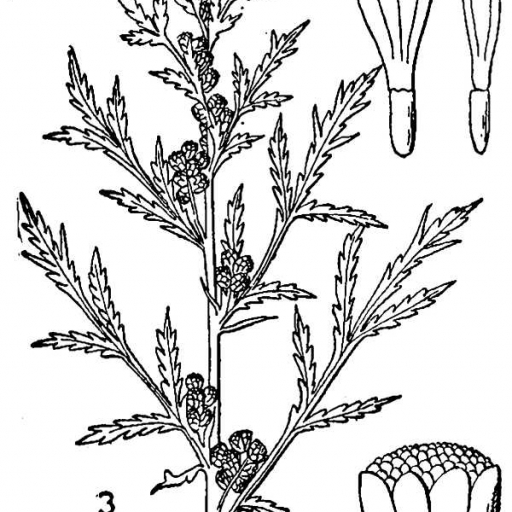
Plant Overview
Known most commonly as Biennial Wormwood, this hardy traveler is the "understated cousin" of the more famous Sagebrush and Absinthe. Unlike many of its silver-clothed relatives, Artemisia biennis sports a deep green, hairless look that often lets it blend into the background of meadows and fields. Though often dismissed as a mere weed, it is a resilient pioneer species that excels at colonizing disturbed soils and damp riverbanks.
🔍 How to Identify
- 🌿 The Foliage: Unlike the silvery, fuzzy leaves of common Mugwort, these leaves are smooth, bright green, and deeply "pinnatifid" (finely divided), giving the plant a delicate, fern-like appearance.
- Stem The Stems: The plant features a sturdy, upright central stem that often turns a striking reddish or purplish hue as it matures, reaching heights of up to 6 feet in ideal conditions.
- 🌼 The Flowers: In late summer, it produces dense, leafy spikes of tiny, yellowish-green flower heads. They are inconspicuous and lack petals, looking more like small, bunched-up beads than traditional blooms.
🏡 In Your Garden
- 💧 Moisture Lover: While most Artemisia species thrive in bone-dry deserts, the Biennial Wormwood prefers "feet" that stay a bit damp. You’ll often find it thriving near irrigation ditches or in low-lying garden spots where water collects.
- 🌱 The Two-Year Cycle: As a biennial, it spends its first year as a low-growing rosette of leaves, quietly building energy. In its second year, it shoots upward rapidly to flower and set thousands of seeds before completing its life cycle.
⚠️ Safety & Toxicity
- 🐾 Mildly Toxic: Like many members of the Artemisia family, this plant contains thujone and other volatile oils. While not usually fatal, it can cause digestive upset if eaten by pets or livestock in large quantities.
- 🤧 Allergy Alert: Because it is wind-pollinated, its inconspicuous flowers release copious amounts of pollen in late summer, which can be a significant trigger for hay fever sufferers.
- 🧤 Skin Sensitivity: Some gardeners report mild skin irritation (dermatitis) after handling the crushed leaves; it’s best to wear gloves if you are pulling it from your yard.
✨ Fun Fact
Unlike its famous relative Artemisia absinthium (used to make Absinthe), the Biennial Wormwood is surprisingly odorless. While most wormwoods are famous for their intense, bitter, or herbal scent, this species has almost no fragrance at all when the leaves are crushed!

Detailed Care Instructions
To grow Artemisia Biennis (also known as Biennial Wormwood), follow these steps:
- Find appropriate growing conditions: Artemisia Biennis prefers full sun to partial shade and well-drained soil. Ensure the location you choose receives at least six hours of direct sunlight each day.
- Prepare the soil: Biennial Wormwood grows best in fertile, loamy soil. Amend your soil with organic matter like compost or well-rotted manure to improve its fertility and drainage.
- Sow seeds: Artemisia Biennis can be grown from seeds. Sow the seeds directly into the prepared soil around two to three weeks before the last frost date in your area. Lightly cover them with a thin layer of soil.
- Watering: Keep the soil consistently moist but not waterlogged. Water the plant whenever the soil feels dry to the touch. This may require watering once or twice a week, depending on the weather conditions.
- Thin the seedlings: Once the seedlings sprout and establish a few pairs of true leaves, thin them to provide adequate space for each plant to grow. Use scissors or your fingers to remove the excess seedlings, leaving a spacing of approximately 12-18 inches between plants.
- Mulch: Apply a layer of organic mulch, such as straw or wood chips, around the base of the plants. Mulch helps retain soil moisture, suppresses weeds, and regulates soil temperature.
- Maintenance: Artemisia Biennis does not require much maintenance. Ensure the plants receive sufficient water, especially during dry periods. It has low fertility requirements, so you generally do not need to fertilize it.
- Pruning: Prune the plant as necessary to maintain its shape and control its growth. You can also choose to prune in the early spring to encourage bushier growth.
- Harvesting: You can harvest the leaves of Artemisia Biennis as and when needed. Harvest them in the morning when the leaves have a higher concentration of essential oils for the best flavor and aroma.
By following these steps, you should be able to successfully grow Artemisia Biennis. Enjoy your gardening experience!

Place in a bright room that is sun drenched almost all day. Or directly in a south-facing window.

To water this plant, it is important to first consider the soil conditions. Ensure that the soil is well-draining to prevent waterlogging and root rot. It is advised to water this plant deeply and less frequently, allowing the soil to dry slightly between watering sessions. To avoid moisture-related issues, avoid getting water on the leaves or stem of the plant, and instead, water directly at the base. It is also important to note that this plant is drought-tolerant and can withstand extended periods without water, but it is still important to provide adequate moisture during extended dry spells.
To fertilize this plant, first ensure that the soil is moist. Then, apply a balanced fertilizer with equal amounts of nitrogen, phosphorus, and potassium to the soil around the base of the plant. Use a rate of 1 tablespoon per square foot of soil. Water the plant immediately after fertilizing to help activate the fertilizer. Avoid fertilizing during periods of drought or extreme heat.
Artemisia Biennis plant does well in well-draining soil that contains organic matter. The soil should be slightly alkaline to neutral with a pH range of 6.0-7.5. It prefers a loamy or sandy soil texture that is well-aerated and is not prone to waterlogging. The soil should also retain moisture but should not be too saturated. Adding compost or aged manure to the soil will help to improve its fertility and provide the necessary nutrients for healthy growth. Mulching around the base of the plant will help to conserve moisture and suppress weeds.
To propagate this plant, you can start by collecting mature seeds from the parent plant. The seeds should be sown in a well-draining soil mix at a depth of about 1/8 inch and kept moist until germination, which usually takes around 2-3 weeks. You can also propagate Artemisia Biennis through division. Dig up the parent plant carefully and separate the root clumps into several small divisions, making sure each clump has a portion of roots and leaves. Plant the divisions in a well-draining soil mix and water thoroughly. The best time to do this is in the spring, just as new growth begins to emerge. Provide the newly propagated plants with ample sunlight and water, and they should establish themselves quickly.








