Plant Overview
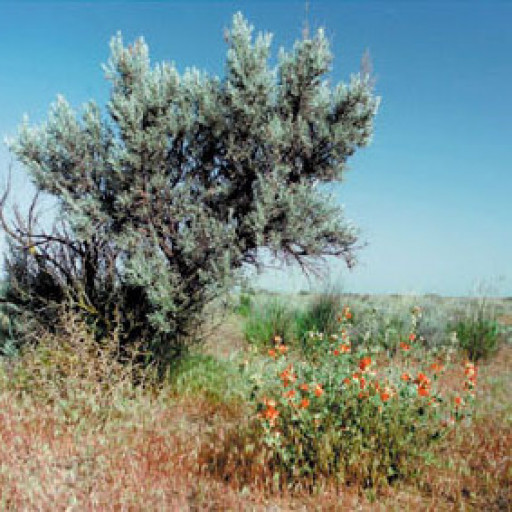
The quintessential scent of the High Desert, Artemisia tridentata is the silver-maned king of the American West. Known widely as Big Sagebrush, it is famous for its pungent, earthy aroma that intensifies beautifully after a rainstorm. While it shares its name with the culinary herb, it isn't a true sage (Salvia) but rather a resilient member of the sunflower family that has mastered the art of surviving in harsh, arid landscapes.
🔍 How to Identify
- 🌿 The Three-Toothed Leaf: The species name tridentata refers to the tiny, three-lobed tips of its narrow, wedge-shaped leaves, which look like a small trident.
- 🌫️ Silvery Foliage: The leaves are covered in fine, silky hairs that reflect intense sunlight and trap moisture, giving the entire shrub a ghostly, blue-gray appearance.
- 🪵 Gnarled Structure: As it matures, it develops a woody, twisted trunk with shaggy, shredding gray bark, often resembling a weathered miniature tree.
🏡 In Your Garden
- 🏜️ Drainage is Non-Negotiable: This plant is a specialist in dry soil. If planted in heavy clay or areas where water "pools," it will quickly succumb to root rot. It prefers "lean" soil without heavy fertilizers.
- ☀️ The Sun Seeker: It requires full, unobstructed sunlight to maintain its silvery color and dense growth. In the shade, it becomes leggy, green, and loses its structural integrity.
- 🌬️ Drought Champion: Once established, it is one of the most drought-tolerant plants available for xeric landscaping, requiring almost no supplemental water during the summer months.
⚠️ Safety & Toxicity
- 🐾 Low Risk: It is generally considered non-toxic to touch, and many Indigenous cultures have used it medicinally for centuries.
- 🤢 Ingestion Warning: The plant contains thujone and other volatile oils. If eaten in significant quantities by pets or curious children, it can cause digestive upset or mild neurological distress.
- 🤧 Allergy Alert: In late summer and fall, it releases wind-borne pollen that can be a significant trigger for hay fever and respiratory sensitivities.
✨ Fun Fact
Big Sagebrush is a "talkative" plant. When its leaves are chewed by grasshoppers or other pests, it releases chemical signals into the air. Neighboring sagebrush plants "hear" this scent and immediately start pumping bitter chemicals into their own leaves to discourage the insects before they even arrive!

Detailed Care Instructions
| Humidity | Dry |
| Lighting | Full Sun |
| Toxicity | Poisonous |
| Difficulty | Medium |
| Hibernation | Cold Period |
| Hardiness Zones | 4 - 9 |
Here are some steps you can follow to grow Artemisia tridentata, also known as Big Sagebrush:
- Choose the right location: Artemisia tridentata prefers a sunny location with well-draining soil. Ensure the area has good air circulation and is not prone to waterlogging.
- Prepare the soil: Artemisia tridentata can grow in poor, sandy, or gravelly soil types. However, it is important to remove any weeds or grasses from the area before planting. You can also mix in some organic matter or compost to improve the soil's fertility.
- Sow seeds or plant cuttings: You can either sow seeds directly in early spring or start the seeds indoors 6-8 weeks before the last frost. If using cuttings, take semi-hardwood cuttings in summer and root them in a moist rooting medium. Transplant seedlings or rooted cuttings into the prepared soil, spacing them about 2-3 feet apart.
- Watering: Initially, keep the soil consistently moist but not waterlogged. Once established, Artemisia tridentata is drought-tolerant and does not require regular watering. Water sparingly during extended periods of drought.
- Mulching: Apply a layer of organic mulch around the base of the plant to conserve soil moisture and suppress weed growth. However, avoid mulch directly touching the plant stems, as it can encourage rot.
- Pruning and maintenance: Artemisia tridentata is a low-maintenance plant. You can prune it lightly in late winter or early spring to remove any dead or damaged branches. This will help maintain a compact shape and promote healthy growth.
- Protection: Protect young plants from harsh winds until they become established. Consider installing windbreaks if necessary.
- Overwintering: Artemisia tridentata is generally hardy and can withstand cold temperatures. However, if you live in an area with severe winter conditions, consider providing additional protection by mulching around the base of the plant or using frost covers.
Remember, growing conditions can vary, so it's beneficial to research specific information based on your location or consult a local nursery or agricultural extension for region-specific guidance.

Place in a bright room that is sun drenched almost all day. Or directly in a south-facing window.

The best way to water this plant is to slowly and deeply saturate the soil around the base of the plant. It is important to avoid getting water on the leaves as this can lead to fungal diseases. This plant prefers dry conditions so be sure to not overwater, allowing the soil to dry out slightly between watering. In hot or dry weather, the plant may require more frequent watering. It is also important to avoid watering in the evening as this can increase the risk of fungal diseases. Instead, water in the early morning so the plant has time to dry off before nightfall.
To fertilize this plant, apply a slow-release fertilizer in the spring. Be sure to follow the recommended dosage on the label. Additionally, you can supplement with a liquid fertilizer during the growing season. Water thoroughly after fertilizing. Avoid over-fertilizing as this can damage the plant.
Artemisia tridentata requires well-draining soil that is sandy or gravelly, with a pH range between 6.0 and 8.0. It can also tolerate poor, infertile soil with low organic matter. It prefers soil that is dry to moderately moist, and it does not thrive in wet conditions. The plant can tolerate temperatures ranging from -40°F to 110°F, depending on the variety. It typically grows in arid or semiarid regions, often in sagebrush communities, and can withstand drought conditions. It is important to avoid overwatering the plant, as it can lead to root rot. Adding organic matter and fertilizer is not necessary, as this plant is adapted to low nutrient environments.
- Choose a healthy parent plant: Pick a mature, healthy plant that is free from diseases and pests. The parent plant should have strong stems and healthy leaves.
- Take a stem cutting: Use a sharp, clean pair of shears to take a stem cutting from the parent plant. Choose a stem that is about 5-6 inches long and has several nodes.
- Remove the lower leaves: Use your fingers to gently remove the lower leaves from the stem cutting. Leave about 2-3 leaves at the top of the stem.
- Dip the stem in rooting hormone: Dip the bottom of the stem cutting in rooting hormone to encourage root growth.
- Plant the cutting in a pot: Fill a small pot with well-draining soil and make a hole with your finger. Insert the stem cutting into the hole and gently press the soil around the stem.
- Water the cutting: Water the soil around the stem cutting until it is moist but not waterlogged.
- Cover the pot with a plastic bag: Cover the pot with a clear plastic bag to create a greenhouse-like environment. This will help to keep the soil moist and create humidity around the plant.
- Place the pot in a bright, warm location: Place the pot in a bright, warm location, such as a near a sunny window. Avoid direct sunlight, as this can be too intense for the young plant to handle.
- Monitor the plant: Check the soil moisture regularly and water as needed. After a few weeks, the stem cutting should begin to develop roots.
- Transplant the plant: Once the stem cutting has developed roots, you can transplant it to a larger pot or to an outdoor location. Gradually expose the plant to more sunlight and outdoor conditions to help it acclimate.








