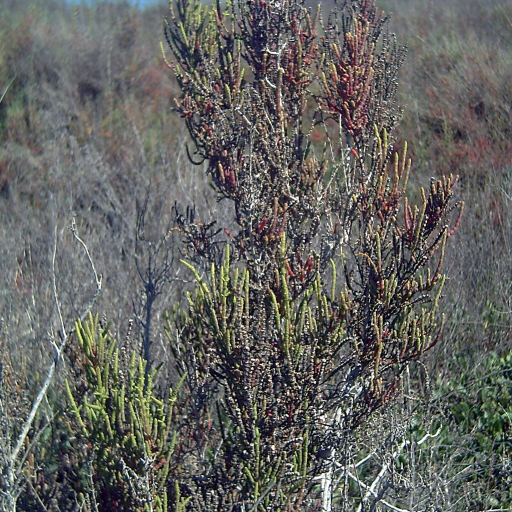
Plant Overview
Commonly known as the Mediterranean Glasswort, this plant looks like a collection of tiny, succulent green sausages linked together. Often found hugging the edges of salt marshes and coastal lagoons, it is a master of survival in environments where most plants would wither. It has been a silent witness to Mediterranean history, thriving in soils so salty they glisten like snow.
🔍 How to Identify
- 🌵 Stem Structure: Features segmented, cylindrical, and fleshy stems that look "jointed" or like tiny beads stacked on a string.
- 🍃 Leaf Reduction: The leaves are reduced to tiny, inconspicuous scales that wrap around the stem joints to prevent water loss in harsh winds.
- 🎨 Color Profile: Usually a dull glaucous green, but it often turns a striking crimson or deep purple during periods of high salt stress or winter chill.
🏡 In Your Garden
- 🧂 Saline Specialist: This isn't your average backyard plant; it is a "halophyte," meaning it specifically craves salt-rich soils. It is perfect for coastal "Xeriscaping" where sea spray kills other greenery.
- ☀️ Solar Powered: It demands full, unfiltered sun to maintain its tight, beaded growth. In shaded spots, the segments become thin, weak, and lose their ability to change colors.
⚠️ Safety & Toxicity
- ✅ Safe Status: This plant is generally considered non-toxic to humans and common household pets.
- 👅 Salt Content: While it is a relative of the edible Samphire, it is exceptionally high in salts and oxalates. Ingesting large amounts may lead to a very thirsty pet or an upset stomach due to the mineral concentration.
✨ Fun Fact
The Arthrocaulon macrostachyum acts like a living desalination plant; it stores excess salt in its fleshy outer segments and eventually sheds the most salt-saturated "beads" to protect the rest of the plant from dehydration!

Detailed Care Instructions

Place in a bright room that is sun drenched almost all day. Or directly in a south-facing window.

Some plants require more regular watering than others, which should be done every few days. It's critical to maintain the soil moist all of the time. The water requirements of the same plant placed in pots with varying sizes will differ. Because the water in the smaller pot evaporates faster than the water in the larger pot, it will require more watering. Regardless of pot size, the surface should constantly be maintained moist.








