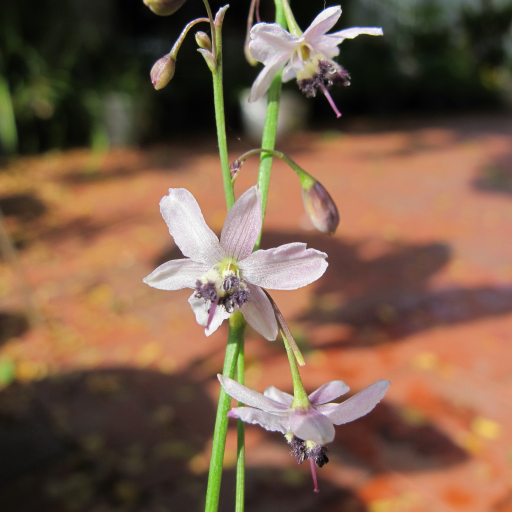
Plant Overview
Known as the Pale Vanilla Lily, this delicate Australian wildflower is a sensory delight for any woodland garden. It earns its name from the soft, sweet fragrance that wafts from its blossoms on warm afternoons, often described as a mix of vanilla and roasted chocolate. While it looks like a fragile meadow grass for most of the year, it transforms into a cloud of nodding stars during the spring.
🔍 How to Identify
- 🍃 The Foliage: Long, narrow, grass-like leaves that form a soft, tufted mound. The leaves are usually a dull green and can grow up to 60cm long, often arching gracefully toward the ground.
- 🌸 The Blooms: Dainty, six-petaled flowers that range from pure white to a soft, pale mauve. They hang face-down (nodding) from tall, wiry stems that rise well above the foliage.
- 🍇 The Details: Look closely at the center of the flower; you’ll see tiny, fringed appendages on the stamens, which is a signature trait of the Arthropodium genus.
🏡 In Your Garden
- 🌱 The Invisible Life: This plant is a "geophyte," meaning it grows from small, fleshy underground tubers. If the weather gets too dry or cold, the leaves may die back completely, but don't panic—the plant is simply resting underground and will sprout again when the rain returns.
- 🦋 Pollinator Magnet: Because of its heavy scent and nectar-rich flowers, it is a favorite for native bees and butterflies. Planting it in drifts (groups) creates a more significant visual impact and a stronger "scent trail" for local wildlife.
- clay Soil Preference: It is surprisingly hardy and isn't picky about soil, provided it isn't sitting in a swamp. It actually thrives in heavier clay soils that many other lilies find difficult to penetrate.
⚠️ Safety & Toxicity
- 🟢 Status: Generally considered non-toxic and safe for a family garden.
- 🍽️ Edibility: Historically, the small tubers were a source of food for Indigenous Australians, who roasted them like tiny potatoes. However, always ensure a positive identification before tasting any wild plant, and avoid eating garden specimens treated with chemical fertilizers or pesticides.
- 🐾 Pets: While not listed as a high-risk plant for cats or dogs, it is always best to discourage pets from digging up and eating the tubers.
✨ Fun Fact
The specific epithet milleflorum literally translates to "thousand-flowered." While a single stem might not actually hold a thousand blooms, a well-established colony in the wild can create the illusion of a shimmering, floral mist across the forest floor.

Detailed Care Instructions
To grow Arthropodium milleflorum, also known as mauī ngaio, you can follow these steps:
- Obtaining seeds or plants: You can purchase seeds or young Arthropodium milleflorum plants from nurseries, garden centers, or online seed suppliers.
- Choosing a suitable location: Arthropodium milleflorum prefers a well-draining soil and a location with full sun to partial shade. Ensure the area has good air circulation to prevent fungal diseases.
- Preparing the soil: The soil should be loose, fertile, and rich in organic matter. If the soil is heavy or clayey, you can improve drainage by adding organic matter, such as compost or well-rotted manure.
- Planting seeds: Sow the seeds directly into the prepared soil during the spring or autumn months. Lightly cover the seeds with a thin layer of soil and water gently. Maintain a consistent level of moisture until the seeds germinate, which can take several weeks.
- Transplanting containers or seedlings: If you purchased young Arthropodium milleflorum plants, carefully remove them from their containers and plant them at the same depth as they were in the pot. Space the plants about 12-18 inches apart to allow for spreading.
- Watering: Water the plants regularly, especially during dry periods, to keep the soil consistently moist but not waterlogged. Avoid overwatering, as this can cause root rot.
- Mulching: Applying a layer of organic mulch around the plants will help conserve moisture, suppress weeds, and regulate soil temperature.
- Fertilizing: Feed the plants with a balanced, slow-release fertilizer in the spring and autumn. Follow the instructions on the fertilizer package for the right dosage.
- Pruning: Remove any dead or diseased leaves and flowers as needed throughout the growing season. This will promote healthy growth and prevent the spread of diseases.
- Overwintering: In regions with frost or very cold winters, Arthropodium milleflorum may need protection. Provide a layer of mulch or cover the plants with frost cloth to insulate them during freezing temperatures.
- Propagation: Arthropodium milleflorum can also be propagated by division. Every few years, dig up the plant, divide the clumps into smaller sections, and replant them to create new plants.
By following these guidelines, you should be able to successfully grow Arthropodium milleflorum in your garden. Remember to adjust care based on your specific climate and region.

To properly water this particular plant, it is important to first understand its specific watering needs. Arthropodium Milleflorum plants prefer moderate watering, with soil that is kept consistently damp but not waterlogged.
To water this plant, begin by checking the soil moisture levels. Inserting your finger into the soil can help determine if it is dry or moist. If the top inch of soil feels dry to the touch, it's time to water.
When watering, use room temperature water and pour it slowly and evenly, avoiding getting water directly on the foliage. Allow the water to fully soak into the soil, taking care not to overwater, as this can lead to root rot and other issues.
It's important to note that the watering needs of Arthropodium Milleflorum plants may vary depending on factors such as humidity levels, temperature, and the type of soil it is planted in. Therefore, it is important to monitor the plant and adjust watering accordingly to ensure its overall health and growth.
To fertilize this plant, use a well-balanced fertilizer with equal parts of nitrogen, phosphorus, and potassium. Apply the fertilizer once a month during the growing season, which is typically from spring to summer. Be careful not to over-fertilize as it can lead to leaf burn or other plant health issues. Always read and follow the instructions on the fertilizer packaging. Water the plant thoroughly after each fertilization.
Arthropodium Milleflorum prefers a well-draining soil with good water retention capacity. The soil should have a slightly acidic to neutral pH between 6.0 to 7.5. The plant can tolerate a range of soils including sandy, loamy, and clay soils, but it is important that the soil is not waterlogged. As the plant is native to New Zealand, it prefers soils that are rich in organic matter such as compost or leaf mould. It is recommended to amend the soil with organic matter before planting and to mulch around the plant to retain moisture in the soil.
Arthropodium Milleflorum is a plant that can be propagated through division. The process involves separating the plant clumps into smaller sections. To begin, dig up the entire plant, being careful not to damage the roots. Once the plant is removed from the soil, gently separate it into smaller sections using your hands or a sharp knife. Each section should have its own set of roots and foliage.
Next, prepare new planting locations for the divided sections. Choose an area with well-draining soil and partial shade. Plant each section at the same depth it was growing previously, making sure the roots are adequately covered but the foliage remains above ground.
Water the newly planted sections thoroughly and keep the soil consistently moist for the first few weeks. After that, water when the top one inch of soil feels dry to the touch. Do not overwater, as this can lead to root rot.
Propagation through division is typically done in the spring or fall, when the plant is not actively growing. This gives the new plants time to establish themselves before the hot summer or cold winter months. With proper care, new growth should emerge within a few weeks, and the divided sections should continue to grow and thrive.








