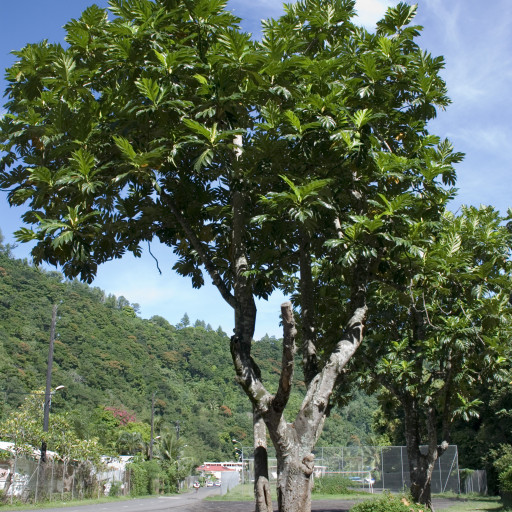
Plant Overview
Known as the "Breadfruit," Artocarpus altilis is a legendary tropical giant that has sustained Pacific islanders for millennia. Its name comes from the fruit's unique texture; when roasted or baked, it smells and tastes remarkably like freshly baked sourdough bread. Often called a "tree of life," a single tree can produce fruit for decades, providing a massive amount of nutrition with very little maintenance.
🔍 How to Identify
- 🍃 Lush Foliage: It features enormous, glossy dark-green leaves that are deeply lobed, often resembling a giant's hand or an ornate paper cutout.
- 🌕 The Fruit: The fruit is large and round with a textured, "pebbled" green skin that turns slightly yellowish or develops brown spotting as it matures.
- 🥛 Milky Sap: Every part of the tree—from the trunk to the fruit—contains a thick, sticky, white latex (sap) that leaks out if the plant is nicked or cut.
🏡 In Your Garden
- 🏝️ Tropical Soul: This tree is a true child of the tropics; it craves high humidity and consistent warmth. It will stop growing or suffer damage if temperatures drop below 60°F (15°C).
- 🏗️ Deep Foundations: Breadfruit trees develop powerful taproots. Because of this, they "hate" being moved once established and require deep, well-draining soil to accommodate their massive eventual size.
- 💨 Wind Protection: While sturdy, the large leaves can act like sails in a storm; young trees appreciate being planted in a spot protected from heavy, drying winds.
⚠️ Safety & Toxicity
- ✅ Safe Staple: The fruit is a non-toxic, highly nutritious carbohydrate source for humans and is generally considered safe for pets if they happen to nibble a fallen leaf.
- 🧤 Latex Warning: The white milky sap is extremely sticky and can cause mild skin irritation or "contact dermatitis," especially for those with latex allergies. It is best to wear gloves when pruning or harvesting.
✨ Fun Fact
⚓ The Bounty Legend: In 1789, the famous "Mutiny on the Bounty" occurred because the ship's crew grew resentful of their captain, William Bligh, who was obsessed with transporting hundreds of breadfruit saplings from Tahiti to the Caribbean to serve as a cheap food source.

Detailed Care Instructions
To grow Artocarpus Altilis, also known as breadfruit, follow these steps:
- Obtain a healthy breadfruit plant from a reputable nursery or source. You can choose to either purchase a young breadfruit tree or grow it from seeds. If starting from seeds, use fresh seeds and soak them in water for 24 hours before planting.
- Choose a suitable planting location with full sun exposure. Breadfruit trees thrive in tropical or subtropical climates with temperatures above 65°F (18°C).
- Prepare the soil by ensuring it is well-draining and rich in organic matter. Add compost or well-rotted manure to improve soil fertility and structure.
- Dig a hole that is wider and deeper than the plant's root ball. Gently untangle and loosen the roots before placing the plant into the hole. Ensure the top of the root ball is level with or slightly above the soil surface.
- Backfill the hole with soil, gently firming it around the base of the tree. Water the planting area thoroughly to settle the soil and remove any air pockets.
- Mulch around the base of the tree with organic materials like wood chips or straw. This helps retain soil moisture, suppress weed growth, and provide additional nutrients as it breaks down.
- Water regularly to keep the soil consistently moist but not waterlogged. Reduce watering during periods of heavy rainfall.
- Apply a balanced organic fertilizer every three months to provide essential nutrients. Follow the package instructions for proper dosage.
- Prune the breadfruit tree annually to remove dead or damaged branches and promote a desired shape or size. Pruning is best done during the tree's dormant period.
- Protect the young tree from strong winds and frost by providing a sheltered location or temporary cover during extreme weather conditions.
- Harvest the breadfruit once it reaches maturity, which can take around 9 to 10 months. The fruit should be firm, green, and have a ripe fragrance. Cut the fruit from the tree, leaving a short stem intact.
By following these steps and providing proper care and attention, you can successfully grow Artocarpus Altilis and enjoy its delicious fruits.

Place in a bright room that is sun drenched almost all day. Or directly in a south-facing window.

Artocarpus Altilis plant is a tropical tree that is commonly known for producing a certain fruit. When it comes to watering this plant, it is important to maintain a consistent routine that depends on the environmental conditions of where it is being grown. Here is a guide on how to water an Artocarpus Altilis plant:
1. Observe the soil: Before watering this plant, it is important to check the soil around it. The soil should be moist, but not soaking wet. If the soil is dry to the touch, it is time to water the plant.
2. Water quantity: The amount of water that the plant requires depends on the size of the pot or container it is growing in. A general rule of thumb is to water the plant until the water drains out of the bottom of the pot.
3. Water frequency: The frequency of watering depends on the temperature and humidity of the environment. In warmer conditions, the plant may require more frequent watering. It is recommended to water the plant every two to three days.
4. Water quality: Artocarpus Altilis plant prefers well-draining soil and requires moderate watering. Tap water can contain chemicals and minerals that are harmful to the plant. It is best to use distilled water or rainwater.
5. Check for drainage: Ensure the pot or container being used has proper drainage holes. Roots that remain in standing water can develop root rot or other plant diseases.
6. Monitor the plant: Monitor the plant and adjust the watering schedule as needed. Overwatering can lead to root rot and other issues, while underwatering can cause the leaves to wilt and dry out.
To fertilize the Artocarpus Altilis plant, mix a balanced, slow-release fertilizer that contains equal parts of nitrogen, potassium, and phosphorus. Apply the fertilizer at the base of the plant, avoiding contact with the stem and leaves. Water the plant thoroughly after applying the fertilizer to help it absorb the nutrients. Fertilize the plant every four to six weeks during its growing season, which is typically from spring to fall. Avoid fertilizing the plant during the winter months when it is dormant.
The soil that is suitable for Artocarpus Altilis plant should have good drainage and moderate fertility. Loamy soils with a pH level of 5.5-7.0 are ideal for the growth and development of this plant as it allows for a sufficient range of nutrients. It is recommended that the soil be well drained as waterlogging can be detrimental to the plant's health.
The ideal soil mix can be composed of equal parts of sand, perlite, and loam, with a small amount of organic matter. A mix of compost and well-rotted manure can be added to the soil to provide nutrients, improve soil structure, and retain moisture.
Regular application of fertilizers rich in potassium, nitrogen and phosphorus can ensure healthy growth of the plant. However, excessive use of fertilizers could lead to problems such as root burn. Additionally, It's essential to monitor the soil's moisture levels, and keep it damp without over watering.
To propagate this plant, start by selecting healthy and mature branches from the parent plant. Using a sharp and sterile pruning tool, make a clean cut of the stem at a 45-degree angle. Remove any leaves or flowers from the lower part of the stem.
Next, prepare a container with well-draining soil and create a hole in the soil with a pencil or similar object. Dip the cut end of the stem in rooting hormone powder and insert it into the hole in the soil. Gently press the soil around the stem to secure it in place.
Water the soil immediately after planting until it is damp, but not waterlogged. Cover the container with a clear plastic bag to create a mini greenhouse and place it in a warm and bright location, avoiding direct sunlight. Mist the soil and inside of the bag regularly to keep the environment moist.
After a few weeks, check for root growth by gently tugging on the stem. If you feel resistance, it means roots have formed and the plant is ready to be moved to a larger container with fresh potting soil. Gradually acclimate the plant to more light and less humidity by removing the plastic bag for longer periods each day.
Continue to care for the plant by providing it with regular water, fertilization, and pruning as needed. With proper care, the propagated Artocarpus Altilis plant will grow into a healthy and productive tree.
Common pests of the breadfruit include Scale insect, mealybugs, spider mites, thrips. Make a habit of checking your breadfruit frequently for pests so that any infestations can be caught and managed early.








