Plant Overview
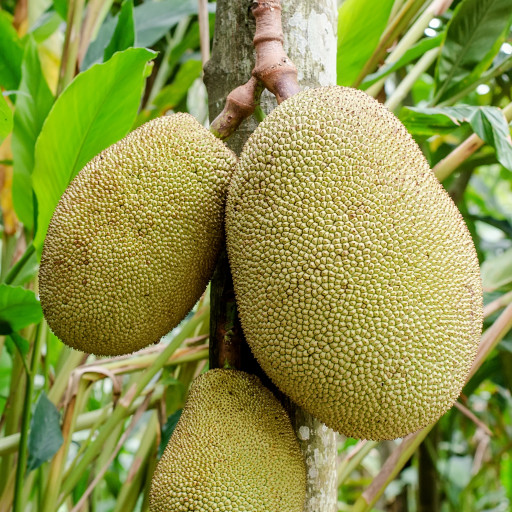
The Jackfruit, often called the "King of Fruits" in South Asia, is a prehistoric-looking giant that holds the title for the largest tree-borne fruit in the world. Native to the rainforests of India’s Western Ghats, this tropical evergreen has become a global superstar as a "miracle crop" due to its ability to mimic the texture of pulled pork when unripe. In many cultures, it is a symbol of fertility and abundance, often planted near homes to ensure the family never goes hungry.
🔍 How to Identify
- 🍃 Glossy Foliage: The leaves are thick, leathery, and a deep emerald green. They are typically oval-shaped, though young saplings may have lobed leaves that look quite different from the adults.
- 🍈 The Great Fruit: The most striking feature is the massive, oblong fruit that grows directly from the trunk or main branches (cauliflory). Its skin is covered in thousands of small, blunt green spikes.
- 💧 Milky Latex: If you snap a leaf or nick the bark, the tree exudes a thick, white, and incredibly sticky sap that resembles Elmer's glue.
🏡 In Your Garden
- 🌳 The Taproot Rule: Jackfruit trees develop a very long, sensitive taproot early in life. This means they absolutely hate being moved; once you plant one, it should stay there forever, or the tree may sulk and die.
- ☀️ Tropical Hunger: These are not "indoor" plants for long. They require full sun and deep, well-draining soil to support their massive weight. They are extremely sensitive to frost and will drop leaves if the temperature dips near freezing.
- 🏗️ Structural Space: Because the fruits can weigh up to 100 pounds, the tree needs space to grow a sturdy, thick trunk. Avoid planting them too close to power lines or your home's foundation.
⚠️ Safety & Toxicity
- ✅ Status: Generally safe and highly nutritious for humans.
- 🧪 Latex Warning: The sticky white sap contains natural latex. People with latex allergies should wear gloves when pruning the tree or carving the fruit to avoid skin irritation or more serious reactions.
- 🐾 Pet Caution: While the fleshy "bulbs" are safe, the large seeds should never be fed to dogs or cats as they can cause intestinal blockages or choking hazards.
✨ Fun Fact
A single Jackfruit tree can produce up to 200 massive fruits in a year, and a single fruit can weigh as much as a standard golden retriever (about 55 kg or 120 lbs)!

Detailed Care Instructions
| Color | Green |
| Soil Ph | Acidic, Neutral, Alkaline |
| Lighting | Full Sun |
| Soil Type | Loamy, Moist, Well-Drained |
| Bloom Time | Seasonal |
| Plant Type | Tree |
| Mature Size | 30-70 Ft. Tall, 20-50 Ft. Wide |
| Native Area | Asia |
| Sun Exposure | Full |
| Hardiness Zones | 10-12 |
To grow an Artocarpus Heterophyllus plant, commonly known as jackfruit, follow these steps:
- Climate and location: Jackfruit trees thrive in tropical climates with temperatures consistently between 25-35°C (77-95°F). Select a sunny location with well-draining soil for planting.
- Seeds or seedlings: Jackfruit can be grown from seeds or young seedlings. If using seeds, soak them in water for 24 hours before planting to enhance germination. Choose fresh seeds from a ripe jackfruit.
- Germination: Plant the pre-soaked seeds about 2 inches deep in a pot or directly in the ground. Water the soil regularly, keeping it moist but not waterlogged. Germination can take 3-8 weeks, so be patient.
- Transplanting: Once the seedlings grow to about 6-8 inches tall with a few leaves, they can be transplanted into larger pots or the ground. If starting with seedlings, ensure they are young and healthy.
- Soil preparation: Jackfruit grows best in well-draining and slightly acidic soil. Amend the soil with organic matter, like compost or well-rotted manure, to improve its fertility and drainage.
- Planting: Dig a hole twice as wide and deep as the root ball of the seedling. Gently place the seedling into the hole, ensuring the top of the root ball is level with or slightly above the soil surface. Fill the hole back with soil, gently firming it around the roots.
- Watering and mulching: Water the plant deeply after planting and continue to provide regular watering to keep the soil consistently moist. Apply a layer of organic mulch around the base of the plant to conserve moisture and suppress weed growth.
- Fertilization: Jackfruit trees benefit from regular fertilization. Apply a balanced, slow-release fertilizer every 2-3 months during the growing season. Additionally, supplement with additional organic fertilizers like compost or fish emulsion.
- Pruning and shaping: Prune the tree regularly to maintain its shape and remove any dead, damaged, or crossing branches. Pruning also helps improve airflow and sunlight penetration throughout the tree's canopy.
- Pest and disease control: Monitor the plant for any signs of pests or diseases, such as aphids, mealybugs, or fungal infections. Treat any issues promptly using organic or chemical remedies if necessary.
- Harvesting: Jackfruit fruits typically take 3-8 years to mature and bear fruit. Harvest the fruit when it reaches its full size, changes color (from green to yellow or brown), and emits a distinctive smell. Carefully cut the fruit from the tree using a sharp knife.
Remember that growing jackfruit requires patience as it takes several years for the tree to bear fruit. However, with proper care, you can enjoy the unique and delicious fruits that jackfruit trees produce.

Place in a bright room that is sun drenched almost all day. Or directly in a south-facing window.

To water the plant commonly known as Artocarpus Heterophyllus, it is important to first identify the soil moisture level. This can be done by sticking a finger into the soil to a depth of about an inch, as this will give a good idea of whether the soil is dry or moist.
If the soil feels dry to the touch, it is time to water the plant. The best way to water this plant is to slowly pour water into the soil around the base of the plant until it starts to seep out of the bottom drainage holes. It is important to not water too quickly or too much, as this can cause the soil to become waterlogged and drown the roots.
In general, it is recommended to water this plant once a week, or more frequently if it is located in a very hot or dry environment. In addition, it is important to make sure the plant is getting enough sunlight and nutrients, as this will help it to grow and thrive. Regular pruning can also help to keep the plant healthy and promote new growth.
To fertilize this plant, use a balanced fertilizer with an NPK ratio of 10-10-10. Apply the fertilizer once a month during the growing season, from spring to fall. Dilute the fertilizer according to package instructions and water the plant thoroughly after application. Do not fertilize during the plant's dormancy period or if the soil is already rich in nutrients. Over-fertilization can cause leaf burn and damage to the roots.
The preferred soil for the Artocarpus Heterophyllus plant should be rich in organic matter and well-draining. A soil that is slightly acidic with a pH range of 5.5 to 6.5 is ideal for optimal growth. The soil should also be able to retain moisture well, as the plant requires consistent watering. Adding compost or aged manure to the soil prior to planting can help ensure the soil provides the necessary nutrients for the plant's growth. It is also recommended to fertilize the soil regularly with a balanced fertilizer to promote healthy growth and fruit development.
To propagate this plant species, you can start by selecting a healthy and mature plant from which to take cuttings. Using a clean and sharp knife, take stem-cuttings that are around 6-8 inches in length with a few leaves attached. Remove any leaves that are close to the bottom of the stem-cutting.
Once the cuttings have been taken, you will need to prepare a rooting hormone solution to encourage root growth. Dip the base of each stem-cutting into the solution and plant the cuttings into a well-draining soil mix that is moistened and has good drainage. Keep the soil moist but not waterlogged, and place the cuttings in a bright and warm location where they will receive partial shade.
Over time the plant should start to root and develop new growth. Once the new growth has reached a size of about 6-8 inches, they can be potted on or transplanted to their desired location. With proper care, this plant can be successfully propagated and grown for many years.
Common pests of the jackfruit include Scale insect, mealybugs, spider mites, thrips. Make a habit of checking your jackfruit frequently for pests so that any infestations can be caught and managed early.








