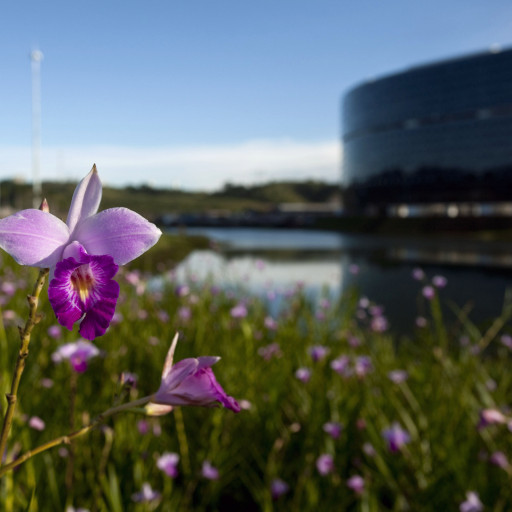
Plant Overview
Often called the Bamboo Orchid, this terrestrial beauty offers a masterclass in botanical deception. At first glance, its tall, reedy stalks look like common bamboo or a clump of wild grass, but it surprises the eye with large, showy blooms that rival the most expensive greenhouse orchids. Originally hailing from the tropical landscapes of Asia, it has become a favorite for those who want orchid-level beauty without the fuss of delicate epiphytic care.
🔍 How to Identify
- 🌿 The Foliage: The leaves are narrow, lance-shaped, and arranged alternately along the stem, looking remarkably like decorative grass or young bamboo shoots.
- 🌸 The Bloom: The flowers emerge at the very tips of the reeds, featuring vibrant shades of pink or lilac with a deep purple or yellow-streaked "lip," closely resembling a Cattleya orchid.
- 📏 The Stature: Unlike tiny potted orchids, this species grows in upright clumps, often reaching heights of 3 to 5 feet, creating a vertical architectural statement in any space.
🏡 In Your Garden
- 🪴 Terrestrial Habit: Unlike many orchids that grow on trees, the Bamboo Orchid grows directly in the ground. It prefers rich, well-draining organic soil rather than the chunky bark mixes used for typical indoor orchids.
- ☀️ Sun Seeker: This is one of the few orchids that truly craves light. It needs significant brightness to trigger its blooming cycle; in too much shade, it will produce plenty of green "bamboo" but zero flowers.
- 💧 Constant Moisture: Because it lacks the thick, water-storing bulbs found in other orchid species, it has very little drought tolerance. It likes its soil to stay consistently moist, especially during the peak of summer heat.
⚠️ Safety & Toxicity
- ✅ Non-Toxic Status: Arundina graminifolia is generally considered safe and non-toxic for humans, cats, and dogs.
- 🌾 Physical Texture: While chemically safe, the tall, thin reeds can be somewhat fibrous and tough. If a curious pet decides to chew on the leaves, it might cause mild stomach upset simply due to the rough fiber content.
✨ Fun Fact
In Hawaii and parts of the Caribbean, the Bamboo Orchid is so hardy that it has "escaped" gardens and now grows wild along roadsides and volcanic slopes, often being the first flower to colonize disturbed tropical soil!

Detailed Care Instructions
| Lighting | Full Sun |
| Hardiness Zones | 10B - 11 |
To grow Arundina graminifolia, also known as the bamboo orchid, follow these steps:
- Selecting a suitable site: Choose a location that receives bright, indirect sunlight. The plant needs at least 4-5 hours of sunlight daily. Ensure the site has well-draining soil for optimal growth.
- Preparing the soil: Arundina graminifolia prefers slightly acidic to neutral soil. Prepare the soil by adding organic matter, such as compost or well-rotted manure, to improve drainage and fertility.
- Planting process: Either purchase a young Arundina graminifolia plant from a nursery, or propagate from a healthy orchid division. Dig a hole deep enough to accommodate the plant's roots and place it in the hole. Backfill the hole with soil, ensuring the plant is at the same depth as it was in the nursery pot. Gently tamp down the soil around the plant to remove any air pockets.
- Watering: Keep the soil consistently moist, but not waterlogged. Provide water whenever the top inch of soil feels dry. Avoid over-watering, as it can lead to root rot.
- Fertilizing: Apply a balanced orchid fertilizer every 2 to 4 weeks during the growing season (spring and summer). Follow the package instructions for the correct dosage. Reduce or stop fertilization during the dormant period in fall and winter.
- Providing support: As the Arundina graminifolia grows, it will need support to prevent the tall stems from bending or breaking. Place stakes or trellises near the plant and gently attach the stems with soft plant ties or twine.
- Pruning: Remove spent flowers regularly to encourage new growth and blooming. In early spring, cut back any dead or damaged stems to promote healthy growth.
- Temperature and humidity: Arundina graminifolia prefers warm temperatures between 70-85°F (21-29°C) during the day and a slight drop at night. It thrives in high humidity, around 60-70%. You can increase humidity by misting the leaves with water or placing a tray of water near the plant.
- Transplanting: Arundina graminifolia can be divided and transplanted every 2-3 years. Gently remove the plant from the soil, separate the rhizomes, and replant them in fresh soil.
- Pests and diseases: Monitor the plant for pests like aphids, mealybugs, or scale. Treat infestations promptly with appropriate pesticides or insecticidal soaps. Ensure good air circulation to prevent fungal diseases like root rot.
By following these guidelines, you should be able to successfully grow Arundina graminifolia and enjoy its beautiful bamboo orchid blooms.

Place in a window with dappled sun or a spot in the middle of a room. Or directly in a window facing west or east.

To properly water this plant, first check the soil moisture by sticking your finger about 2 inches into the soil. If it feels dry, it’s time to water. Use a watering can or hose with a gentle flow to avoid disturbing the soil and roots. Water slowly until you see water begin to seep out of the drainage holes in the bottom of the pot or container. Wait until the soil has fully drained before returning the plant to its regular location. It’s important not to let this plant sit in standing water, as it can promote root rot. Keep the soil consistently moist but not waterlogged, and adjust the frequency of watering based on the temperature and humidity in your growing environment.
To fertilize this particular plant, use a balanced fertilizer with an N-P-K ratio of 10-10-10 or 20-20-20. During the active growing season, fertilize once every two weeks with half-strength fertilizer. Avoid fertilizing during the winter months when the plant is dormant. Always water the plants thoroughly before and after applying fertilizer.
Arundina graminifolia plant thrives well in well-draining soil with moderate moisture content. The soil should be moderately fertile with a pH level of around 6.0 to 7.0. It is recommended to use a soil mix that is rich in organic matter and sandy in texture. This type of soil provides good aeration and drainage, which is crucial for the root health of the plant. It is also important to avoid using heavy clay or waterlogged soil, as this can lead to root rot and other fungal diseases. Additionally, adding perlite or sand to the soil mix can help improve drainage and prevent waterlogging.
Arundina graminifolia is a flowering plant that can be propagated through division or stem cuttings.
Propagation by division involves separating a healthy, mature plant into smaller sections that can be replanted. To do this, gently dig up the entire plant and use a sharp, clean knife to cut through the rhizomes (underground stems) to create smaller sections. Each section should have at least two or three stems and a healthy root system. Replant the sections in well-draining soil and keep them evenly moist until new growth appears.
Propagation by stem cuttings involves taking a stem cutting from a healthy plant and encouraging it to root. Select a healthy stem that is approximately 10-15 cm long and has several leaves. Make a clean cut just below a node (where a leaf attaches to the stem) and remove any leaves from the lower half of the stem. Dip the cut end of the stem in rooting hormone powder and plant it in a pot filled with moist, well-draining soil. Cover the pot with a plastic bag to create a humid environment and keep the soil evenly moist until the cutting roots and new growth appears. Finally, transplant the rooted cutting into a larger container or into the garden.
Both propagation methods require healthy, disease-free parent plants and proper care and attention during the propagation process.
Common pests of the bamboo orchid include Scale insect, mealybugs, spider mites, thrips. Make a habit of checking your bamboo orchid frequently for pests so that any infestations can be caught and managed early.








