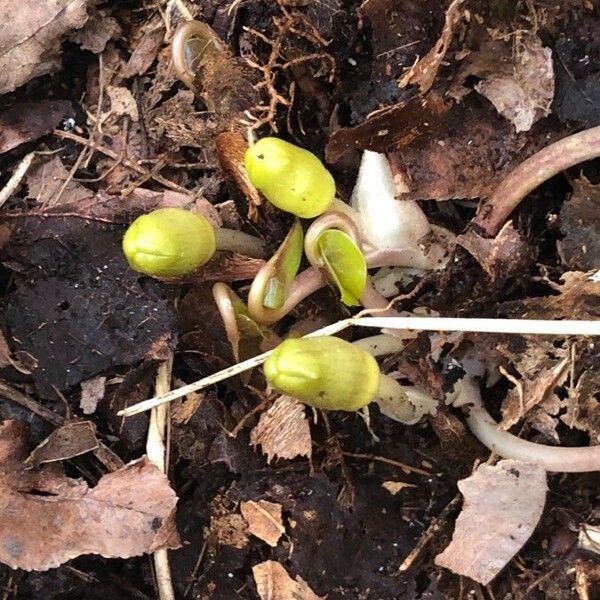
Plant Overview
Meet the shy charmer of the American Southeast, often called the Little Brown Jug or Arrowleaf Wild Ginger. This evergreen perennial is a master of disguise, hugging the forest floor with beautifully mottled leaves that look like they’ve been hand-painted with silver splashes. While it carries the name "ginger," it isn’t a true ginger, though its crushed roots release a spicy, familiar scent that hints at its woodland secrets.
🔍 How to Identify
- 🍃 The Foliage: Look for distinctive arrow-shaped or heart-shaped leaves. They are leathery to the touch and usually feature a striking silver-grey marbling against a deep forest-green background.
- 🏺 The "Jugs": The most famous feature is the flower, though you’ll have to get low to see it. Small, fleshy, brownish-purple blooms shaped like tiny antique jugs hide right at the soil line under the leaf litter.
- 🌱 Growth Habit: This is a low-growing, clumping plant. It doesn't spread aggressively like some groundcovers, instead forming tidy, elegant colonies over many years.
🏡 In Your Garden
- 🌑 The Shade Specialist: This plant is perfect for those "problem" deep-shade spots where grass refuses to grow. It mimics its natural home under oak and pine canopies, thriving in dappled light and acidic, leaf-mold-rich soil.
- ⏳ Patience is Key: Because it grows from a slow-moving rhizome, don't expect an overnight carpet. It’s a "slow and steady" grower that resents being moved once established, so pick its permanent home carefully.
- 🐜 Ant Ambassadors: In your garden, you might notice ants hovering around the base. They are actually the plant's primary "delivery service," carrying seeds away to plant them in new locations in exchange for a tasty snack attached to the seed.
⚠️ Safety & Toxicity
- 🚫 Status: Toxic if Ingested. While it smells like culinary ginger, it is not edible.
- 🧪 The Danger: The plant contains aristolochic acid, a potent compound that can cause severe kidney damage if eaten. Keep a watchful eye on curious pets or toddlers who might be tempted by the low-growing leaves.
- 🖐️ Skin Sensitivity: For most people, touching the leaves is harmless, but those with very sensitive skin may experience mild irritation from the oils in the rhizomes.
✨ Fun Fact
The Little Brown Jug’s flowers aren't designed to attract bees or butterflies. Instead, they evolved to mimic the scent and appearance of certain mushrooms. This "deception" lures in fungus gnats and beetles who crawl into the jugs, inadvertently pollinating the plant while looking for a place to lay eggs!

Detailed Care Instructions
To grow Asarum arifolium, also known as arrowleaf ginger or wild ginger, follow these steps:
- Environmental conditions: Choose a suitable location that provides partial to full shade and has well-drained soil. Asarum arifolium prefers moist and rich organic soil.
- Propagation: You can start growing Asarum arifolium from seeds or divisions. Collect seeds from mature plants in late summer or early fall and sow them directly in the ground or in containers. For divisions, carefully dig up an established plant, separate the clumps, and replant them.
- Planting: Dig a hole or prepare a container that is two times the size of the root ball. Place the plant at the same depth it was growing previously and backfill with soil, gently firming it around the roots.
- Watering: Keep the soil consistently moist but not overly saturated. Regular watering is important, especially during dry spells or in the first year of growth.
- Mulching: Apply a layer of organic mulch around the plant to conserve moisture, suppress weeds, and provide organic matter as it decomposes. Avoid piling mulch against the stem to prevent rot.
- Fertilizing: Asarum arifolium generally doesn't require much fertilization. However, you can apply a balanced, slow-release fertilizer in early spring to boost growth.
- Maintenance: Remove any weeds that may compete with the plant for nutrients. Trim back any dead or damaged leaves in early spring. Once established, the plant will spread through rhizomes, forming a dense ground cover.
- Pests and diseases: Asarum arifolium is relatively pest and disease resistant. However, slugs and snails can sometimes feed on the leaves. Regular inspections and manual removal can help control them.
- Division: Over time, Asarum arifolium forms dense clumps. To rejuvenate crowded plants or propagate more specimens, dig up the clumps in spring or fall, divide them into smaller sections, and replant.
By following these guidelines, you can successfully grow Asarum arifolium and enjoy its attractive foliage and unique flowers.
To water the Asarum Arifolium plant, it is important to follow a few specific guidelines:
- Evaluate the soil moisture: Before watering, first assess the moisture level of the soil. Insert your finger about an inch deep into the soil near the plant's base. If it feels dry at this depth, it indicates that watering is required.
- Water deeply: When watering, ensure that water reaches the plant's root zone. Slowly pour water around the base of the plant rather than directly onto the foliage. Use a gentle stream to avoid any disturbance to the plant or displacing the soil.
- Water moderately: Asarum Arifolium prefers moderate watering rather than excessive moisture. After watering, allow time for the soil to partially dry out before watering again to prevent overwatering. Overwatering can lead to root rot and other moisture-related problems.
- Consider the climate: Climate plays a crucial role in determining the watering frequency for the Asarum Arifolium plant. In hotter and drier regions, it may require more regular watering, while in cooler and humid environments, less frequent watering may be needed.
- Observe the plant's response: Pay attention to how the plant responds to watering. If the leaves start to wilt or turn brown, it could indicate underwatering. On the other hand, if the leaves become yellow or develop fungal issues, it might suggest overwatering. Adjust the watering schedule accordingly based on the plant's needs.
Remember, every plant has its unique watering requirements. It is essential to understand the specific needs of the Asarum Arifolium plant to ensure it receives the right amount of water for optimal growth and health.
To fertilize the Asarum Arifolium plant, follow these instructions:
- Use a balanced, water-soluble fertilizer with equal amounts of nitrogen, phosphorus, and potassium (NPK), such as a 10-10-10 or 20-20-20 formulation.
- Dilute the fertilizer according to the package instructions, usually at a rate of 1 teaspoon per gallon of water.
- Apply the diluted fertilizer to the soil around the base of the plant, avoiding direct contact with the foliage.
- Water the plant thoroughly after fertilizing to ensure the nutrients penetrate the soil.
- Fertilize the Asarum Arifolium plant once every four to six weeks during the spring and summer growing seasons.
- Reduce or stop fertilization in the fall and winter when the plant's growth slows down.
- Monitor the plant's response to fertilization carefully. If you notice excessive leaf growth or any signs of fertilizer burn, reduce the frequency or strength of fertilizer applications.
Remember to always follow the specific fertilizer instructions and consider the plant's individual needs for optimal results.
The Asarum arifolium plant is best cultivated in a well-draining soil that promotes root development and prevents waterlogging. It thrives in a soil mix that is equal parts organic matter and a coarse mineral component. The organic matter can be sourced from compost, leaf mold, or well-rotted manure, which enhance soil fertility and provide essential nutrients for the plant's growth. The coarse mineral component, such as perlite or sand, ensures adequate drainage by preventing soil compaction.
Additionally, the soil should have a slightly acidic to neutral pH, ranging from 5.5 to 7.0, as it adapts well to these conditions. Since Asarum arifolium is native to woodland areas, it prefers a soil that mimics the rich, loamy composition found under the forest canopy. This type of soil supports moisture retention while allowing excess water to drain away, preventing the plant's roots from sitting in wet conditions.
Moreover, the soil should be well-aerated to facilitate proper gas exchange between the roots and the surrounding environment. This helps prevent root rot and other diseases caused by oxygen deprivation.
Overall, choosing a soil mixture that is rich in organic matter, provides good drainage, and has a slightly acidic to neutral pH will create an ideal growing environment for the Asarum arifolium plant.
Asarum arifolium is a perennial evergreen herbaceous plant native to North America. It belongs to the Aristolochiaceae family and is commonly propagated through division and seed germination. Here are the steps to propagate Asarum arifolium:
- Division: Propagation by division is commonly done in early spring when new growth starts to emerge.
- Choose a mature plant that has been growing for a few years and has multiple stems or "crowns".
- Carefully dig up the plant, ensuring you don't damage the roots.
- Gently separate the individual crowns by carefully pulling them apart or using a knife if needed.
- Each divided crown should have a good amount of roots and a few healthy shoots.
- Replant the divided crowns in well-draining soil either in a pot or directly in a prepared garden bed.
- Water thoroughly and provide regular care to aid their establishment.
- Choose a mature plant that has been growing for a few years and has multiple stems or "crowns".
- Seed Germination: Propagation from seeds can be done in late winter or early spring, as cold stratification is required to achieve better germination rates.
- Collect ripe seeds from the plant when the seed capsules turn brown and start to split open.
- Clean the seeds by removing any debris and pulp.
- Fill a seed tray or small pots with a well-draining seed-starting mix.
- Moisten the soil and sow the seeds on the surface, pressing them lightly into the soil.
- Do not bury the seeds as they require light to germinate.
- Place the tray or pots in a plastic bag or cover them with a plastic wrap to create a humid environment.
- Store the tray or pots in a cool place, such as a refrigerator, for 8-12 weeks to fulfill the cold stratification requirement.
- After the stratification period, move the tray or pots to a warm, bright location with indirect sunlight.
- Maintain consistent moisture and ensure the soil doesn't dry out.
- Germination usually takes several weeks or even months, so be patient.
- Transplant the seedlings into individual pots once they have developed a few sets of true leaves.
- Gradually acclimate the young plants to outdoor conditions before planting them in the garden.
By following these propagation techniques, you can successfully propagate Asarum arifolium and enjoy the unique beauty of this plant in your garden or landscape.
- Collect ripe seeds from the plant when the seed capsules turn brown and start to split open.








