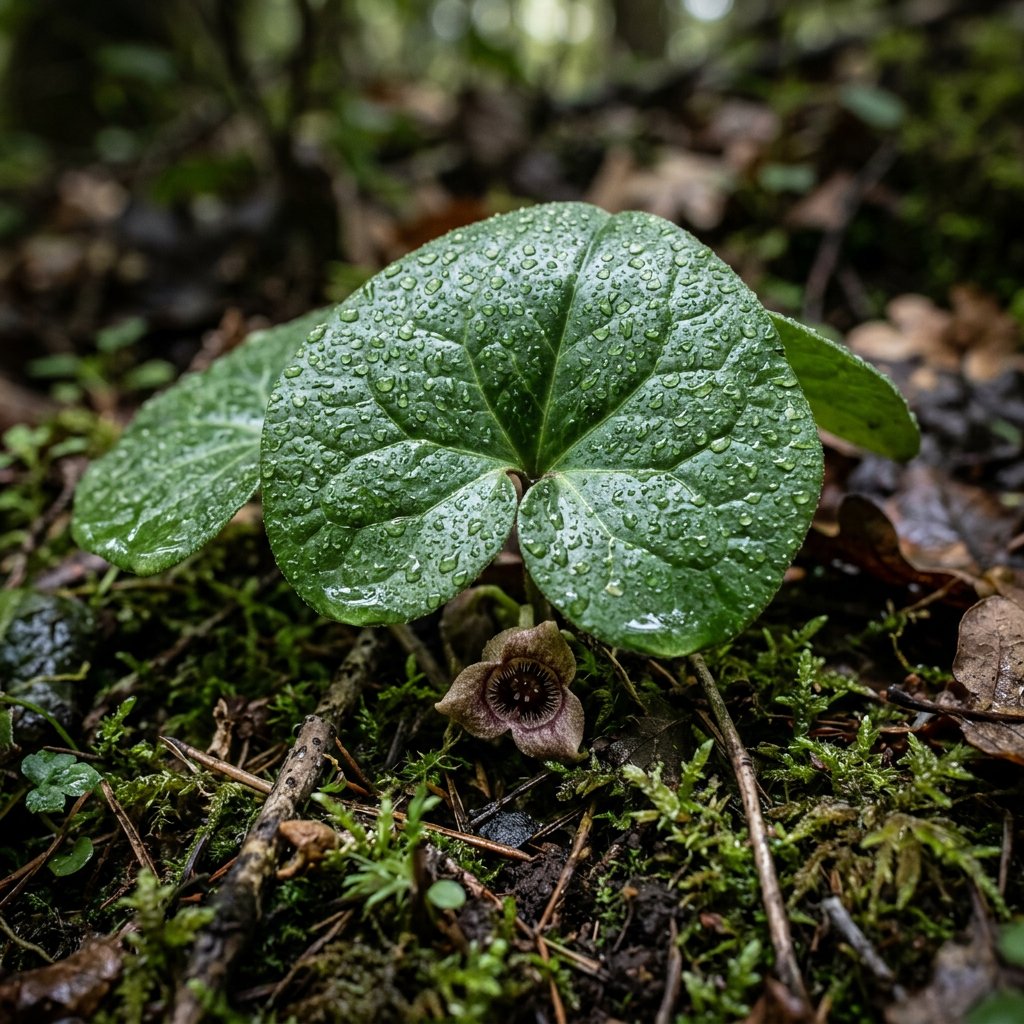
Plant Overview
Known affectionately as the "European Wild Ginger" or "Hazelwort," Asarum europaeum is a woodland aristocrat that carpets the forest floor in deep, glossy emerald. While its crushed leaves release a spicy, peppery aroma reminiscent of culinary ginger, it is actually a member of the Birthwort family. This hardy evergreen is a favorite for shade gardeners looking to add a touch of prehistoric, waxy elegance to the darkest corners of their landscape.
🔍 How to Identify
- 🍃 Lustrous Leaves: The foliage is unmistakable—kidney-shaped, leathery, and remarkably glossy, appearing as if they have been polished with wax.
- 🌸 Hidden Blooms: Look closely at the base of the stems; the plant produces strange, bell-shaped, brownish-purple flowers that hide under the leaves to be pollinated by ground-crawling insects.
- 🌱 Prostrate Growth: It maintains a very low profile, rarely rising more than 4 to 6 inches off the ground, creating a dense and uniform mat of green.
🏡 In Your Garden
- 🌑 The Shade Specialist: This plant is a true "climax" species for the shade. It thrives in deep, cool shadows where most other groundcovers would wither, making it perfect for the north side of buildings or under heavy tree canopies.
- 🐌 Slow and Steady: Unlike invasive ivy, Wild Ginger is a slow mover. It spreads via underground rhizomes at a meditative pace, meaning it won't overwhelm its neighbors, but it does require patience to establish a full carpet. It prefers lime-rich, moist, and humic soils that mimic its native forest floor.
⚠️ Safety & Toxicity
- 🚫 Toxic if Ingested: While it smells like spice, this plant is not edible. It contains aristolochic acid and asarone, which are toxic to humans, cats, and dogs, potentially causing kidney damage if swallowed.
- 🧴 Contact Irritation: Some sensitive individuals may experience mild skin irritation (dermatitis) when handling the roots or crushed leaves. It is best to wear gloves when dividing or planting.
✨ Fun Fact
In centuries past, Asarum europaeum was a key ingredient in "Asarabacca Snuff." This medicinal powder was snuffed up the nose to induce violent sneezing, which was believed to clear the head and cure various ailments of the brain!

Detailed Care Instructions
| Humidity | Normal |
| Lighting | Part Sun |
| Toxicity | Poisonous |
| Difficulty | Medium |
| Hibernation | Cold Period |
| Hardiness Zones | 4 - 8 |
To grow Asarum europaeum, also known as European wild ginger, follow these steps:
- Location: Choose a suitable location with partial to full shade. This plant thrives in woodland garden settings. Ensure the soil is rich, moist, and well-draining.
- Planting: Prepare the planting hole by loosening the soil and removing any weeds or rocks. Dig a hole that is slightly wider and deeper than the root ball. Place the plant in the hole, ensuring that the crown is level with or slightly above the soil surface. Space multiple plants about 12 inches (30 cm) apart.
- Soil preparation: Mix organic matter, such as compost or aged manure, into the soil before planting to improve soil fertility and retain moisture.
- Watering: Water the newly planted Asarum europaeum thoroughly to settle the soil around the root ball. After that, water regularly to keep the soil evenly moist, especially during dry periods. However, avoid overwatering, as the plant prefers moist soil but does not like to sit in waterlogged conditions.
- Mulching: Apply a layer of mulch around the plant, leaving a small space around the crown to prevent rot. Mulching helps conserve moisture, suppresses weeds, and provides insulation during extreme temperatures.
- Fertilization: Fertilization may not be necessary if the soil is already rich in organic matter. However, if growth appears slow or pale, you can apply a balanced organic fertilizer in spring.
- Care: Remove any weeds that compete with the plant for nutrients and water. Trim away any dead or damaged leaves as needed, but avoid severe pruning as Asarum europaeum grows slowly and is best left undisturbed.
- Propagation: Asarum europaeum can be propagated by dividing the plant in spring or autumn. Carefully lift the plant from the ground, divide it into clumps, and replant each clump in a suitable location.
With proper care and attention, Asarum europaeum can grow into a beautiful groundcover plant, providing attractive foliage year-round.

Place in a window with dappled sun or a spot in the middle of a room. Or directly in a window facing west or east.

Asarum Europaeum is a perennial plant that requires consistent watering to thrive. Watering should be done regularly, but not excessively, as the plant prefers moist soil to dry soil.
To water Asarum Europaeum plant, start by checking the soil moisture level by inserting a finger into the soil to a depth of around one inch. If the soil feels dry or slightly moist, it is time to water the plant.
Use a watering can or a hose with a spray nozzle to water the plant gently at the soil level. Avoid watering the leaves or flowers directly, as this can lead to fungal diseases.
Water the plant until the soil is evenly moist, but not waterlogged. Allow the soil to dry out slightly before watering again, as overwatering can lead to root rot.
During the summer months when temperatures are high and the plant is actively growing, it may require more frequent watering. In winter, reduce the frequency of watering to prevent the plant from sitting in waterlogged soil.
Overall, Asarum Europaeum is a low maintenance plant that thrives in consistent moisture levels and well-draining soil.
To fertilize this plant, apply a balanced fertilizer with equal amounts of nitrogen, phosphorus, and potassium in early spring when growth begins. Use a slow-release fertilizer and apply it according to the package instructions. Avoid over-fertilizing as it can cause excessive growth and harm the plant. Water the plant well after fertilizing to help distribute the nutrients throughout the soil.
The ideal soil to use for the plant should be rich and well-draining. It should have a slightly acidic to neutral pH level, ranging from 5.5 to 7.0. The soil should be kept consistently moist but not soggy, and it should have good aeration to promote healthy root growth. Organic matter such as compost or leaf mold can be added to the soil to increase its fertility and water-holding capacity. The plant can be sensitive to high levels of nutrients, so it's important to avoid over-fertilization and instead provide regular applications of a balanced, slow-release fertilizer. Overall, the soil should provide a healthy growing environment that supports the plant's growth and development.
To propagate this plant, take a healthy stem cutting that is around 5-7cm in length. Remove the lower leaves and dip the cut end into rooting hormone powder. Plant the cutting into a well-draining potting mix that is kept moist but not waterlogged. Keep the cutting in a warm, humid environment with indirect light and mist regularly to maintain moisture levels. After a few weeks, roots should begin to form and the cutting can be transplanted to a larger container or planted outside once established.
Common pests of the asarabacca include Thrips, snails. Make a habit of checking your asarabacca frequently for pests so that any infestations can be caught and managed early.








