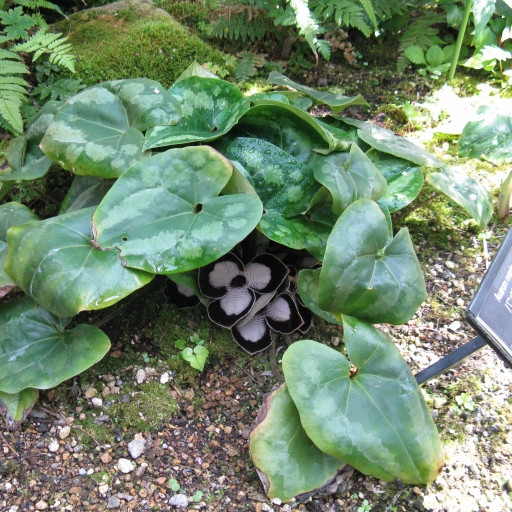
Plant Overview
Often called the Panda Face Ginger, this striking perennial is a hidden gem of the forest floor. Native to the damp, shaded woodlands of China, it is beloved for its dramatic, velvety flowers that look remarkably like the face of a Giant Panda. While it isn’t a true culinary ginger, its lush, heart-shaped foliage creates a luxurious, tropical groundcover in temperate shade gardens.
🔍 How to Identify
- 🐼 The "Panda" Bloom: The most distinct feature is the 2-inch wide, velvety flower. It features a deep charcoal-black exterior with a brilliant white ring around the center, mimicking a panda’s eyes.
- 🍃 Marbled Foliage: The large, heart-shaped leaves are thick and glossy, often reaching 6-8 inches across. They are typically a rich forest green with silvery-mint splashing or "marbling" on the surface.
- 🌱 Low Profile: This plant is a "creeper." It grows via underground rhizomes, keeping a very low profile (about 6-12 inches tall), with the flowers often tucked shyly beneath the leaves near the soil line.
🏡 In Your Garden
- ☁️ The Shade Specialist: This plant is a true "sciophyte," meaning it thrives in deep to partial shade. In the wild, it lives under dense tree canopies, so it will scorch quickly if exposed to direct afternoon sun.
- 💧 Moisture Consistency: Because it lacks a deep taproot, it prefers "goldilocks" soil—consistently moist and rich in organic matter (like leaf mold), but never soggy or sitting in standing water.
- 🐌 Slug Watch: Its fleshy, succulent-like leaves are a five-star meal for slugs and snails. If you see jagged holes in the beautiful marbling, it’s time to look for nighttime visitors.
⚠️ Safety & Toxicity
- 🚫 Toxic if Ingested: Like many members of the Asarum genus, this plant contains aristolochic acid, a known toxin and carcinogen.
- 🐾 Pet & Child Safety: Keep this plant away from curious pets and toddlers. Ingesting any part of the plant can cause severe kidney damage or gastrointestinal distress. It is strictly ornamental and should never be confused with edible ginger.
✨ Fun Fact
Unlike most garden flowers that aim for the sky to attract bees, the Panda Ginger hides its flowers on the ground. It evolved this way to attract ground-crawling pollinators like beetles and flies, who are lured in by the flower's mushroom-like scent and low-light visibility.

Detailed Care Instructions
To grow Asarum maximum, also known as wild ginger, follow these steps:
- Planting: Choose a suitable location with partially shaded to fully shaded conditions, as direct sunlight can scorch the foliage. The soil should be rich, moist, and well-draining. Wild ginger prefers slightly acidic soil with a pH level between 5.5 and 6.5.
- Propagation: Asarum maximum can be propagated through seeds or division of mature plants. Seeds should be sown in a container with a rich potting mix and kept moist until they germinate. Division can be done in early spring or early fall by separating the clumps with a sharp tool.
- Watering: Keep the soil consistently moist, but not waterlogged. Wild ginger prefers moist conditions, so ensure the plant receives regular watering, especially during dry spells.
- Mulching: Apply a layer of organic mulch, such as shredded bark or compost, around the base of the plant. Mulch helps retain moisture, suppress weeds, and regulate soil temperature.
- Fertilizing: Asarum maximum generally does not require excessive fertilization. However, in early spring, you can apply a slow-release balanced fertilizer or a layer of compost to provide necessary nutrients.
- Care: Remove any weeds or dead foliage that may compete with the plant for nutrients and water. Prune any damaged or diseased leaves to maintain the plant's health and appearance.
- Winter protection: Wild ginger is generally hardy and can tolerate freezing temperatures. However, in colder regions, it may benefit from a layer of mulch or evergreen boughs to protect it from extreme cold and temperature fluctuations.
- Pests and diseases: Asarum maximum is relatively resistant to pests and diseases. However, watch for slugs and snails, as they may feed on the foliage. If necessary, use organic slug control methods.
By providing the appropriate growing conditions and care, your Asarum maximum plant should thrive and gradually increase in size over time.

Place in a window with dappled sun or a spot in the middle of a room. Or directly in a window facing west or east.

Asarum Maximum plant should be watered regularly, but not too frequently as it cannot tolerate overwatering. It is important to avoid getting water on the leaves and instead, water the soil around the base of the plant.
This plant prefers slightly moist soil, so it is recommended to wait until the top inch of soil is dry before watering. The frequency of watering may depend on the environmental conditions such as temperature and humidity, as well as the size of the pot and the type of soil.
When watering, add water until it starts to come out of the drainage holes at the bottom of the pot. This will ensure that the entire root ball gets watered and prevent water from sitting in the bottom of the pot. Any excess water should be discarded to avoid waterlogged soil.
During the summer months, the plant may require more frequent watering due to higher temperatures and increased evaporation. In the winter, watering should be reduced to allow the plant to go into dormancy.
To fertilize this plant, use a balanced fertilizer with equal amounts of nitrogen, phosphorus, and potassium. Apply the fertilizer in early spring before new growth emerges and again in midsummer. Mix the fertilizer with water according to the manufacturer's instructions and apply directly to the soil around the plant, avoiding direct contact with the leaves. Water the plant immediately after fertilizing to help the nutrients reach the roots.
Asarum Maximum plant prefers a well-draining soil with a neutral pH level. The soil should contain a combination of organic matter, such as compost, peat moss, or leaf mold, and a light, sandy soil. The plant also requires moderate moisture, so it is necessary to ensure the soil holds water well. It is recommended to mix the soil with perlite or vermiculite to increase its drainage ability and aerate the growing medium. Additionally, the plant should be fertilized with a balanced organic fertilizer every two weeks during the growing season. It is essential to avoid using heavy soil mixtures or soils that tend to compact as they can cause root rot and hinder plant growth.
Asarum Maximum plant can be propagated through division. To do this, select a healthy plant and gently remove it from the soil. Carefully separate the roots and the rhizomes using a sharp and sterilized knife, making sure each division has at least one healthy shoot and a few roots attached. Plant these divisions in separate containers filled with well-draining soil. Water them thoroughly and keep them in a bright, indirect light location. It is also important to keep the soil consistently moist but not waterlogged. The rhizomes should start to produce new shoots and roots within a few weeks. Once the plants have become established, they can be transplanted into a larger container or planted directly in the garden.
Common pests of the wild ginger include Thrips, snails. Make a habit of checking your wild ginger frequently for pests so that any infestations can be caught and managed early.








