Plant Overview
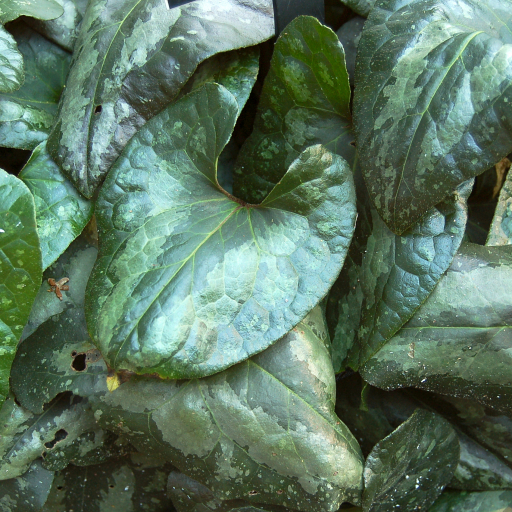
Often called the Chinese Wild Ginger or Showy Wild Ginger, this woodland treasure is a favorite among shade gardeners for its metallic, high-contrast foliage. While it shares a name and a spicy, ginger-like scent with culinary ginger, this plant is purely ornamental and acts as a sophisticated, slow-spreading groundcover. Originating from the damp forest floors of China, it brings a touch of "silver moonlight" to the darkest corners of the garden.
🔍 How to Identify
- 🍃 The Foliage: Large, heart-shaped (cordate) leaves that can grow up to 6 inches long. They are dark forest green with dramatic, irregular silver-gray splashing that looks almost painted on.
- 🌿 Growth Habit: It grows in low, mounding clumps that slowly expand via underground rhizomes. It rarely exceeds 6–10 inches in height.
- 🎭 Hidden Flowers: Dark, velvety, brownish-purple flowers shaped like "little jugs" or "pandas." They bloom in late spring but are often hidden tucked away directly at the soil level beneath the heavy leaves.
🏡 In Your Garden
- ☁️ Shadow Lover: This is a true "deep shade" specialist. It is perfect for those awkward spots under heavy tree canopies or on the north side of a house where grass refuses to grow.
- 💧 Moisture Management: While it loves consistent moisture, it hates "wet feet." Ensure your soil is rich in organic matter (like leaf mold) to allow for drainage while keeping the roots cool and damp.
- 🦌 Natural Repellent: One of its best garden features is its deer resistance. The leaves contain compounds that smell like ginger when crushed, which most browsing animals find unappealing.
⚠️ Safety & Toxicity
- 🚫 Toxic if Ingested: Warning: Asarum splendens contains aristolochic acid, a potent nephrotoxin (kidney toxin) and carcinogen. It should never be consumed.
- 🐾 Pets & Children: Keep this plant away from curious pets and toddlers. While it isn't usually attractive to eat, ingestion can cause serious internal damage.
- 🖐️ Contact: Touching the leaves is generally safe for most people, though those with sensitive skin may experience mild irritation from the plant's oils.
✨ Fun Fact
The flowers of the Chinese Wild Ginger are evolved to be "ground-level" for a reason—they are primarily pollinated by ants and beetles! Furthermore, its seeds have a fatty attachment called an elaiosome that ants love to eat; the ants carry the seeds back to their nests, effectively "planting" the ginger in new locations.

Detailed Care Instructions
Growing Asarum splendens, also known as Chinese wild ginger, can be achieved by following these steps:
- Planting: Choose a suitable location with well-draining soil. The plant prefers partial or full shade, away from direct sunlight. It can tolerate a range of soil types, as long as it is moist and has organic matter.
- Soil preparation: Prepare the soil by loosening it and adding compost or well-rotted manure. This will improve drainage and provide nutrients for the plant.
- Planting method: Dig a hole that is slightly wider and deeper than the plant's root ball. Place the plant in the hole, ensuring that the root crown is level with the soil surface. Backfill the hole with soil, gently firming it around the roots.
- Watering: Asarum splendens prefers consistently moist soil, so water the plant regularly, especially during dry periods. However, avoid overwatering, as it may lead to root rot.
- Mulching: Applying a layer of organic mulch, such as wood chips or leaf litter, around the plant will help retain moisture, suppress weeds, and regulate soil temperature.
- Fertilizing: This plant doesn't require much fertilizer. However, an annual application of balanced organic fertilizer, in early spring, can enhance its growth.
- Maintenance: Remove any dead or decaying foliage to prevent diseases. Additionally, provide winter protection by mulching heavily around the plant.
- Propagation: Asarum splendens can be propagated through division or by collecting and sowing seeds. To divide the plant, dig up the clump during its dormant period and separate the sections using a sharp knife. Replant the divisions at the same depth as before, ensuring they have enough space to grow.
By following these steps and providing the appropriate growing conditions, you can successfully grow Asarum splendens plants.

Place in a window with dappled sun or a spot in the middle of a room. Or directly in a window facing west or east.

To properly water Asarum Splendens, it is essential to consider the plant's specific requirements. Here is a step-by-step guide to help you provide appropriate watering:
1. Check the soil moisture: Before watering, assess the moisture level of the soil by inserting your finger or a moisture meter about 2-3 inches deep into the soil. If it feels dry at this depth, proceed with watering.
2. Choose the right watering method: To prevent waterlogging or overwatering, opt for a gentle watering technique. A suitable method is using a watering can with a narrow spout or a drip irrigation system. This will ensure a slow, controlled application of water.
3. Water at the base of the plant: Direct the water towards the base of the plant, avoiding the leaves as much as possible. This helps minimize the risk of fungal diseases and keeps the foliage dry.
4. Apply water evenly: Make sure to water the entire root zone evenly. Asarum Splendens has shallow roots, so watering the surrounding area as well can help maintain a consistent moisture level.
5. Time of watering: Watering in the morning is generally favorable, as it allows the foliage to dry throughout the day and reduces the risk of rot or diseases caused by prolonged moisture.
6. Monitor soil drainage: Ensure that the pot or planting location has adequate drainage to prevent water from pooling around the plant's roots. Excessive moisture can lead to root rot or other root-related issues.
7. Observe the plant's response: After watering, observe how the plant reacts. If it starts to perk up, it indicates that the watering was sufficient. However, if it appears droopy or shows signs of stress, it may require more water.
8. Adjust watering frequency: Asarum Splendens prefers consistently moist soil but not waterlogged conditions. Depending on factors such as temperature, humidity, and soil type, adjust the watering frequency accordingly. It is advisable to allow the top layer of soil to dry out partially between waterings.
By following these guidelines, you can provide appropriate and effective watering to maintain the health and vitality of your Asarum Splendens plant.
Fertilizing instructions for Asarum Splendens:
- Choose a well-balanced, water-soluble fertilizer specifically formulated for houseplants or shade-loving plants.
- Dilute the fertilizer according to the package instructions, usually at a rate of ½ strength.
- Apply the diluted fertilizer to the soil around the base of the plant, avoiding direct contact with the leaves.
- Fertilize once every two to four weeks during the growing season, typically from spring to early fall.
- Ensure that the soil is moist before applying the fertilizer to prevent potential root burn.
- After applying the fertilizer, water the plant thoroughly to help distribute the nutrients throughout the soil.
- Monitor the plant for any signs of over-fertilization, such as yellowing or burning of the leaves. If this occurs, flush the soil with water to help dilute the excess fertilizer.
- During the dormant period in winter, reduce or stop fertilization as the plant's growth slows down.
- Regularly clean the foliage of the plant to remove any dust or debris, which can hinder nutrient absorption.
- Keep an eye on the plant's overall health and adjust the fertilization frequency or strength as needed based on its growth and appearance.
Asarum Splendens is a perennial plant that requires a specific type of soil for optimal growth. It thrives in well-draining soil that is rich in organic matter. The ideal soil composition for this plant consists of a loamy texture with a slightly acidic to neutral pH level.
A loamy soil helps to retain moisture while allowing excess water to drain properly, preventing the roots from becoming waterlogged. This is especially crucial for Asarum Splendens, as excessive moisture can lead to root rot and other diseases.
Furthermore, the soil should have a high organic matter content, as it enhances fertility and provides essential nutrients for the plant's overall health and growth. Organic matter can be added by amending the soil with compost, leaf mold, or well-rotted manure.
Asarum Splendens prefers a slightly acidic to neutral pH range of 5.5 to 7.0. It is important to test the soil pH periodically to ensure it remains within this range. Adjustments can be made using amendments such as lime to raise the pH or sulfur to lower it, based on the specific requirements of the plant.
In summary, to provide an ideal growing environment for Asarum Splendens, use well-draining loamy soil with a slightly acidic to neutral pH, enriched with organic matter.
To propagate Asarum Splendens, also known as wild ginger or heartleaf wild ginger, you can follow these steps:
- Choose a healthy and mature parent plant: Select a well-established Asarum Splendens plant with vigorous growth and without any signs of diseases or pests.
- Prepare a suitable potting mix: Create a propagation mix by combining equal parts of well-draining soil, such as peat moss or coco coir, and perlite or sand. This mixture will provide a suitable environment for root development.
- Gather suitable containers: Select small pots or trays with drainage holes to ensure proper airflow and avoid waterlogging. Clean the containers properly before use to minimize the risk of diseases.
- Take stem cuttings: Using clean and sharp pruning shears, cut several stem sections from the parent plant. Each cutting should be around 3-4 inches long and have at least two or three nodes, which are small protrusions on the stem where leaves emerge.
- Remove lower leaves: Gently strip off the lower leaves from the lower part of each cutting, leaving a few leaves at the top. This reduces moisture loss and redirects the plant's energy towards root production.
- Dip cuttings in rooting hormone (optional): To improve the chances of successful rooting, you may choose to dip the lower end of each cutting in a rooting hormone powder or gel, following the manufacturer's instructions. This can encourage the development of roots.
- Plant the cuttings: Make small holes in the prepared potting mix using a dibber or your finger. Place each cutting in a hole, ensuring it is inserted deep enough so that at least one node is buried beneath the soil. Gently firm the soil around the cutting to provide support.
- Provide appropriate care: Place the pots in a warm, partially shaded location, as direct sunlight can damage the cuttings. Maintain a consistent level of moisture in the soil by watering them regularly, ensuring they never dry out completely nor become overly saturated.
- Encourage root development: To promote rooting, you can cover the cuttings with a clear plastic bag or place them in a humidity dome. This creates a humid microclimate that aids in moisture retention and reduces the risk of dehydration. Mist the cuttings occasionally to maintain humidity levels.
- Monitor and transplant: Over the next few weeks, keep a close eye on the cuttings for signs of growth, such as the emergence of new leaves. Once they have developed a healthy root system, which can take several months, you can transplant the rooted cuttings into individual pots filled with a suitable potting mix and gradually expose them to more light.
By following these steps, you can propagate Asarum Splendens successfully and expand your collection of these beautiful and unique plants.
Common pests of the chinese wild ginger include Thrips, snails. Make a habit of checking your chinese wild ginger frequently for pests so that any infestations can be caught and managed early.








