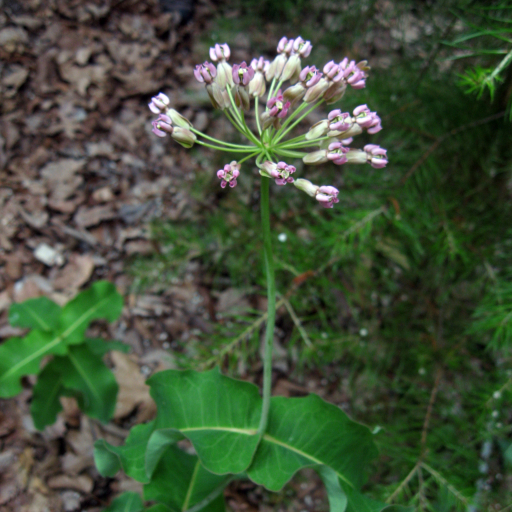
Plant Overview
Often called the Clasping Milkweed, this native North American perennial is a minimalist’s dream and a butterfly’s favorite. It earns its name from the unique way its wavy-edged leaves wrap tightly around the stem as if giving it a perpetual hug. Found primarily in sandy prairies and open woodlands, it is a hardy survivor that offers a sophisticated, muted color palette to any wild garden.
🔍 How to Identify
- 🍃 Clasping Leaves: The most distinct feature; the broad, oval leaves have no stalks (petioles) and heart-shaped bases that completely encircle the stem.
- 🌊 Wavy Margins: Look for leaves with "crinkled" or wavy edges, often highlighted by a pale, creamy-pink vein running down the center.
- 🌸 Spherical Blooms: It produces a single, globe-like cluster of star-shaped flowers at the very top of the stem, usually appearing in shades of dusty rose, pale purple, or translucent green.
🏡 In Your Garden
- 🏜️ The Sandy Specialist: This plant is the ultimate "tough love" species. It thrives in poor, sandy, or rocky soils where other flowers might wilt. Over-fertilizing it can actually cause more harm than good.
- 🌱 Don’t Move Me: Because it develops a very long, deep taproot to find water in dry environments, it is notoriously difficult to transplant. It is best started from seed in its "forever home."
- 🦋 The Monarch Nursery: Like all milkweeds, it is an essential host plant for Monarch butterfly caterpillars. If you see the leaves being eaten, don't panic—it's a sign of a healthy ecosystem!
⚠️ Safety & Toxicity
- 🐾 Toxic to Pets: All parts of the plant contain cardiac glycosides. If ingested in large quantities by dogs, cats, or livestock, it can cause heart rhythm issues or digestive distress.
- 🧤 Sticky Sap: When broken, the stem leaks a thick, milky white latex. This sap can be a skin irritant for humans and should be kept away from the eyes.
✨ Fun Fact
The wavy leaves of the Clasping Milkweed are more than just a fashion statement; researchers believe the crinkled texture may help the plant dissipate heat more effectively, allowing it to stay cool in the scorching sun of open sandy barrens.

Detailed Care Instructions
To grow Asclepias amplexicaulis (Clasping Milkweed) successfully, follow these steps:
- Planting: Choose a sunny location with well-draining soil. Asclepias amplexicaulis prefers sandy or loamy soil. Plant the seeds in the spring, after the danger of frost has passed, or in the fall, about 6 to 8 weeks before the first frost.
- Seed Treatment: Asclepias amplexicaulis seeds can benefit from a pre-germination treatment called stratification. This involves refrigerating the seeds for about 30 days before planting to simulate winter conditions. This process can improve germination rates.
- Soil Preparation: Prior to planting, prepare the soil by removing any weeds or rocks and loosening it to a depth of about 6 to 8 inches. You can also mix in compost or well-rotted manure to improve the soil's fertility.
- Sowing Seeds: Spread the seeds evenly over the prepared soil. Asclepias amplexicaulis seeds are tiny, so you can mix them with some sand to make it easier to distribute them evenly. Lightly press the seeds into the soil without covering them completely, as they require light to germinate.
- Watering: Keep the soil moist but not waterlogged during the germination period, which averages around 10 to 20 days. After germination, reduce watering but ensure the plants receive about an inch of water per week during dry periods.
- Mulching: Mulch around the plants with a layer of organic mulch like straw to help retain moisture, suppress weed growth, and moderate soil temperature.
- Maintenance: Asclepias amplexicaulis generally requires minimal maintenance. However, it may benefit from occasional watering during prolonged dry periods. Remove any weeds that appear near the plants to prevent competition for resources. Additionally, you can provide support for the plants as they grow taller to prevent bending or breaking.
- Propagation: Asclepias amplexicaulis can also be propagated through division in the spring or fall. Dig up the plant, separate the roots, and transplant each section into its own location.
- Monarch Butterfly Conservation: Asclepias amplexicaulis is a valuable host plant for monarch butterfly larvae. By providing suitable habitat and avoiding the use of pesticides, you can support monarch populations.
Remember to check local regulations or consult with a local nursery to ensure Asclepias amplexicaulis is native and allowed to grow in your specific area.

Place in a bright room that is sun drenched almost all day. Or directly in a south-facing window.

Asclepias Amplexicaulis is a plant that requires proper watering to ensure its growth and health. When watering this plant, it is important to keep in mind its water requirements.
To water the Asclepias Amplexicaulis, first, identify the soil moisture level. This can be assessed by touching the soil with fingers or using a moisture meter. The soil should be kept consistently moist but not waterlogged.
Watering should be done in the early morning or in the evening when the temperature is cooler to prevent evaporation. Use a watering can or a hose with a slow trickle to avoid damaging the plant or washing away the soil.
Ensure that the water reaches the roots by watering at the base of the plant. Avoid watering from above as it can damage the fragile foliage and flowers. The frequency of watering depends on the surrounding environment, temperature, and humidity. Therefore, it is recommended to check the soil moisture level regularly and adjust watering accordingly.
In the case of hot and dry weather or in regions with low rainfall, this plant may require additional watering to keep the soil moisture consistent. On the other hand, during the rainy season or in areas with high humidity, reduce the frequency of watering to avoid oversaturation of the soil.
By ensuring proper watering, the Asclepias Amplexicaulis can thrive and produce beautiful flowers that attract pollinators such as butterflies and bees.
To fertilize this plant, apply a balanced fertilizer, such as a 10-10-10, in the early spring, just before the new growth begins. Use a granular fertilizer and spread it evenly over the soil around the plant. Water the plant immediately after fertilizing to help the nutrients soak into the soil. Do not over-fertilize, as this can cause excessive vegetative growth and reduce the plant's ability to produce flowers.
The ideal soil for Asclepias Amplexicaulis is well-draining and loamy. It should be rich in organic matter and have a pH range of 6.0 to 7.5. This plant prefers moist soil but can also tolerate dry soil conditions. Adding sand or perlite to the soil mix can help improve drainage and prevent waterlogging. Asclepias Amplexicaulis is a native plant and can grow well in soil that is deep, slightly acidic, and fertile. It is also recommended to avoid using heavy clay soils as they can lead to waterlogging and root rot. When planting this plant, ensure the soil is well-aerated and free from any debris or weeds.
To propagate this plant, first obtain some mature and healthy specimens. Make sure the plants are disease-free and pest-free. Collect seeds from the plants once the seed pods have turned brown and cracked open. Remove the silky white fluff from the seeds by rubbing them together in your hands or by using a sieve. Sow the seeds in a pot filled with well-draining soil and cover lightly with soil. Water the soil regularly and keep it moist.
Alternatively, you can propagate this plant by taking stem cuttings. Cut a healthy stem using sharp, sterilized scissors or pruning shears. Remove the lower leaves from the stem, leaving only a few leaves on the top. Dip the cut end of the stem in rooting hormone powder and insert it into a pot filled with well-draining soil. Water the soil and keep it moist. Place the pot in a warm, bright spot but avoid direct sunlight. After a few weeks, new roots should start to grow from the stem cutting.








