Plant Overview
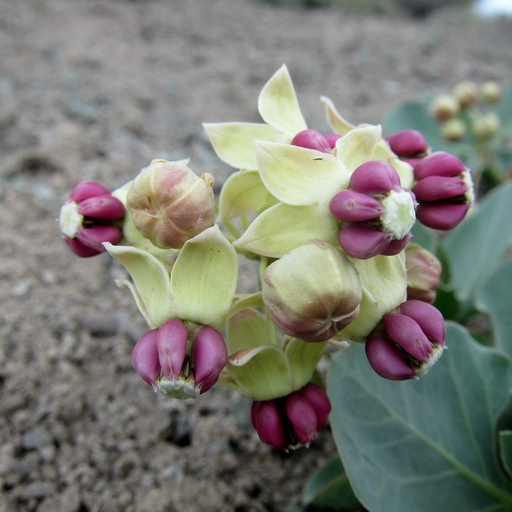
Commonly known as the Pallid Milkweed or the Jewel Milkweed, this desert-dwelling beauty is a far cry from its tall, lanky cousins. Instead of reaching for the sky, it hugs the sun-baked earth of the American West, looking more like a scattered collection of ocean-smoothed stones or succulent jewels than a typical wildflower. It is a vital, rugged survivor that provides a lifeline for butterflies in some of the harshest landscapes imaginable.
🔍 How to Identify
- 🍃 The Leaves: Unlike most milkweeds, the leaves are thick, fleshy, and almost perfectly round or heart-shaped. They have a distinct "glaucous" coating—a waxy, blue-green film that helps the plant retain moisture.
- 匍 Growth Habit: This is a prostrate plant, meaning it grows flat against the ground. Its stems sprawl outward in a star-like pattern, rarely rising more than a few inches high.
- 🌸 The "Jewel" Flowers: The blossoms are stunningly geometric. They feature pale, mint-green petals that recurve backward to reveal deep purple or chocolate-colored "hoods" in the center, resembling tiny, ornate jewelry.
🏡 In Your Garden
- 🏜️ The "High Desert" Aesthetic: This plant is perfect for rock gardens or "crevice" gardening. Because it evolved on clay and gravelly slopes, it requires exceptional drainage; in heavy, wet garden soil, its roots will rot almost overnight.
- 🧊 The Taproot Trap: Like many desert specialists, it grows a massive, deep taproot to find water. This makes it incredibly drought-tolerant but also means it absolutely hates being moved. Choose its "forever home" carefully, as transplanting an established plant is usually fatal.
- 🦋 A Butterfly Magnet: Despite its low profile, it is a high-priority host plant for the Monarch butterfly, particularly for populations migrating through the Great Basin and the Sierra Nevada.
⚠️ Safety & Toxicity
- 🚫 Status: Toxic to humans and animals.
- 🧪 The Sap: Like all members of the Asclepias genus, it contains cardiac glycosides. If ingested, it can cause heart rhythm issues, nausea, and more severe reactions.
- 🧤 Skin Irritant: The milky white sap can cause significant skin and eye irritation. It is always best to wear gloves when pruning or handling the plant, and keep it away from curious pets or livestock.
✨ Fun Fact
The "glaucous" waxy coating on the leaves isn't just for show; it acts as a natural sunscreen and a windbreaker, reflecting harsh UV rays and preventing the dry desert winds from "stealing" the plant's internal water supply!

Detailed Care Instructions
To grow Asclepias Cryptoceras (Pine needle milkweed) successfully, follow these steps:
- Seed collection: Collect ripe seeds from mature pods in late summer or early autumn. Ensure that the seeds are completely dry before storing them in a cool, dry place.
- Cold stratification: Mix the collected seeds with some moist sand, and place them in a plastic bag. Seal the bag and refrigerate it for about 30-60 days. This process will mimic winter conditions and help break seed dormancy.
- Soil preparation: Asclepias Cryptoceras prefers well-draining soil, so ensure that the planting area has good drainage. Work the soil by removing any weeds, rocks, or debris and amend it with organic matter to promote soil fertility.
- Planting: Sow the seeds directly in the prepared soil in early spring after the last frost date. Sprinkle the seeds over the surface and lightly press them into the soil. Do not cover the seeds with soil as they require light to germinate.
- Watering: Water the planting area gently but thoroughly after sowing to ensure that the soil is sufficiently moist. Avoid overwatering, as this can lead to rotting or fungal diseases.
- Sunlight and temperature: Asclepias Cryptoceras thrives in full sun, so ensure that the plants receive at least 6-8 hours of direct sunlight per day. The ideal temperature range is between 75-85°F (24-29°C).
- Maintenance: Keep the area around the plants weed-free to avoid competition for nutrients and water. Regularly monitor moisture levels and water when the top inch of soil feels dry. Avoid excess fertilizer application, as milkweeds prefer nutrient-poor soil.
- Pests and diseases: Asclepias Cryptoceras is relatively resistant to pests and diseases. However, occasional aphids or milkweed bugs might be present. Consider using organic pest control methods if necessary.
- Harvesting seeds: Allow some seed pods to dry and split open on the plant to collect seeds for future propagation.
By following these steps, you can successfully grow Asclepias Cryptoceras plants and contribute to the conservation of this important pollinator plant.

Place in a bright room that is sun drenched almost all day. Or directly in a south-facing window.

To properly water this plant, ensure that the soil is dry to the touch before watering. When watering, be careful not to splash water onto the leaves as this can cause damage. Instead, water around the base of the plant, giving it a thorough soak. Allow excess water to drain away. Avoid overwatering as this can cause root rot.
To fertilize the Asclepias Cryptoceras plant, use a slow-release fertilizer with a balanced ratio of nitrogen, phosphorus, and potassium. Apply the fertilizer around the base of the plant, being careful to not get any on the leaves or stems. Water the plant thoroughly after fertilizing. It is important to not over-fertilize, as it can harm the plant and lead to excessive growth. Fertilize every 4-6 weeks during the growing season.
Asclepias Cryptoceras plant requires well-draining soil that is slightly acidic with a pH range of 6.0 to 6.5. The soil should be nutrient-rich and loamy, with good moisture-retention capabilities. It's important to avoid using heavy clay or sandy soils and to amend the soil with organic matter such as compost, aged manure, or peat moss to improve soil structure and fertility. Additionally, the soil should be kept consistently moist but not waterlogged as overly wet soil can cause root rot and damage to the plant.
There are several ways to propagate this plant. One method is by collecting the seeds in the fall, after the pods have dried and split open. The seeds can then be sown directly in the ground or started indoors and transplanted later.
Another method involves taking stem cuttings from the plant. The cuttings should be taken from healthy, mature stems in the spring or summer. Remove the leaves from the bottom two-thirds of the cutting and dip the cut end in rooting hormone. Plant the cutting in a pot filled with a well-draining soil mix and keep it moist until roots have formed.
Propagation can also be done through division of the plant. This should be done in the spring or fall, when the plant is dormant. Gently dig up the plant and separate the roots into sections, making sure each section contains a healthy portion of roots and foliage. Replant the divided sections in a well-draining soil mix and keep moist until they become established.








