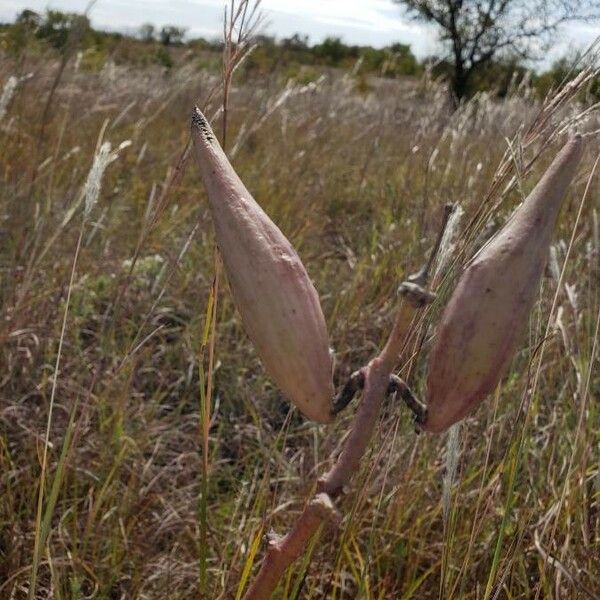
Plant Overview
Known as Engelmann’s Milkweed or the Slim-leaf Milkweed, this architectural beauty is a resilient survivalist of the American Great Plains and Southwest. While many milkweeds boast broad, lush leaves, this species opts for a "less is more" approach with foliage as thin as pine needles, allowing it to thrive in arid, sun-scorched landscapes. It serves as a vital pit stop for migrating butterflies, offering a nectar-rich oasis in dry environments.
🔍 How to Identify
- 🍃 The Foliage: Unlike common milkweeds, the leaves are exceptionally narrow and linear, often looking more like tall grass or pine needles than a typical broad-leaf plant.
- 🌸 Unique Blooms: It produces globe-like clusters (umbels) of flowers that are a subtle greenish-white, sometimes washed with delicate shades of purple or rose.
- 🥛 Milky Latex: If a leaf or stem is damaged, the plant leaks a thick, sticky white sap, which is a signature trait of the Asclepias genus.
🏡 In Your Garden
- 🏜️ The Taproot Rule: This plant develops a deep, vertical taproot to find moisture deep underground. Because of this, it is incredibly drought-hardy but hates being moved—pick its "forever home" in your garden carefully, as transplanting is rarely successful.
- 🦋 The Monarch Connection: It is a critical host plant for Monarch butterfly caterpillars. While the leaves look thin, they provide essential nutrients that help the larvae build up the toxins they need for protection against predators.
- ☀️ Sun Seeker: It thrives in full sun and rocky, poor, or sandy soils. If your garden has a "trouble spot" that is too dry for other flowers, this milkweed will likely love it.
⚠️ Safety & Toxicity
- 🐾 Status: Toxic to pets and livestock.
- 👶 Details: Like all milkweeds, it contains cardiac glycosides. If ingested in large quantities, it can affect heart rhythm. The milky sap is also a skin and eye irritant; it is best to wear gloves when pruning or handling the plant.
✨ Fun Fact
🎓 A Botanical Legacy: The plant is named after George Engelmann, a famous 19th-century German-American botanist who was one of the first people to scientifically describe the diverse flora of the American West, including many cacti and pines.

Detailed Care Instructions
To grow Asclepias Engelmanniana, also known as Engelmann's milkweed, you can follow these steps:
- Planting: Choose a sunny location with well-draining soil. Asclepias plants prefer full sun but can tolerate a little shade. The soil should be slightly sandy and not too clayey. If your soil is heavy clay, you can improve drainage by adding organic matter like compost or sand.
- Seeds: You can start growing Asclepias Engelmanniana from seed. Collect the mature seeds from a mature milkweed plant or purchase them from a reputable seed supplier. Stratify the seeds by storing them in the refrigerator for about six weeks before planting. This mimics the natural winter dormancy period and improves germination rates.
- Planting seeds: Sprinkle the stratified seeds on the soil surface, then lightly cover them with a thin layer of soil or sand. Water gently to settle the seeds in place.
- Watering: Initially, keep the soil moist but not soaking wet until the seeds germinate. After that, water the plants deeply once a week, or when the soil feels dry. Once established, Asclepias Engelmanniana is relatively drought-tolerant.
- Weed control: Keep the area around your Asclepias plants weed-free. Weeds can compete for resources and take away nutrients from the milkweed plants.
- Mulching: Consider applying a layer of organic mulch around the plants to help retain moisture and control weed growth. Just make sure the mulch doesn't smother the emerging seedlings or the base of the plants.
- Deadheading: Deadhead the flowers, which means removing the spent blooms, to encourage more flowering and prevent self-seeding. However, if you want to support local butterfly populations, leave a few seed pods on the plant for caterpillars to feed on.
- Overwintering: Asclepias Engelmanniana is a perennial and can survive winter in USDA hardiness zones 3-9. In areas with harsh winters, mulching around the base of the plants with straw or leaves can help protect them from freezing temperatures.
- Pests and diseases: These plants are generally not highly susceptible to pests or diseases. However, they may occasionally be affected by aphids. If you notice an infestation, you can control them by spraying with an insecticidal soap or using organic pest control methods.
Remember that milkweed plants are crucial to the survival of monarch butterflies and other pollinators. By growing Asclepias Engelmanniana, you are supporting their habitat and contributing to the preservation of these important species.

Place in a bright room that is sun drenched almost all day. Or directly in a south-facing window.

Asclepias Engelmanniana plants prefer to be watered on a regular basis, especially during hot and dry weather. However, it is important not to overwater them as this can lead to root rot. The best way to water these plants is to give them a deep watering once a week, making sure the soil is moist but not waterlogged. It is also important to water the plants at the base, rather than overhead, as this can prevent fungal diseases. Additionally, it is best to avoid watering the plants late in the day as this can lead to moisture sitting on the leaves overnight, which can encourage diseases. Overall, providing consistent and appropriate watering is important for the health and growth of Asclepias Engelmanniana plants.
To fertilize this plant, apply a slow-release, balanced fertilizer in early spring or early summer, avoiding direct contact with the plant's stem and foliage. Water the plant thoroughly after fertilizing to ensure the nutrients are absorbed into the soil. Repeat the fertilization process annually to promote healthy growth. In general, avoid over-fertilizing, as this may lead to weak growth and susceptibility to disease.
Asclepias Engelmanniana plant requires well-draining soil with good aeration to prevent waterlogging and ensure healthy root development. The soil should have a neutral to slightly alkaline pH level of 6.5-7.5. Adding a layer of perlite or sand to the soil mix can improve drainage. It prefers a soil that is slightly sandy and somewhat loamy. The soil should be moderately fertile with a good balance of nutrients, which can be achieved by adding organic matter like compost or well-rotted manure. It should also be free of any chemical or synthetic fertilizers or pesticides.
- Locate a mature and healthy specimen of the desired plant in the wild or in a garden setting.
- Take a cutting from the stem of the plant, ensuring that it is about 6 inches long and has at least two sets of leaves.
- Remove the lower set of leaves from the cutting, leaving only the top set of leaves.
- Dip the end of the stem in rooting hormone to encourage root growth.
- Place the cutting in a pot filled with well-draining soil.
- Water the cutting and cover it with a plastic bag to create a humid environment.
- Place the pot in a location with indirect sunlight and a consistent temperature.
- Check the cutting regularly to ensure that the soil is moist and the plastic bag does not trap too much moisture.
- After several weeks, check for signs of root growth by gently tugging on the cutting. If there is resistance, roots have formed.
- Once roots have formed, gradually introduce the plant to more sunlight and cautiously begin to remove the plastic bag cover.
- When the plant is established and growing well, transplant it into a larger pot or outdoor location.








