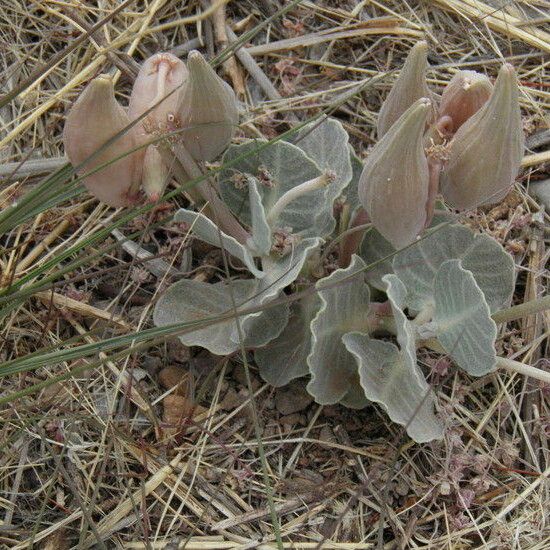
Plant Overview
Often called the "Moneywort Milkweed" or "Disk Milkweed," this desert gem looks more like a collection of scattered silver coins than a traditional wildflower. Native to the arid landscapes of the American Southwest and Northern Mexico, it has evolved to thrive where other plants wither under the scorching sun. It is a rare and architectural choice for gardeners looking to support local pollinators in dry climates.
🔍 How to Identify
- 🍃 The Foliage: The most striking feature is its thick, leathery, coin-shaped leaves that grow in opposite pairs. They are usually a dusty silver-green and covered in fine, velvety hairs to reflect the intense desert heat.
- 🌸 The Blooms: It produces globe-like clusters (umbels) of star-shaped flowers that range from creamy white to a delicate, dusty pink. These clusters often appear to nestle directly against the round leaves.
- 🌱 Growth Habit: Unlike its tall, lanky relatives, this species is a low-grower, rarely exceeding a foot in height. It spreads horizontally, creating a unique "disk" appearance on the desert floor.
🏡 In Your Garden
- 🏜️ Desert Resilience: This plant is a master of water conservation. It thrives in rocky, "lean" soil with very little organic matter. In a home garden, it requires excellent drainage; if its feet stay wet, the roots will rot quickly.
- ⚓ The Deep Taproot: It develops a long, stubborn taproot that searches for deep underground moisture. Because of this, it is notoriously difficult to transplant once established. It is best to plant it from seed or a very young nursery start in its "forever home."
⚠️ Safety & Toxicity
- ⛔ Toxic Sap: Like all milkweeds, it contains a milky white latex sap filled with cardiac glycosides. This sap is the plant's primary defense against being eaten by herbivores.
- 🐾 Risk Level: It is toxic to dogs, cats, and livestock if ingested. The sap can also cause significant skin or eye irritation for humans, so it is best to wear gloves when pruning or handling the plant.
✨ Fun Fact
🦋 A Monarch’s Desert Oasis: While many milkweeds are tall and lush, Asclepias nummularia is a vital survival host for Monarch and Queen butterflies migrating through the harsh Chihuahuan and Sonoran deserts, providing a rare place to lay eggs where little else grows.

Detailed Care Instructions
To grow Asclepias nummularia, also known as the butterfly weed or balloon plant, follow these steps:
- Location: Choose a sunny location in your garden as Asclepias nummularia thrives in full sun. It prefers well-draining soil but can tolerate various soil types.
- Soil preparation: Prepare the soil by removing any weeds or grass from the planting area. Loosen the soil and mix in organic compost to improve its fertility and drainage.
- Seed collection: Collect seeds from mature Asclepias nummularia plants. Seeds are typically collected in the fall when the seed pods turn brown and start to split open. Gently remove the seeds and store them in a cool, dry place until planting time.
- Scarification: Asclepias nummularia seeds have a hard outer shell, which can inhibit germination. You can improve germination rates by scarifying the seeds, either by carefully nicking the seed coat with a knife or using sandpaper to gently wear down the seed coat.
- Stratification: Certain species of Asclepias benefit from a period of cold stratification to break their dormancy. However, Asclepias nummularia does not typically require this step for germination.
- Planting: In early spring, sow the scarified seeds directly into the prepared soil. Plant each seed at a depth of ¼ inch and space them about 12-18 inches apart. If you want to start the seeds indoors, sow them in pots filled with a well-draining seed starting mix and transplant them outside after the last frost.
- Watering: Keep the soil consistently moist but not waterlogged. Water the seeds gently to avoid displacing them or creating an overly compacted soil surface.
- Maintenance: Once the seedlings emerge, thin them to maintain the desired spacing. Water regularly, especially during dry periods, to help establish a strong root system.
- Pests and diseases: Asclepias nummularia is relatively resistant to pests and diseases. However, keep an eye out for aphids or milkweed bugs, which may occasionally feed on the plant. Address any pest issues promptly with appropriate organic insecticides.
- Mulching and support: Mulching around the plant can help retain soil moisture, suppress weed growth, and provide insulation during winter. It is best to avoid excessive mulch directly around the stems to prevent the accumulation of moisture, which can promote rotting. Additionally, provide support to the growing plants, such as staking, if needed.
- Blooming and seed harvesting: Asclepias nummularia typically blooms in late summer, producing small clusters of bright orange flowers. After blooming, seed pods develop, which contain seeds for future propagation. Allow these pods to mature and dry on the plant before collecting the seeds for future propagation.

Place in a bright room that is sun drenched almost all day. Or directly in a south-facing window.

To properly water this plant, ensure that the soil is dry to the touch before watering. When watering, thoroughly saturate the soil around the plant and allow excess water to drain out of the drainage holes at the bottom of the pot. It is important not to overwater, as this can lead to root rot and other issues. Maintain a consistent watering schedule, taking into account factors such as temperature, humidity, and the size of the pot.
To fertilize this plant, first choose a balanced fertilizer with equal amounts of nitrogen, phosphorus, and potassium. Use a water-soluble fertilizer that can be easily absorbed by the plant. Dilute the fertilizer to half strength and apply it to the soil around the plant, making sure not to get any on the foliage. Fertilize every two weeks during the growing season, and reduce to once a month in the winter. Avoid over-fertilizing, as this can cause the plant to become leggy and weak.
Asclepias Nummularia is a plant species that requires a specific type of soil for healthy growth and development. When planting Asclepias Nummularia, it's important to use a well-draining soil that is not too heavy or compact. This type of soil will allow the plant's roots to breathe and prevent water from pooling around them. The ideal soil for Asclepias Nummularia should also be rich in organic matter and nutrients to support the plant's growth and flowering. It's recommended to mix sand, peat moss, and compost into the soil to create a light and nutrient-rich planting medium. Additionally, Asclepias Nummularia prefers slightly acidic to neutral soil with a pH range of 6.0 to 7.5. Avoid using soil that is too clayey or alkaline, as this can lead to poor plant growth and could even cause the plant to die.
To propagate this plant, you need to take a cutting from the stem of the mature plant. Make sure to cut at a 45-degree angle, about 4-6 inches from the end of the stem. Remove any leaves from the bottom 2 inches of the stem.
Next, dip the cut end of the stem in rooting hormone. This will help encourage root growth. Then, plant the stem in a pot filled with moist potting soil. Cover the pot with a plastic bag to create a humid environment that will encourage root growth.
Place the potted stem in a warm, bright location, but out of direct sunlight. Keep the soil moist but not waterlogged. After a few weeks, you should see roots beginning to form.
Once the roots have formed, you can transplant the new plant into a larger pot or into your garden. Make sure to give it plenty of sunlight and water regularly until it becomes established.








