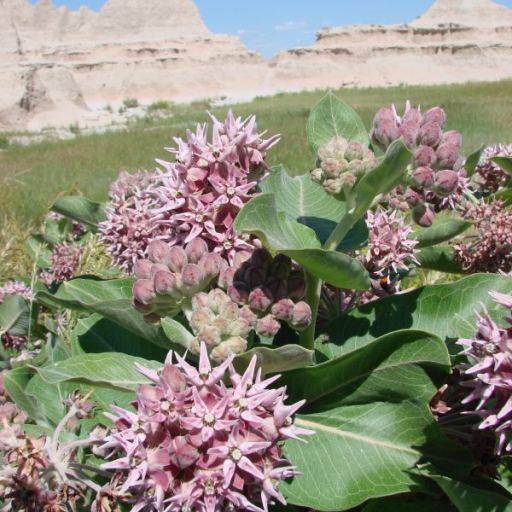
Plant Overview
Often called the "Queen of the Prairie," the Showy Milkweed is a structural masterpiece of the North American landscape. With its velvety silver leaves and clusters of star-shaped, rose-tinted blossoms, it serves as a fragrant sanctuary for local wildlife. It is best known as a vital "nursery" plant, providing the essential fuel and habitat needed for the survival of the iconic Monarch butterfly.
🔍 How to Identify
- 🌸 The Crowned Flowers: Unlike other milkweeds, its blossoms are larger and more "showy," forming spherical clusters of star-shaped flowers with distinct, elegant hoods that resemble tiny crowns.
- ☁️ Velvety Foliage: The large, oval leaves have a unique dusty-green color and are covered in fine, soft hairs, giving the entire plant a frosted or "fuzzy" texture.
- 💧 Milky Latex: If a leaf or stem is broken, the plant immediately leaks a thick, sticky white sap, which is a key defensive mechanism against many herbivores.
🏡 In Your Garden
- 🦋 The Monarch Magnet: This is a "must-have" for conservation gardens. It is a primary host plant where Monarchs lay their eggs, and the caterpillars rely solely on these leaves for food to become toxic to predators.
- Root Resilience:** It develops a very deep, sturdy taproot that allows it to survive intense droughts and cold winters. However, this means it hates being transplanted; choose its "forever home" in your garden carefully.
- ↔️ Space to Roam: Be aware that Showy Milkweed spreads via underground runners (rhizomes). It is perfect for wilder meadow styles, but in a formal garden, you may need to pull up new shoots to keep it from "hopping" into neighboring flower beds.
⚠️ Safety & Toxicity
- 🐾 Toxic to Pets: Like all members of the Asclepias genus, this plant contains cardiac glycosides. It is toxic to dogs, cats, and horses if consumed in large quantities.
- 🖐️ Skin & Eye Irritant: The milky sap can cause skin irritation (dermatitis) for some gardeners. More importantly, be careful not to rub your eyes after handling the plant, as the sap can cause painful inflammation.
✨ Fun Fact
During World War II, when traditional stuffing materials like kapok were unavailable, the fluffy "silk" from Showy Milkweed seed pods was collected by American school children to stuff military life jackets. The fibers are naturally water-repellent and more buoyant than cork!

Detailed Care Instructions
| Color | Rosey-Purple And Pink |
| Humidity | Normal |
| Lighting | Part Sun |
| Toxicity | Poisonous |
| Soil Type | Average Fertility, Average To Less Than Average Water Needs, Well-Drained |
| Bloom Time | May To June |
| Difficulty | Medium |
| Plant Type | Herbaceous Perennial |
| Hibernation | Cold Period |
| Mature Size | 1 To 3 Feet Tall |
| Native Area | Western North America |
| Sun Exposure | Full Sun |
| Hardiness Zones | 3-9 |
To grow Asclepias speciosa plants, commonly known as Showy Milkweed, follow these steps:
- Choose a suitable location: Select a sunny spot in your garden or yard. The plant requires at least six hours of direct sunlight daily.
- Soil preparation: Showy Milkweed prefers well-draining soil. Loosen the soil to a depth of at least 12 inches and mix in compost or organic matter to improve drainage and fertility.
- Planting: Sow the seeds directly into the prepared soil in spring after the last frost date. Alternatively, you can purchase young plants from a nursery and transplant them. Space the plants around 18-24 inches apart.
- Watering: Keep the soil consistently moist but not waterlogged until the seedlings establish and begin to grow. Mature plants are relatively drought-tolerant, but it is still important to water them regularly during hot and dry periods.
- Mulching: Apply a layer of organic mulch around the plants to help retain moisture, suppress weeds, and moderate soil temperature.
- Pruning: In late winter or early spring, before new growth emerges, prune the plants back to a few inches above ground level. This will help rejuvenate the plant and stimulate healthy growth.
- Fertilizing: Showy Milkweed generally does not require heavy fertilization. However, you can apply a balanced organic fertilizer in early spring to promote healthy growth.
- Pest control: Asclepias speciosa is generally resistant to many pests and diseases. However, you may occasionally encounter aphids or milkweed bugs. If necessary, use natural insecticidal soap or neem oil to control these pests.
- Supporting Monarch butterflies: Showy Milkweed is a crucial host plant for Monarch butterfly larvae. By planting and maintaining this plant, you contribute to supporting these important pollinators.
- Observing local regulations: Keep in mind any regulations related to the cultivation of Asclepias speciosa in your area, especially if you live in a region where it is considered invasive.
Keep in mind that Asclepias speciosa plants may take a few years to establish fully and produce a substantial number of flowers. With proper care and patience, you can enjoy the beautiful blooms and help support local pollinators.

Place in a bright room that is sun drenched almost all day. Or directly in a south-facing window.

Asclepias Speciosa plant should be watered thoroughly and deeply once a week during the growing season. It prefers well-draining soil, so be sure not to overwater or leave the plant in standing water. Allow the top few inches of soil to dry out before watering again. During periods of drought, the plant may need more frequent watering. Avoid getting water on the foliage, as this can promote the growth of fungal diseases. Water in the morning or evening to minimize evaporation and give the plant time to absorb the water before the hottest part of the day.
To fertilize this plant, apply a balanced fertilizer with equal amounts of nitrogen, phosphorus, and potassium in the early spring before new growth appears. Use a slow-release fertilizer, following the manufacturer's instructions for application rates. Avoid over-fertilization, which may cause excessive vegetative growth and reduce the number of flowers produced. Water the plant thoroughly after fertilizing to help distribute the nutrients evenly.
Asclepias Speciosa plant prefers well-drained soil with a neutral pH level. The soil should not be too rich in nutrients and organic matter because the plant prefers lean soil. It is also important to avoid soil that is too heavy or compacted, as this can lead to poor drainage and root rot. A sandy loam soil that is well-drained and allows for good airflow is ideal for this plant. It is important to avoid fertilizing the plant excessively or with high-nitrogen fertilizers, which can cause the plant to grow too quickly and become weak and susceptible to pests and diseases. Additionally, it is recommended to plant Asclepias Speciosa in a sunny location that receives at least six hours of direct sunlight each day.
- Obtain a mature plant: Look for a mature Asclepias Speciosa plant in a nursery or ask a friend who has one.
- Gather tools: You will need cutting shears or a sharp knife, rooting hormone powder, a pot with well-draining soil, and a clear plastic bag.
- Take stem cuttings: Cut off a 4- to 6-inch stem from the Asclepias Speciosa plant just below a node or leaf juncture. Make sure to take cuttings in the morning when the plant is well hydrated.
- Remove leaves: Strip off the lower leaves of the stem, leaving only a few at the top.
- Apply rooting hormone: Dip the lower cut end of the stem in rooting hormone powder to promote root growth.
- Plant the cutting: Insert the stem into the soil, water it, and gently press down the soil around the base to secure it.
- Cover with plastic: Cover the pot with a clear plastic bag to create a humid environment. Place it in a bright, but indirect, light location.
- Water regularly: Check the soil often and water the cutting whenever the soil feels dry to the touch.
- Monitor the cutting: Keep an eye on the cutting for signs of wilt or disease. If it looks unhealthy, remove it from the soil to prevent the spread of disease.
- Transplant: Once the cutting has developed roots and is growing well, transplant it into a larger pot or a garden outdoors.
Common pests of the showy milkweed include Spider mites, aphids. Make a habit of checking your showy milkweed frequently for pests so that any infestations can be caught and managed early.








