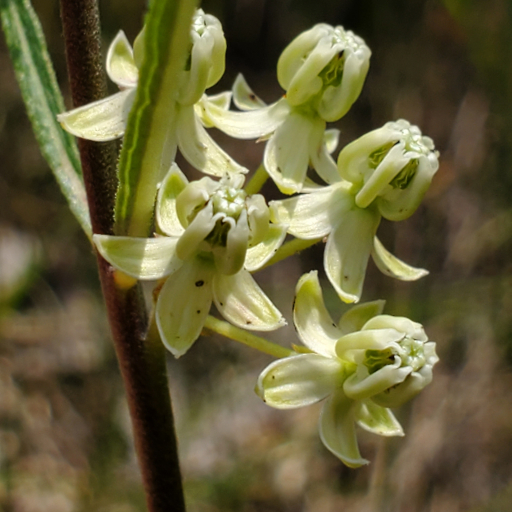
Plant Overview
Known as the Slimleaf Milkweed, this elegant perennial is the minimalist of the prairie world. Unlike its broad-leafed cousins, this plant features exceptionally slender, grass-like foliage that allows it to hide in plain sight until its delicate clusters of pale flowers bloom. It is a vital, specialized member of the Great Plains ecosystem, providing a unique architectural look for native plant enthusiasts.
🔍 How to Identify
- 🌿 Narrow Foliage: The leaves are its most defining trait—long, linear, and very thin (less than 1/4 inch wide), often resembling blades of grass.
- 🌸 Ghostly Blooms: Clusters of greenish-white to creamy-yellow flowers emerge from the leaf axils, featuring the classic five-hooded "crown" shape typical of milkweeds.
- 📏 Slender Stature: It typically grows as a single, unbranched stem, reaching about 1 to 2 feet in height, giving it a very upright and "tidy" appearance.
🏡 In Your Garden
- 🏜️ Drought Specialist: This species is incredibly hardy and thrives in dry, rocky, or sandy soils where other plants might wither. It is a perfect choice for xeriscaping or rock gardens.
- 🌱 Look but Don't Move: Like many prairie natives, it develops a deep, resilient taproot. This makes it very drought-tolerant but also means it hates being transplanted; pick its permanent "forever home" carefully before planting.
- 🦋 The Monarch Diner: While its leaves are thin, they are highly nutritious for Monarch butterfly caterpillars. It serves as a critical "pit stop" for migrating butterflies in the central United States.
⚠️ Safety & Toxicity
- 🚫 Toxic if Ingested: Like all members of the Asclepias genus, the plant contains cardiac glycosides which can be dangerous to the heart if eaten in large quantities.
- 🐾 Pet & Livestock Warning: It is toxic to dogs, cats, and horses. While most animals avoid it due to its bitter, milky sap, it is best kept away from curious nibblers.
- 🧤 Skin Irritant: The white, milky latex sap can cause skin irritation or rashes in some people. It is a good idea to wear gloves if you are pruning or handling broken stems.
✨ Fun Fact
The species name stenophylla comes from the Greek words stenos (narrow) and phyllon (leaf), perfectly describing its needle-like appearance that helps the plant reduce water loss in the scorching prairie sun.

Detailed Care Instructions

Place in a bright room that is sun drenched almost all day. Or directly in a south-facing window.

Some plants require more regular watering than others, which should be done every few days. It's critical to maintain the soil moist all of the time. The water requirements of the same plant placed in pots with varying sizes will differ. Because the water in the smaller pot evaporates faster than the water in the larger pot, it will require more watering. Regardless of pot size, the surface should constantly be maintained moist.








