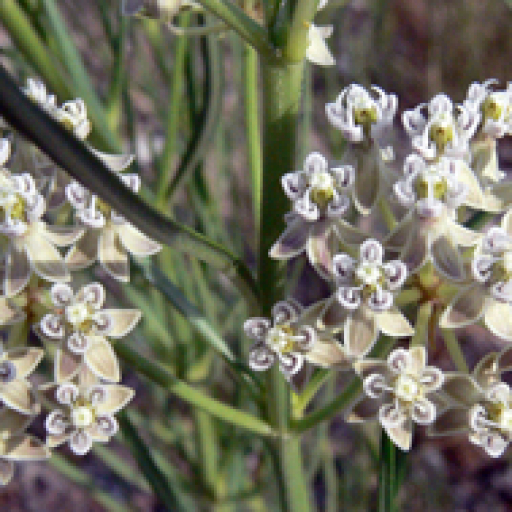
Plant Overview
Known as the Horsetail Milkweed, this slender beauty is a desert survivor often found dancing in the dry winds of the American Southwest. Its common name comes from the way its narrow, needle-like leaves wrap around the stem, mimicking the look of a horse’s tail or a bottlebrush. While it looks delicate, it is one of the hardiest members of the Asclepias family, providing a vital lifeline for migrating butterflies in arid landscapes.
🔍 How to Identify
- 🌿 The Foliage: Unlike the broad leaves of common milkweed, this species has very narrow, linear leaves that grow in "whorls" (circles) of three to five around the stem.
- 🌸 The Blooms: It produces elegant, star-shaped flowers that are creamy white to pale green, gathered in small, rounded clusters called umbels.
- 🧴 The Sap: Like all milkweeds, if you break a leaf or stem, it will "bleed" a thick, sticky white latex.
🏡 In Your Garden
- 🏜️ Tough as Nails: This plant is perfect for "xeriscaping" (low-water gardening). It thrives in sandy, rocky, or even disturbed soils where other plants might wither.
- 🦋 A Butterfly Nursery: It is a high-quality host plant for Monarch and Queen butterflies. However, because it spreads via underground "rhizomes," it can be a bit of a wanderer—give it plenty of space to roam or use it in a wilder corner of your yard.
- ⚓ Deep Roots: It develops a deep taproot to find water in the desert, which means it hates being moved once established. Pick its "forever home" carefully!
⚠️ Safety & Toxicity
- 🚫 High Toxicity: Warning. Horsetail Milkweed is considered one of the most toxic milkweed species. It contains concentrated cardenolides that can affect heart rhythm and the nervous system.
- 🐎 Livestock Danger: It is particularly dangerous to horses, sheep, and cattle. Most animals avoid it due to its bitter taste, but it can be accidentally consumed if mixed into dried hay.
- 🐾 Pets & Kids: Keep this plant away from areas where curious pets or small children might play. Ingestion of any part of the plant requires immediate medical/veterinary attention.
✨ Fun Fact
While it is poisonous to most mammals, Monarch caterpillars actually "steal" the plant's toxins! By eating the leaves, the caterpillars store the poison in their own bodies, making themselves (and later the adult butterflies) taste terrible to birds and other predators.

Detailed Care Instructions
Growing Asclepias subverticillata, commonly known as the horsetail milkweed, can be done by following these steps:
- Select a suitable location: Asclepias subverticillata prefers full sun to partial shade, so choose a spot in your garden that receives at least 6 hours of direct sunlight per day. The soil should be well-draining.
- Prepare the soil: Before planting, prepare the soil by removing any weeds, rocks, or debris. Loosen the soil to a depth of about 6-8 inches and mix in organic matter or compost to improve drainage and fertility.
- Obtain seeds or plants: You can start growing Asclepias subverticillata from seeds or purchase established plants from a nursery. If starting from seeds, plant them indoors about 8-12 weeks before the last frost date or sow them directly in the garden after the danger of frost has passed.
- Plant the seeds or seedlings: If planting seeds indoors, sow them in small pots or trays filled with a seed-starting mix. Lightly press the seeds into the soil and cover them with a thin layer of soil. Water gently and keep the soil consistently moist until germination.
If planting seedlings, dig a hole slightly larger than the root ball and place the plant in the hole. Backfill with soil, firming it gently around the roots. Water thoroughly after planting.
- Watering and care: Asclepias subverticillata prefers slightly dry conditions, so water it sparingly. Only water when the soil starts to feel dry, and be careful not to overwater as it can lead to root rot. Once established, the plant is quite drought-tolerant. Mulching around the plant can help retain moisture and suppress weed growth.
- Provide support (optional): Asclepias subverticillata has a sprawling growth habit, so providing support by staking or using a trellis can prevent the stems from flopping over.
- Maintenance: Regularly remove any weeds around the plant to reduce competition for resources. In the fall, cut back the stems to promote new growth in the next growing season.
- Attract pollinators: Asclepias subverticillata is a magnet for bees, butterflies, and other pollinators, so planting it in your garden can help support their populations. Avoid using pesticides or insecticides that can harm these beneficial insects.
By following these steps, you can successfully grow Asclepias subverticillata in your garden and create habitat for pollinators.

Place in a bright room that is sun drenched almost all day. Or directly in a south-facing window.

To water the Asclepias Subverticillata plant, it is important to follow specific guidelines to ensure its proper care and growth. Here are some detailed instructions on how to water this plant:
1. Evaluate the moisture level: Before watering, check the soil moisture level by inserting your finger about an inch deep into the soil. If it feels dry, it's time to water the plant.
2. Watering frequency: The Asclepias Subverticillata plant requires watering when the soil becomes moderately dry. However, avoid overwatering as it can lead to root rot. On average, water the plant once every 7-10 days during the growing season.
3. Watering method: Use a watering can or a hose with a gentle flow setting to water the plant. Slowly apply water at the base of the plant, allowing it to soak into the soil. Avoid watering the foliage as this may increase the risk of disease.
4. Deep watering technique: To ensure water reaches the deeper roots, water the plant thoroughly by applying water until it begins to penetrate the soil. This technique encourages the roots to grow deeper, making the plant more resilient to drought conditions.
5. Prevent waterlogging: Ensure that the Asclepias Subverticillata plant is not sitting in standing water as it can lead to root rot. Adequate drainage is essential, so consider using well-draining soil or adding a layer of gravel in the pot to promote drainage.
6. Monitor environmental factors: Different environmental factors such as sunlight exposure, temperature, and humidity affect the moisture requirements of the plant. Adjust the watering frequency accordingly to maintain a balance based on these factors.
7. Consider seasonality: Watering needs may vary during different seasons. For instance, during the dormant winter period, reduce the watering frequency to prevent water retention in the soil. Resume regular watering when the plant enters the active growing phase.
Remember that these instructions are general guidelines, and the best way to determine the watering needs of the Asclepias Subverticillata plant is through consistent monitoring and observation of the soil moisture levels and the plant's overall health.
To properly fertilize the Asclepias Subverticillata plant, follow these instructions:
- Choose a balanced, slow-release fertilizer with equal amounts of nitrogen (N), phosphorus (P), and potassium (K). A ratio of 10-10-10 or 14-14-14 would be suitable.
- Apply the fertilizer in early spring, just as new growth emerges.
- Sprinkle the fertilizer evenly around the base of the plant, avoiding direct contact with the stems or leaves.
- Use a garden fork or rake to lightly work the fertilizer into the top layer of soil, ensuring it is well-incorporated.
- Water the plant thoroughly after applying the fertilizer to help it absorb the nutrients.
- Repeat the fertilization process once every spring, following the same steps.
Remember, it's always important to carefully read and follow the instructions provided on the fertilizer packaging for dosage and safety guidelines.
Asclepias subverticillata is a species of plant that belongs to the Asclepiadoideae subfamily of milkweeds. When choosing soil for this particular plant, it is essential to consider the natural habitat and growing conditions in order to replicate them as closely as possible. Here are some details about the soil requirements for Asclepias subverticillata:
- Texture: The ideal soil for Asclepias subverticillata is well-draining to prevent waterlogging. It should have a balanced texture, ensuring a combination of fine particles (silt) and large particles (sand). This composition aids in water permeability while providing adequate oxygen to the roots.
- pH Level: This plant species thrives in slightly acidic to neutral soil. The pH level should ideally range between 6.0 to 7.5. Maintaining an appropriate pH level assists in optimal nutrient uptake by the plant.
- Organic Matter: Incorporating organic matter, such as compost or well-rotted manure, into the soil helps improve its texture and nutrient content. It adds essential nutrients, enhances moisture retention abilities, and promotes microbial activity, which is beneficial for the overall health of the plant.
- Drainage: Good drainage is crucial for Asclepias subverticillata to prevent the roots from sitting in waterlogged conditions. To improve drainage, the soil should be amended with materials like perlite or coarse sand. This allows excess water to move through the soil, reducing the risk of root rot.
- Nutrient Requirements: Asclepias subverticillata typically grows in areas that have nutrient-poor soils. Therefore, heavy or excessive fertilization is unnecessary and may lead to excessive leaf growth at the expense of flower production. Instead, it is advisable to use a slow-release or balanced organic fertilizer sparingly, following the manufacturer's instructions, to provide essential nutrients without overstimulating growth.
It is worth noting that environmental factors, such as climate and local soil conditions, can affect the specific soil requirements for Asclepias subverticillata. Therefore, it is recommended to observe the plant's growth and adjust the soil composition accordingly, if necessary.
Propagation of Asclepias subverticillata can be done through several methods, including seed propagation and vegetative propagation. Here are the details of each method:
Seed Propagation:
- Collect mature seeds from a well-established Asclepias subverticillata plant during the late summer or early fall when the seed pods have turned brown and dried out.
- Gently remove the seeds from the pod and place them in a container.
- Fill a seedling tray or small pots with a well-draining potting mix specifically designed for starting seeds.
- Moisten the potting mix evenly, ensuring it is adequately moist but not soaking wet.
- Sow the Asclepias subverticillata seeds by scattering them lightly over the surface of the potting mix. Since the seeds require light for germination, do not cover them with soil.
- Mist the surface with water to settle the seeds in the soil.
- Place the seedling tray or pots in a warm, bright location with indirect sunlight.
- Maintain consistent moisture in the soil by misting regularly or using a spray bottle, making sure it doesn't dry out.
- Germination typically occurs within 2-4 weeks. Once the seedlings have developed two to three true leaves, transplant them into individual pots or a prepared garden bed.
Vegetative Propagation: - Identify healthy and established Asclepias subverticillata plants that can be divided.
- Choose the appropriate time to divide the plants, preferably in early spring when new growth is just starting.
- Dig carefully around the plant, ensuring you remove as much of the root system as possible.
- Gently lift the entire plant out of the ground, taking care not to damage the roots.
- Divide the plant into smaller sections, ensuring each division has a healthy root system and an adequate number of stems.
- Trim any damaged or excessively long roots with clean and sharp gardening shears.
- Prepare a well-draining soil mix in pots or a prepared garden bed.
- Plant each division at the same depth it was previously growing, and space them according to their mature size.
- Water the newly planted divisions thoroughly, ensuring the soil is evenly moist.
- Place the pots or garden bed in a location with partial shade to protect the new divisions from excessive sun exposure while they establish themselves.
- Continue to water regularly, keeping the soil moist but not waterlogged.
- As the divisions establish and new growth initiates, gradually expose them to more sunlight until they receive the appropriate amount for their species tolerance.
Remember, it is essential to use proper gloves and safety precautions when working with plants, especially milkweed species, as they contain a sap that some individuals might find irritating or toxic.








