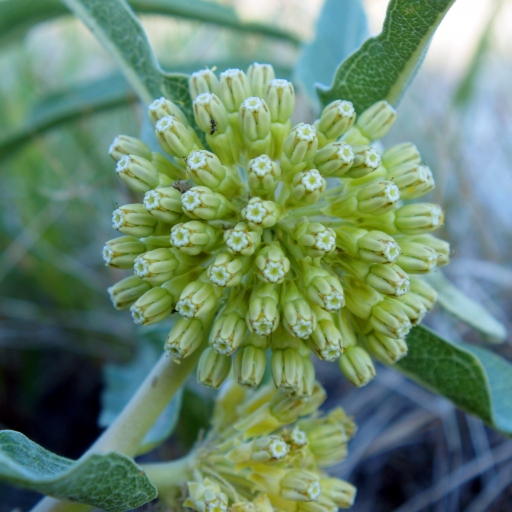
Plant Overview
Often called the Green Comet Milkweed or Green Antelopehorn, this subtle beauty is the master of camouflage in the North American prairie. Unlike its flashy orange or pink cousins, Asclepias viridiflora opts for an elegant, monochromatic green palette that blends seamlessly into the tallgrass. It is a rugged survivor, known for its deep taproot and its role as a vital "refueling station" for migrating Monarch butterflies.
🔍 How to Identify
- 🟢 The Flowers: Look for dense, globular clusters of nodding flowers that are pale green to yellowish. Unlike most milkweeds, these flowers lack the prominent "horns" inside the hoods, giving them a unique, smooth appearance.
- 🍃 The Foliage: The leaves are thick, opposite, and vary from broad to lance-shaped. They often have distinctive wavy margins and a velvety texture due to fine hairs.
- 🌱 Growth Habit: This plant is usually low-growing and may lean or sprawl toward the ground as it matures, rather than standing perfectly upright like Common Milkweed.
🏡 In Your Garden
- ⚓ The Taproot Rule: This species develops a massive, deep taproot to survive droughts. Because of this, it absolutely hates being moved. Choose its "forever home" carefully, as transplanting an established plant is rarely successful.
- 🦋 The Pollinator Magnet: While humans might overlook the green blooms, bees and butterflies find them irresistible. It serves as a critical host plant for Monarch larvae, providing the essential nutrients they need to transform.
- ☀️ Soil & Sun: It thrives in "tough" spots—sandy, rocky, or clay soils that drain well. It is a perfect choice for a dry rock garden or a native meadow restoration where other plants might struggle.
⚠️ Safety & Toxicity
- 🚫 Status: Toxic to ingest.
- 🐕 Details: Like all milkweeds, it contains cardiac glycosides. If eaten in large quantities, it can be dangerous to dogs, cats, and livestock.
- 💧 Sap Irritation: The "milk" (white latex sap) can cause skin irritation or temporary blurred vision if it gets into the eyes. Always wash your hands after pruning or handling a broken stem.
✨ Fun Fact
The nickname "Green Comet" comes from the way the flower umbels (clusters) hang from the leaf axils; when they are in full bloom, they resemble small, glowing green stars trailing through the foliage.

Detailed Care Instructions
To grow Asclepias Viridiflora, also known as the green milkweed or green comet milkweed, you can follow these steps:
- Planting: Choose a sunny location with well-draining soil. It is best to plant Asclepias Viridiflora in spring after the last frost or in early fall. If you live in a cold climate, start the seeds indoors 6 to 8 weeks before the last frost date.
- Propagation: Asclepias Viridiflora can be grown from seeds or propagated through root cuttings. If using seeds, scarify them by rubbing them between two sheets of sandpaper to help with germination. Soak the seeds in warm water overnight before planting.
- Soil preparation: Prepare the soil by removing any weeds and loosening it with a garden fork or tiller. Asclepias Viridiflora grows well in a wide range of soil types but prefers slightly acidic to neutral soil.
- Planting seeds: Sow the seeds 1/4 inch deep and 1 to 2 inches apart in rows. Water gently to avoid displacing the seeds. If starting indoors, transplant the seedlings when they have developed a few sets of true leaves.
- Watering: Keep the soil consistently moist but not waterlogged. Once established, Asclepias Viridiflora is somewhat drought-tolerant but may benefit from occasional watering during dry periods.
- Mulching: Apply a layer of organic mulch around the plants to conserve moisture, suppress weeds, and regulate soil temperature.
- Maintenance: Asclepias Viridiflora is a relatively low-maintenance plant. Remove any weeds that compete for resources. Deadhead the flowers to encourage continuous blooming. In late fall or early spring, cut the plant back to about 6 inches above the ground to promote new growth.
- Pests and diseases: Asclepias Viridiflora is generally resistant to pests and diseases. However, be vigilant for aphids and milkweed bugs, as they can occasionally appear. If necessary, handpick or use natural insecticidal soap to control infestations.
- Supporting pollinators: Asclepias Viridiflora attracts a variety of pollinators, especially butterflies and bees. Consider providing nearby nectar-rich flowers and avoid using pesticides that may harm beneficial insects.
- Propagation through root cuttings: If you want to propagate Asclepias Viridiflora through root cuttings, dig up a mature plant in early spring or late fall when it is dormant. Cut the roots into 2 to 3-inch sections and plant them horizontally in well-draining soil. Keep the soil consistently moist until new shoots emerge.
With proper care and attention, your Asclepias Viridiflora plants should thrive and contribute to supporting pollinators in your garden.

Place in a bright room that is sun drenched almost all day. Or directly in a south-facing window.

Asclepias Viridiflora is a plant that requires moderate watering. When watering, it is important to avoid getting the leaves wet as this can lead to fungal diseases. Instead, water at the base of the plant, making sure to soak the soil fully. It is recommended to water the plant once a week during the growing season and reduce watering during the dormant season.
To ensure that the plant gets enough water, it is important to check the soil moisture regularly. If the soil feels dry to the touch, it is time to water. However, if the soil feels moist, it is best to wait a few more days before watering again.
It is also important to note that the plant prefers well-draining soil, so make sure the pot or ground has adequate drainage. Overwatering can lead to root rot, which can be fatal to the plant.
Overall, Asclepias Viridiflora needs consistent and moderate watering, preferably at the base of the plant and with well-draining soil.
To fertilize this plant, use a balanced, slow-release fertilizer with an NPK ratio of 10-10-10 or 20-20-20. Apply the fertilizer according to the manufacturer's instructions, usually once a month during the growing season. Water the plant well before and after fertilizing to prevent fertilizer burn. Avoid over-fertilizing as it may lead to excessive growth and decreased flower production.
Asclepias Viridiflora prefers a sandy loam soil that is well-draining. The soil should be slightly acidic with a pH between 6.0 and 6.5. It does not tolerate heavy clay soils or soils that retain too much moisture. The plant also requires full sun exposure and thrives in hot, dry conditions. Fertilization is not necessary, but a light application of balanced fertilizer in the spring can promote growth.
Asclepias viridiflora is a perennial plant species that belongs to the Apocynaceae family. It has delicate green-yellow flowers that bloom in clusters, and is a popular choice for butterfly gardens due to its attractiveness to monarch butterflies.
If you want to propagate this plant, the most effective way is through stem cuttings. Here's how:
- Select a healthy stem that is free of disease, pests, and damage. The stem should be at least 4 inches long and have several sets of leaves.
- Cut the stem cleanly with a sharp, sterilized knife at a 45-degree angle.
- Remove the leaves from the bottom part of the stem, leaving only two or three sets of leaves at the top.
- Dip the cut end of the stem into rooting hormone powder.
- Fill a small pot with a well-draining potting mix and make a small hole in the center.
- Insert the stem cutting into the potting mix, making sure that at least one set of leaves is above the soil surface.
- Water the cutting thoroughly, and cover it with a clear plastic bag or container to create a humid environment.
- Place the pot in a bright spot, but avoid direct sunlight.
- Check the soil moisture regularly and water when necessary, but do not over-water.
- After 4-6 weeks, check for new growth by gently tugging on the stem. If there is resistance, then roots have formed and you can remove the plastic cover.
- When the plant has grown a few sets of leaves, it can be transplanted into a larger container or into the ground.
With proper care and attention, your newly propagated Asclepias viridiflora plant will grow into a beautiful addition to your garden.








