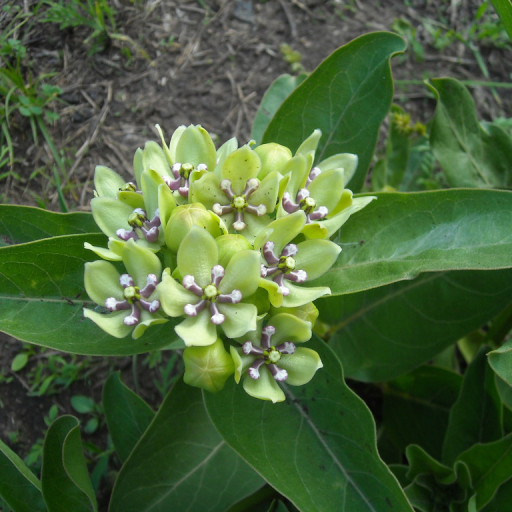
Plant Overview
Often called the "Green Antelopehorn" or "Spider Milkweed," Asclepias viridis is a rugged beauty of the American prairies. Unlike its tall, pink-flowered cousins, this milkweed stays low to the ground, offering unique, alien-looking green blossoms that are a crucial pit stop for the Monarch butterfly’s epic migration. It’s a plant that thrives on neglect, often popping up in rocky pastures where other plants struggle to survive.
🔍 How to Identify
- 🌸 The Flowers: Large, globe-shaped clusters of pale mint-green flowers. Each individual bloom features a purple-tinged center (the corona) but lacks the "horns" found in most other milkweed species.
- 🍃 The Foliage: Thick, leathery leaves with noticeably wavy margins. They are typically oblong or lance-shaped and arranged alternately or oppositely along the stem.
- 🧪 The Sap: Like all members of its family, the stems and leaves leak a thick, sticky white latex (milky sap) if broken or scratched.
- 📦 The Pods: Large, teardrop-shaped seed follicles that are often covered in soft, bumpy "warts." When they dry, they split to reveal seeds attached to silky white hairs.
🏡 In Your Garden
- 🌱 The Taproot Trap: This plant develops a deep, sturdy taproot very quickly. This makes it incredibly drought-tolerant, but it also means it hates being moved. Choose its "forever home" carefully, as transplanting an established plant usually results in failure.
- 🦋 Pollinator Powerhouse: While it is the primary host plant for Monarch caterpillars, its nectar is also a favorite for honeybees and various fritillary butterflies. It’s a "must-have" for any serious conservation garden.
- ☀️ Sun Seeker: It thrives in full sun and well-drained soil. It is particularly well-suited for xeriscaping or native meadow plantings where supplemental watering is minimal.
⚠️ Safety & Toxicity
- 🐾 Toxic to Pets: All parts of the plant contain cardiac glycosides. If ingested in large quantities, it can cause vomiting, tremors, or even heart failure in cats, dogs, and livestock.
- 👶 Skin & Eye Irritant: The milky sap is alkaline and can cause skin irritation or temporary blindness if rubbed into the eyes. Always wash your hands thoroughly after pruning or handling.
✨ Fun Fact
The common name "Antelopehorn" comes from the shape of the seed pods. As they mature and curve, they are said to resemble the horns of a Pronghorn antelope grazing on the Great Plains.

Detailed Care Instructions
| Humidity | High |
| Lighting | Full Sun |
| Difficulty | Medium |
| Hibernation | Cold Period |
| Hardiness Zones | 7 - 9 |
To successfully grow Asclepias viridis, also known as green milkweed, follow these steps:
- Site selection: Choose a sunny location in your garden that receives at least six hours of direct sunlight per day. The site should have well-draining soil.
- Soil preparation: Amend the soil with organic matter like compost to improve its fertility and drainage. Remove any weeds or grass from the planting area.
- Sowing seeds: Asclepias viridis can be grown from seeds. Directly sow the seeds in the garden in late fall or early winter, as they require a period of cold stratification to germinate. Alternatively, you can start them indoors in the early spring and transplant them as seedlings.
- Soil moisture: Keep the soil consistently moist, but not waterlogged, during the germination and establishment phase. Once established, Asclepias viridis is surprisingly drought-tolerant and can withstand dry periods.
- Mulching: Apply a layer of mulch around the plants. This helps retain soil moisture, suppress weeds, and moderate soil temperatures.
- Fertilization: Green milkweed plants generally do not require heavy fertilization. However, if your soil is poor, you can apply a balanced slow-release fertilizer in early spring according to the manufacturer's instructions.
- Weed control: Regularly remove any weeds or grass that may compete with the milkweed plants for nutrients and sunlight.
- Pests and diseases: Asclepias viridis is relatively resistant to pests and diseases. However, occasional issues may include aphids and milkweed bugs. Use appropriate organic pest control methods, such as insecticidal soaps or neem oil, if necessary.
- Avoid pesticides: Asclepias viridis is a host plant for monarch butterflies, so avoid using chemical pesticides that could harm them. Instead, encourage natural predators like ladybugs and lacewings that feed on pests.
- Propagation: Asclepias viridis can also be propagated through division. Divide mature plants in early spring before new growth emerges. Each division should have enough roots and shoots to independently establish itself.
- Maintenance: Prune back dead stems and foliage in late winter or early spring to encourage new growth. This will also help prevent the spread of diseases.
By following these steps, you can successfully grow Asclepias viridis in your garden, attracting monarch butterflies and other pollinators to your outdoor space.

Place in a bright room that is sun drenched almost all day. Or directly in a south-facing window.

To water this plant, first, check the soil moisture by sticking your finger about an inch deep into the soil. If the soil feels dry at that depth, it's time to water. Use a watering can or hose with a gentle spray nozzle to water the soil around the base of the plant until it is thoroughly saturated. Avoid getting the leaves or stem wet, as this can lead to disease. Watering once a week or when the soil feels dry is usually sufficient, but adjust the frequency based on the plant's specific needs and the weather conditions. It's important not to overwater, as this can lead to root rot.
To fertilize this plant, use a balanced fertilizer with equal amounts of nitrogen, phosphorous, and potassium. Apply the fertilizer in the early spring and mid-summer. Spread the fertilizer evenly around the base of the plant, taking care to not get any on the leaves. Water the plant well after fertilizing to help the nutrients get absorbed. Avoid overfertilizing as this can lead to excessive vegetative growth and reduce the number of flowers produced.
The ideal soil for Asclepias Viridis is a well-draining soil mixture that is rich in organic matter and nutrients. It should have a pH level of 6.5 to 7.5 and be able to hold moisture without becoming waterlogged. A sandy loam soil is recommended that is composed of equal parts of sand, silt, and clay. The soil should be free from heavy metals and other pollutants that can harm the plant. It is important to avoid over-fertilization and over-watering, as this can damage the roots of the plant. The soil should be kept moist but not waterlogged, and it should be allowed to dry out slightly between watering intervals. It is also recommended to add compost or other organic matter to the soil before planting to provide additional nutrients to the plant.
Asclepias Viridis can be propagated through seeds. Collect the seeds from a mature plant during late summer or early fall. The seeds should be dry and brown. Sow the seeds immediately after collecting them into a soil mix containing 50% sand and 50% potting soil. Water the soil and place the container in indirect sunlight. Keep the soil moist and allow it to dry slightly between watering. Germination usually takes 14-21 days. Once the seedlings reach about 6 inches in height, they can be transplanted into individual pots or a larger container with well-draining soil. The plant can also be propagated through stem cuttings. Choose a healthy stem from a mature plant and cut it into 3-4 inch sections. Remove the leaves from the bottom of the stem and dip the cuttings into rooting hormone. Plant the cuttings in a container with well-draining soil and water them regularly. Place the container in indirect sunlight until the cuttings have rooted.








