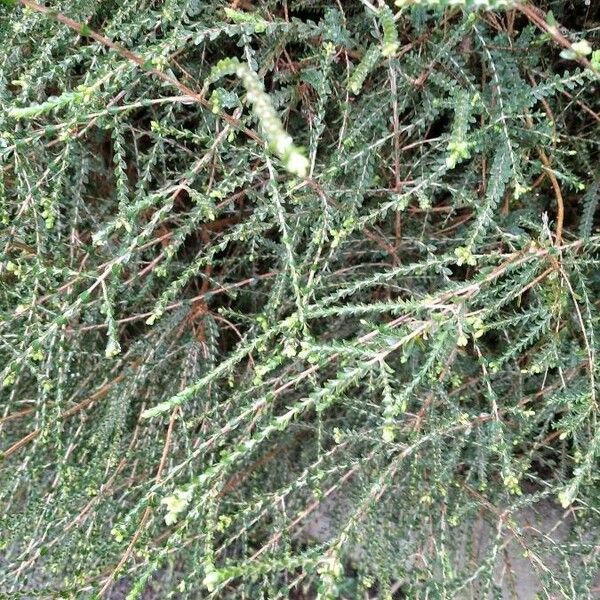
Plant Overview
Often called the Bristly Aspalathus, this hardy South African native is a rugged jewel of the Cape’s famous Fynbos biome. It is a close relative of the plant used to make Rooibos tea, though this particular species is celebrated more for its golden blooms than its brewing potential. Its name comes from the Latin hispida, meaning "bristly," a nod to the fine, stiff hairs that give the plant a silvery, textured appearance.
🔍 How to Identify
- 🌿 The Foliage: Look for tiny, needle-like leaves that grow in dense clusters (fascicles). These leaves are often covered in fine greyish hairs, giving the plant a soft, "fuzzy" look from a distance.
- 🌼 The Flowers: It produces classic pea-shaped flowers that are bright yellow, sometimes aging to a rusty orange or red. They usually appear near the tips of the branches.
- 🎋 The Stems: The branches are stiff and intricate, forming a low, spreading shrub that rarely exceeds one meter in height.
🏡 In Your Garden
- 🏜️ Tough as Nails: This plant is a "fire-follower" in its natural habitat, meaning it is evolved to thrive in poor, sandy, and acidic soils. It is incredibly drought-tolerant once established and loves a sunny, wind-swept spot.
- 🐝 Pollinator Magnet: In a garden setting, it acts as a high-value refueling station for local bees and butterflies. Its nitrogen-fixing roots also help improve the quality of the soil for surrounding plants, making it a "team player" in a landscape.
⚠️ Safety & Toxicity
- ✅ Status: Generally considered non-toxic.
- 🧤 Details: While not poisonous to pets or children, the "bristly" nature of the stems and leaves can be slightly abrasive. If you have very sensitive skin, you might experience mild irritation after pruning, so gloves are a good idea.
✨ Fun Fact
Aspalathus hispida has a secret superpower: like many members of the legume family, it hosts special bacteria in its roots that pull nitrogen out of the air and turn it into plant food. It effectively creates its own fertilizer in some of the most nutrient-poor soils on Earth!

Detailed Care Instructions

Place in a bright room that is sun drenched almost all day. Or directly in a south-facing window.

Some plants require more regular watering than others, which should be done every few days. It's critical to maintain the soil moist all of the time. The water requirements of the same plant placed in pots with varying sizes will differ. Because the water in the smaller pot evaporates faster than the water in the larger pot, it will require more watering. Regardless of pot size, the surface should constantly be maintained moist.








