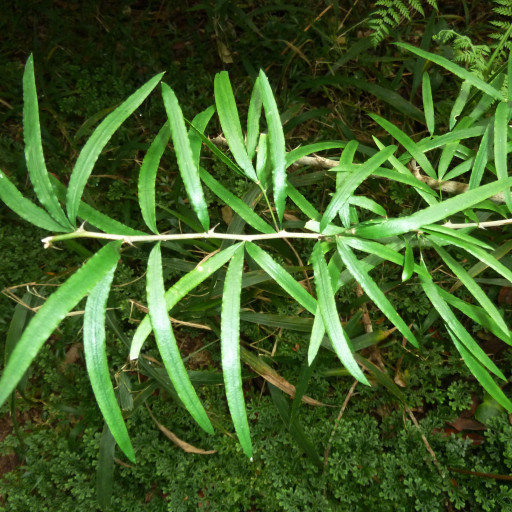
Plant Overview
Often called the Sickle Thorn or Large Forest Asparagus, this South African native is the "tough older sibling" of the common emerald fern. Despite its delicate, feathery appearance, it is a vigorous climber that was historically used as a natural security hedge. In the home, it offers a lush, wild aesthetic that can transform a corner into a miniature indoor jungle.
🔍 How to Identify
- 🌿 The Foliage: Unlike the needle-like leaves of other asparagus ferns, these are distinct, dark green, and shaped like tiny sickles (hence the name falcatus).
- 🦴 The Stems: The main stems are surprisingly woody and light gray, providing a sturdy skeleton for the scrambling branches.
- ⚔️ The Thorns: Look closely at the stem junctions; you will find sharp, hooked thorns that help the plant "climb" by latching onto nearby structures or trees.
- 🌸 The Bloom: If the plant is mature and happy, it produces clusters of tiny, white, star-shaped flowers that carry a surprisingly sweet, jasmine-like scent.
🏡 In Your Garden
- 🪴 Pot Cracker: This plant grows thick, tuberous roots that store water. Because these tubers expand with age, they are notorious for literally cracking ceramic pots or pushing themselves out of the soil. Choose a sturdy container and repot every two years.
- 🧗 Space to Roam: In its native habitat, it can reach 20 feet high. Indoors, it needs a trellis or a spot where its long, arching fronds won't be constantly bumped by passersby (to avoid those thorns!).
- 🌦️ Resilience Logic: Because of those underground water-storage tubers, the Sickle Thorn is much more forgiving of a missed watering than a true fern. It prefers "drenched then dried" over "constantly soggy."
⚠️ Safety & Toxicity
- 🐾 Pet Warning: The attractive red berries that appear after flowering are toxic to cats and dogs, potentially causing vomiting or diarrhea if ingested.
- 👶 Child Safety: The thorns are small but very sharp and hooked. It is best kept on a high shelf or in a corner away from curious toddlers who might grab the trailing stems.
- 🧴 Skin Irritation: Repeated contact with the sap or scratches from the thorns can cause mild dermatitis in sensitive individuals.
✨ Fun Fact
In South Africa, the Asparagus falcatus is frequently used as a "living fence." Because the thorns are curved backward like fishhooks, they are incredibly effective at stopping intruders or livestock from pushing through the dense thickets!

Detailed Care Instructions
| Soil Ph | 6.5-7 |
| Humidity | High |
| Lighting | Shade |
| Toxicity | Toxic |
| Soil Type | Moist, But Well-Drained Soil, Or Loam-Based Potting Compost |
| Bloom Time | Spring To Fall |
| Difficulty | Medium |
| Plant Type | Herbaceous Perennial |
| Mature Size | Up To 3-4 Feet High |
| Native Area | South Africa And Mozambique |
| Temperature | 18°C - 25°C |
| Sun Exposure | Partial Shade Outside; Indoors In Bright But Indirect Light |
| Hardiness Zones | 9-12 |
To grow Asparagus Falcatus, also known as the Sicklethorn, you can follow these steps:
- Climate and Soil Requirements: Asparagus Falcatus prefers a warm, subtropical climate. It thrives in well-draining soil with a pH level between 6.0 and 7.0.
- Selecting Propagation Method: Asparagus Falcatus can be propagated from seeds or by dividing mature plants. Seeds can take longer to establish, so dividing mature plants is often the preferred method.
- Dividing Mature Plants: If you choose to divide mature plants, dig up the clump of Asparagus Falcatus during its dormant period, which is typically in early spring. Carefully separate the clumps into smaller sections, ensuring each division has a healthy root system. Replant the divisions in prepared soil, leaving enough space between each plant.
- Seed Propagation: If you decide to grow from seeds, soak them in warm water for a few hours to help speed up germination. Plant the seeds in a seed tray or small pots filled with a well-draining potting mix. Keep the soil moist and provide a warm location, preferably between 70°F and 85°F (21°C to 29°C). The seeds should start germinating within a few weeks.
- Transplanting: Whether grown from seeds or divided plants, transplant the seedlings or divisions into larger pots or directly into the garden once they have established a strong root system. Ensure they have enough space to spread out, as Asparagus Falcatus can grow into a large, bushy plant.
- Watering: Asparagus Falcatus prefers regular watering, but be careful not to overwater as it can lead to root rot. Allow the top inch of soil to dry out between watering, and adjust the frequency based on the weather conditions and the moisture levels of the soil.
- Fertilization: Apply a balanced fertilizer during the growing season to promote healthy growth. Follow the manufacturer's instructions regarding dosage and frequency. Avoid over-fertilization, as it can damage the plant.
- Pruning: Asparagus Falcatus usually doesn't require much pruning. However, you can trim back any dead or damaged fronds to maintain the plant's appearance.
- Pest and Disease Control: Check regularly for common pests like aphids, spider mites, or scale insects, and treat with appropriate organic or chemical insecticides as needed. Asparagus Falcatus is generally disease-resistant, but keeping the plants well-spaced and avoiding overwatering can help prevent fungal diseases.
- Harvesting: Harvest the young shoots when they are approximately 6-8 inches tall. Cut the shoots near their base with a sharp knife or scissors, but be careful not to damage the rest of the plant. Allow the remaining shoots to grow and develop into leafy fronds to ensure the plant's health and replenish energy reserves for the next season.
By following these guidelines, you should be able to successfully grow Asparagus Falcatus plants in your garden or pots.

Place in a dark room with little light, like a dark bedroom or a spot far away from a window or directly in a north-facing window.

To water this plant, it is important to deeply soak the soil until the water runs out of the bottom of the container or until the surrounding soil is moist. The frequency of watering may depend on the climate and soil conditions, but generally, it is recommended to water the plant when the top inch of soil feels dry to the touch. Proper drainage is also crucial as the plant is susceptible to root rot. It is advised to let the soil dry out slightly between waterings rather than keeping it constantly damp. Over-watering can lead to yellowing of the leaves and stunted growth. In periods of high heat or low humidity, misting the plant may also be beneficial.
To fertilize your plant, use a balanced fertilizer with equal parts nitrogen, phosphorus, and potassium. Apply the fertilizer once a month during the growing season (spring and summer) by gently scattering it around the base of the plant and lightly working it into the soil. Be sure to water the plant immediately after fertilizing to help the nutrients reach the roots. Avoid over-fertilizing as it can cause damage to the plant.
Asparagus Falcatus grow best in well-draining, fertile and slightly acidic soil with a pH range of 6.5-7.5. The soil should be rich in organic matter and have good water-holding capacity. Adding compost or aged manure to the soil is recommended. It is important to avoid using heavy soils that retain water as this can cause root rot. When planting, ensure the soil is loosened to a depth of at least 8 inches to allow for proper root growth. Additionally, Asparagus Falcatus prefer slightly sandy soil that drains well, so adding some sand may improve drainage.
To propagate this plant, you will need to take stem cuttings from a healthy parent plant. Make sure to choose a stem that is at least 4-6 inches long, and has several leaves on it.
Using a sharp, sterilized knife or scissors, make a clean cut just below a node (where a leaf attaches to the stem). Remove any lower leaves, so that there are only a few leaves remaining at the top of the cutting.
Dip the cut end of the stem in rooting hormone powder, which will help encourage root growth. Place the cutting into a pot filled with well-draining soil, and lightly water it.
Cover the pot with a plastic bag or clear plastic wrap, creating a mini greenhouse to help retain moisture. Place the pot in a warm, bright area of your home, but out of direct sunlight.
Check the soil regularly and water as needed, making sure not to overwater and cause the cutting to rot. After a few weeks, you should notice new growth and roots starting to form.
Once the cutting has established roots and grown several new leaves, you can transplant it into a larger pot or directly into the ground.
Common pests of the sicklethorn asparagus include Mealybugs, spider mites, fungus gnats. Make a habit of checking your sicklethorn asparagus frequently for pests so that any infestations can be caught and managed early.








