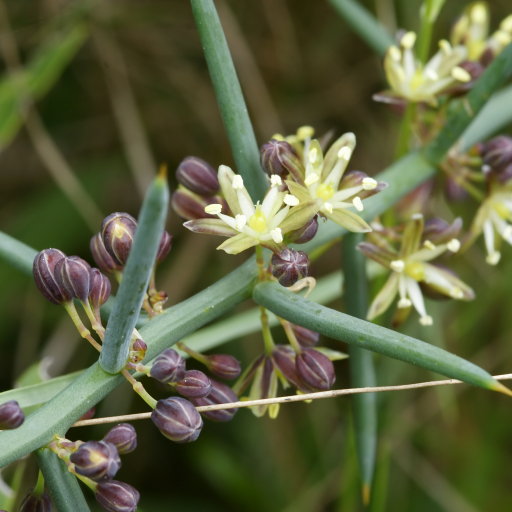
Plant Overview
Known as the "Wild Prickly Asparagus," Asparagus horridus is the rugged, armored cousin of the tender stalks you find in the grocery store. Native to the arid Mediterranean Basin, this plant has traded soft leaves for formidable spines to survive harsh sun and hungry herbivores. While its mature form is a thorny fortress, its young springtime shoots are a gourmet treasure highly prized by foragers for their intense, nutty, and slightly bitter flavor.
🔍 How to Identify
- 🌵 The Spines: Unlike common asparagus, this species is heavily armed with thick, rigid, grey-green spines (modified stems) that grow in star-like clusters.
- 🌿 Growth Habit: It forms a dense, zig-zagging shrub that can reach up to a meter in height, often looking more like a dry bramble than a vegetable.
- 🌼 Flowers & Berries: In late summer, it produces tiny, fragrant yellowish-green flowers, followed by small berries that turn from green to a deep, waxy black.
- 🌱 The Shoots: The edible "spears" emerge from the base in spring; they are much thinner than garden asparagus and have a dark green to purplish hue.
🏡 In Your Garden
- ☀️ The Toughest Resident: This plant is an "extremophile" in the garden sense—it thrives in poor, rocky, or sandy soils where other plants wither. It requires almost no supplemental water once established and loves a baking-hot southern exposure.
- 🛡️ Natural Fencing: Due to its "horrid" thorns, it makes an excellent deterrent hedge. If you plant it under a window or along a boundary, its tangled, prickly branches provide a natural security barrier that is virtually impenetrable to intruders or stray animals.
⚠️ Safety & Toxicity
- 🍴 Status: The young shoots are edible and delicious when cooked, but the rest of the plant is not.
- 🚫 Toxic Berries: The black berries are toxic to humans and pets (dogs and cats). Ingestion can cause vomiting, diarrhea, and abdominal pain.
- ⚔️ Physical Hazard: The thorns are genuinely sharp and can easily puncture skin or gardening gloves. Always wear heavy-duty leather gloves when pruning or harvesting near a mature specimen.
✨ Fun Fact
The specific epithet horridus doesn't mean the plant is "horrible" in the modern sense; it comes from the Latin word for "bristly" or "standing on end," referring to the aggressive, prickly texture of its branches. It is a master of mimicry, often blending into dry scrubland until its tender shoots give it away in the spring!

Detailed Care Instructions
To grow Asparagus Horridus, also known as Horseradish Asparagus or Cilantro Root, follow these steps:
- Obtain seeds or crowns: You can purchase seeds or crowns from a local nursery or online. Crowns are more commonly used and are a 1 to 2-year-old root system that has already developed. Seeds require more time and effort to grow.
- Choose the right location: Asparagus Horridus grows best in a sunny location with well-drained soil. Make sure the soil is loose, loamy, and has good drainage. Asparagus plants are long-lived, so choose a spot where they won't be disturbed for many years.
- Prepare the soil: Before planting, prepare the soil by removing weeds, rocks, and debris. Dig a trench about 12-18 inches deep and incorporate organic matter, such as compost or well-rotted manure, to improve the soil's fertility.
- Plant the crowns or seeds: If using crowns, dig a trench wide and deep enough to accommodate them. Place the crowns in the trench, making sure the buds are facing upwards, and cover with 2-3 inches of soil. Space the crowns about 18-24 inches apart in rows that are 3-5 feet apart. If using seeds, sow them about half an inch deep and around 2 inches apart. Keep the soil moist until germination occurs.
- Maintain proper care: Asparagus Horridus requires consistent moisture, so water deeply and regularly, especially during dry spells. Mulching around the plants helps conserve moisture and suppresses weeds. Keep the area around the plants weed-free by removing any unwanted growth.
- Provide support: As the plants grow, they may need support to prevent them from falling over. Install stakes or a trellis system to keep the stems upright.
- Fertilize: Asparagus plants benefit from regular fertilization. A balanced organic fertilizer or compost can be applied in spring and fall to provide essential nutrients.
- Harvesting: Do not harvest Asparagus Horridus during the first year to allow the plants to establish a strong root system. Harvesting can begin in the second year. Cut or snap off the shoots when they reach around 6-8 inches tall. Harvesting can be done for about 6-8 weeks, depending on local climate.
- Winter care: In colder regions, it is recommended to cut back the foliage after the first frost and mulch the plants with straw or compost to protect them from freezing temperatures.
By following these steps, you can successfully grow Asparagus Horridus and enjoy its unique flavor and aesthetic appeal.

Place in a bright room that is sun drenched almost all day. Or directly in a south-facing window.

Watering Asparagus Horridus plant is an important aspect of its care. It is recommended to water it regularly, but ensure not to overwater it as it may lead to root rot. The amount of water required by the plant varies depending on the climatic conditions, type of soil, and the pot's size. As a general rule of thumb, water the plant thoroughly until the water runs out of the drainage holes. Allow the soil to dry out partially before watering it again. Also, ensure that the soil is well-draining as Asparagus Horridus does not like soggy soil. It is advisable to water the plant early in the morning or late in the evening to avoid water evaporation during the day.
To promote healthy growth, apply a balanced fertilizer, such as a 10-10-10 blend, in the early spring before the plant emerges from the ground. Make sure to follow the manufacturer's instructions for application rates. Additionally, side dress with compost or organic matter throughout the growing season to provide additional nutrients. Avoid fertilizing after mid-summer to allow the plant to enter dormancy naturally.
Asparagus Horridus prefers a well-draining soil that is rich in organic matter and has a pH level between 6.0 and 7.5. It grows best in a soil that has a loamy texture with a good mix of sand, silt, and clay. The plant requires a soil that retains moisture but does not become waterlogged since it can lead to damaging the roots. It is important to use a soil mix that is free of any pests or diseases that could harm the plant. Adding compost or aged manure to the soil will provide the necessary nutrients and help retain moisture levels.
Asparagus Horridus is a plant that can be propagated by seed or division of its woody rhizome roots. For seed propagation, the seeds should be sown in a well-draining soil mix and kept moist until they germinate. The newly sprouted seedlings should be transplanted into individual pots or suitable containers.
For division, the rhizome roots should be dug up in the fall or early spring and separated into sections with a sharp knife. Each section should have some healthy roots and shoots attached. The divided sections can be planted in well-draining soil in individual pots or directly into the ground.
In both cases, the planted seeds or divided sections should be kept at a consistent temperature and in a bright, partially shaded location until they are established and ready to be transplanted into their final growing location.








