Plant Overview
Often found in the arid landscapes of Southern Africa, Asparagus nelsii—commonly known as Nelson’s Asparagus—is a hardy survivor that balances delicate beauty with a fierce "stay-away" attitude. While it shares a genus with the common garden vegetable, this wild cousin is a rugged, woody shrub that acts as a natural lace curtain in the bushveld, providing shelter for small birds and insects.
🔍 How to Identify
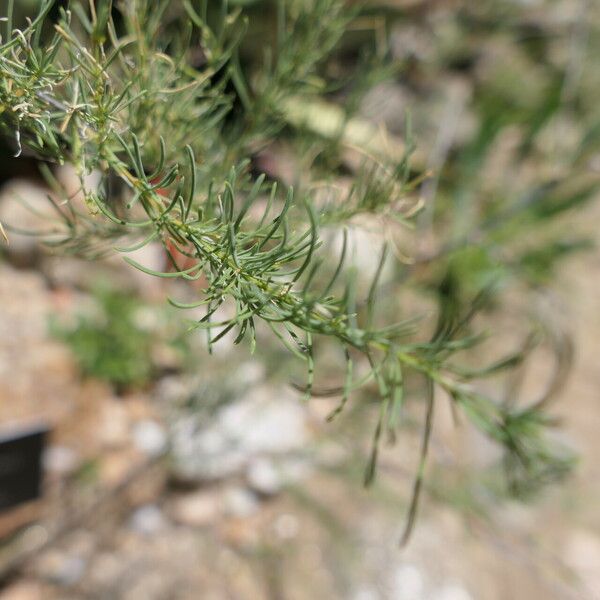
- 🌿 The "Leaves": What appear to be fine, needle-like leaves are actually modified stems called cladodes. They grow in tufts, giving the plant a soft, feathery texture from a distance.
- ⚔️ Hidden Thorns: Beneath the soft-looking foliage lie sharp, woody thorns. These are recurved (hooked), helping the plant scramble over other bushes or protect itself from hungry animals.
- 🌸 Fragrant Blooms: In the right season, the plant is covered in tiny, star-shaped white flowers that emit a surprisingly sweet, honey-like scent.
- 🍒 Jewel-like Berries: After flowering, the plant produces small, round berries that transition from green to a dark, glossy red or blackish hue.
🏡 In Your Garden
- 🏜️ Drought Specialist: This plant is a master of water storage. It develops thick, fleshy tuberous roots underground that act as "water tanks," allowing it to survive long periods of neglect and dry soil.
- 🛡️ Natural Security: Due to its dense growth habit and sharp thorns, it is often used in its native range as a "live fence" or security hedge to deter unwanted visitors while still looking ornamental.
- 🪴 Pot Culture: If grown in a container, it requires excellent drainage. It hates "wet feet," which can cause the tuberous roots to rot quickly.
⚠️ Safety & Toxicity
- 🐾 Toxic to Pets: The berries of Asparagus nelsii contain sapogenins that are toxic to dogs and cats. Ingestion can lead to gastrointestinal upset, including vomiting and diarrhea.
- 🧤 Mechanical Injury: The thorns are very sharp and can easily puncture the skin. Always wear heavy-duty gardening gloves when pruning or repotting to avoid painful scratches.
✨ Fun Fact
Unlike the edible garden asparagus, where we eat the young "spears," Asparagus nelsii uses its spears to develop into a permanent, woody skeleton that can live for decades in harsh desert conditions!

Detailed Care Instructions








