Plant Overview
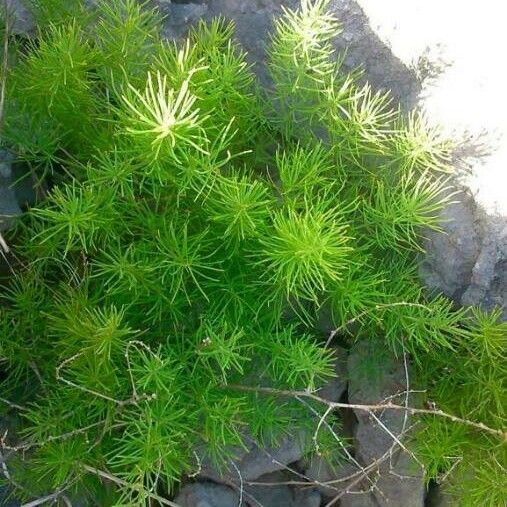
Often called the Narrow-leaved Asparagus, this elegant wild cousin of the common garden vegetable looks like a green mist captured in a garden bed. While it lacks the "beefy" stalks of commercial varieties, it more than makes up for it with its ethereal, feathery texture that seems to float above the soil. In its native Mediterranean and Eastern European haunts, it is a prized find for foragers who seek out its slender, wire-thin spring shoots.
🔍 How to Identify
- 🌿 The "Leaves": Look closely and you’ll see they aren't true leaves, but incredibly fine, needle-like branches called cladophylls. They grow in soft, dense bundles, giving the plant a "fuzzy" or misty appearance.
- 🎋 The Stems: The stalks are much more slender and smooth than common asparagus, often arching gracefully under their own weight as they reach up to 3 feet in height.
- 🔴 The Fruit: After its tiny, bell-shaped flowers fade, the plant produces perfectly spherical berries that turn a brilliant, glossy red in late summer.
🏡 In Your Garden
- 🪴 Drainage is Key: This plant is a master of the "long game." It develops a deep, fleshy root system designed to store energy and water, which means it survives droughts well but will quickly rot if left in soggy, heavy clay soil.
- ⛅ Woodland Vibes: Unlike the sun-hungry varieties found on farms, the Narrow-leaved Asparagus prefers the dappled light of a woodland edge. It thrives in partial shade where its delicate foliage won't be scorched by intense afternoon sun.
⚠️ Safety & Toxicity
- 🚫 Toxic Berries: While the very young, tender shoots are technically edible when cooked, the mature red berries are toxic and should never be eaten.
- 🐾 Pet & Child Safety: Ingesting the berries can cause significant gastrointestinal upset, including vomiting and diarrhea. Additionally, some people experience mild skin irritation (dermatitis) if they handle the sap or crushed foliage frequently.
✨ Fun Fact
Those "feathery needles" are a clever botanical lie! They are actually modified stems that have taken over the job of photosynthesis. The plant’s "real" leaves are actually tiny, microscopic scales hidden at the base of the branches, a specialized adaptation to help the plant conserve water in dry climates.

Detailed Care Instructions
To grow Asparagus Tenuifolius plants, follow these steps:
- Propagation: Asparagus Tenuifolius can be propagated through seeds or root division. Seeds can be purchased from a nursery or online store. Root divisions can be obtained by separating the roots from a mature plant.
- Soil: Asparagus Tenuifolius prefers well-drained soil with a pH level between 6.5 and 7.5. Ensure the soil is rich in organic matter and has good drainage.
- Planting: If you are using seeds, sow them 0.5 inch deep in the soil, keeping a distance of 12-18 inches between each seed. If using root divisions, plant them 6-8 inches deep into the soil, with the bud facing upwards.
- Sunlight: Asparagus Tenuifolius requires full sun exposure for at least 6-8 hours a day. Ensure the planting spot is not shaded by trees or other plants.
- Watering: Water the plants regularly to keep the soil moist but not waterlogged. Asparagus Tenuifolius prefers consistent moisture. Avoid overwatering, as it can lead to root rot.
- Mulching: Place a layer of organic mulch around the plants to conserve moisture, suppress weed growth, and regulate soil temperature.
- Fertilizing: Apply a balanced fertilizer or compost during the growing season to provide necessary nutrients. Follow the label instructions for the appropriate dosage.
- Weed control: Regularly remove weeds around the plants to reduce competition for nutrients.
- Harvesting: Asparagus Tenuifolius can be harvested when the young shoots reach a height of 4-6 inches. Cut the shoots just above the soil level to allow for regrowth.
- Winter care: Asparagus Tenuifolius is a perennial plant that requires protection during the winter months. Apply a thick layer of mulch around the plants to insulate them from cold temperatures.
Remember that Asparagus Tenuifolius plants take a few years to establish and produce a substantial harvest. Be patient and continue to provide proper care and maintenance for optimal growth.

Place in a window with dappled sun or a spot in the middle of a room. Or directly in a window facing west or east.

To water this plant, you should ensure that the soil is moist, but not waterlogged. Water the plant deeply once a week, but adjust this frequency based on the humidity in the air and the amount of rainfall the plant receives. Avoid letting the soil dry out completely between watering. Additionally, it's important to avoid getting water on the leaves or tips of the plant, as this can cause damage or disease. Consider using a gentle watering can or soaker hose to deliver water directly to the base of the plant.
To fertilize this plant, you should use a balanced fertilizer with equal amounts of nitrogen, phosphorus, and potassium. Apply the fertilizer to the soil around the base of the plant in early spring before new growth appears. You can also apply a second round of fertilizer in midsummer if necessary. Be sure to water the plant deeply after fertilizing to help the nutrients reach the roots. Avoid using fertilizer with high nitrogen content, as this can encourage excessive leaf growth at the expense of flowering and fruiting.
Asparagus Tenuifolius is a species of plant that requires well-draining soil that is rich in organic matter. The soil should be slightly acidic, with a pH level of around 6.0 to 6.7. The plant prefers sandy loam or loamy soil types that are aerated, enabling the roots to expand and grow properly. It's essential to avoid using heavy clay soil because it can retain water, which can lead to root rot. Additionally, sandy soil should be supplemented with organic matter to improve its fertility and water retention. Before planting, amending the soil with compost or well-rotted manure will help your Asparagus Tenuifolius establish roots and grow quickly. Good soil preparation is key to the success of any plant, and the Asparagus Tenuifolius is no exception.
Propagating this plant can be done by dividing its underground rhizomes. The plant should be carefully dug up and the rhizomes separated and replanted immediately. This can be done in the early spring or fall when the plant is less active. It is important to make sure each new division has enough roots and foliage to support itself. New plants may take several weeks to establish themselves after replanting.








