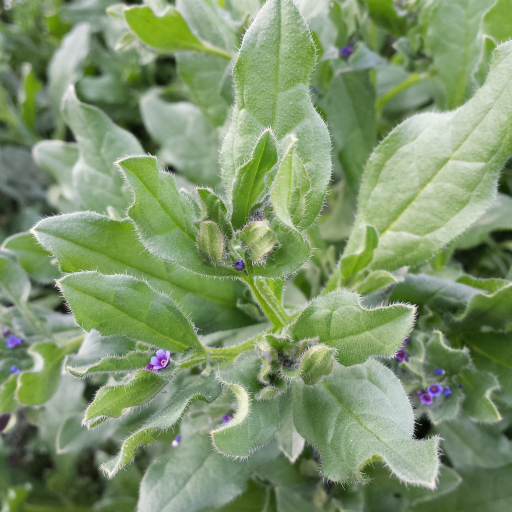
Plant Overview
Known as "Madwort" or "Great Goosegrass," Asperugo procumbens is a quirky, scrambling member of the Forget-me-not family. It earned its common name from ancient folklore suggesting it could cure "madness" or hydrophobia. Originally hailing from Eurasia, this plant has a unique way of "hitching a ride" on passing travelers and animals thanks to its incredibly sticky, bristly texture.
🔍 How to Identify
- 🖐️ Velcro Texture: The most striking feature is its "sticky" feel; the stems and leaves are covered in tiny, downward-pointing hooked prickles that cling to clothing and fur.
- 🌸 Hidden Blooms: It produces very small, star-shaped flowers that transition from a pale yellow-green to a deep violet or royal blue as they mature.
- 🍃 Scrambling Stems: Unlike upright garden flowers, this plant has weak, hollow, four-angled stems that prefer to sprawl across the ground or climb over neighboring weeds.
🏡 In Your Garden
- 🌱 Opportunistic Grower: You’ll likely find Madwort in nitrogen-rich, disturbed soils. It is often seen near compost heaps, farmyards, or old garden beds where the earth has been recently turned.
- 🧗 Space Invader: Because it is a "procumbent" plant (meaning it grows along the ground), it can quickly form a tangled mat. While it isn't as aggressive as some invasive vines, it can easily smother smaller, delicate seedlings if left unchecked.
⚠️ Safety & Toxicity
- 🟢 Non-Toxic Status: Asperugo procumbens is generally considered non-toxic to humans and common household pets.
- 🌵 Mechanical Irritation: While not chemically poisonous, the tiny hooks can cause mild skin irritation or "itchy" sensations if handled with bare hands. It’s always best to wear gardening gloves when pulling it to avoid the sandpaper-like scratchiness.
✨ Fun Fact
- 🐎 The Hitchhiker: The plant's seeds are encased in flattened, leafy "valves" that act like tiny clamps, ensuring that once it hitches a ride on a passing animal, it stays there until dropped in a brand new location.

Detailed Care Instructions
To grow Asperugo Procumbens, also known as German Madwort or Madwort, follow these steps:
- Planting location: Choose a sunny or partially shaded spot in your garden with well-draining soil. Asperugo Procumbens can tolerate a range of soil types but prefers slightly alkaline or neutral soil.
- Soil preparation: Prepare the soil by loosening it and removing any weeds or rocks. You can amend the soil with organic matter, such as compost or well-rotted manure, to improve fertility and drainage.
- Seeds or seedlings: You can start growing Asperugo Procumbens from seeds or purchase seedlings from a nursery. If starting from seeds, sow them directly in the prepared soil after the last frost date in your area.
- Sowing seeds: Broadcast the seeds evenly over the soil surface, then lightly rake the soil to cover them with a thin layer. Water gently to moisten the soil, but avoid overwatering, as it can cause rotting. Keep the soil consistently damp until germination, which should occur within 1-2 weeks.
- Spacing: If planting seedlings, space them about 6 inches apart to allow for proper growth. Asperugo Procumbens has a spreading habit, so enough space between plants will prevent overcrowding.
- Watering: Asperugo Procumbens requires regular watering, especially during dry periods. Water deeply, ensuring the soil is moist but not waterlogged. Avoid overhead watering, as the plant prefers to be watered at the base to prevent foliar diseases.
- Mulching: Apply a layer of organic mulch, such as straw or bark chips, around the plants to help retain moisture, suppress weeds, and regulate soil temperature. Mulching also adds essential nutrients to the soil as it breaks down.
- Fertilization: Asperugo Procumbens generally doesn't require heavy fertilization. However, you can feed it with a balanced organic fertilizer once or twice during the growing season to promote healthier growth.
- Pruning: Trim any dead or damaged parts of the plant as needed. This will help maintain the plant's overall health and appearance.
- Pests and diseases: Asperugo Procumbens is relatively resistant to most pests and diseases. However, keeping the plants well-spaced and providing adequate air circulation can prevent fungal diseases.
- Harvesting: Asperugo Procumbens produces small blue flowers followed by seed pods. The plant self-seeds easily, so if you want to prevent over-spreading, deadhead the flowers before they go to seed. The leaves and flowers can be harvested for culinary or medicinal purposes when needed.
By following these steps, you can successfully grow Asperugo Procumbens in your garden and enjoy its beautiful blue flowers and delicate foliage.

Place in a bright room that is sun drenched almost all day. Or directly in a south-facing window.

The plant requires regular watering to maintain its health and growth. The soil should be kept moist but not waterlogged as excess water can cause root rot. It is recommended to water the plant deeply with a watering can or hose and allow the excess water to drain out. The frequency of watering should be reduced during winters and increased during summers. Factors such as temperature, humidity, and sunlight can affect the plant's water needs, so it is crucial to monitor the soil's moisture content regularly. It is also essential to avoid overwatering as it can lead to wilting, yellowing of leaves, and other plant diseases.
Apply a balanced fertilizer to the soil around the plant during the growing season, following package instructions for dosage and frequency. Avoid over-fertilizing as it can lead to excessive growth and weak stems. Water the plant thoroughly after fertilizing.
Asperugo Procumbens thrives in well-draining soil with plenty of organic matter. It can grow in a variety of soil types but prefers a neutral to alkaline pH (7.0 to 7.5). The soil should be moist but not waterlogged as it can lead to root rot. It is best to avoid sandy soils or soils that are extremely compacted. Adding compost or well-rotted manure can greatly improve soil quality for this plant. Regular fertilization may also be necessary to ensure healthy growth.
Asperugo Procumbens plant can be propagated through a process known as division. To begin the process, carefully dig up the mature plant and separate it into smaller sections, ensuring that each section has roots and stems. The plant should then be replanted in soil that has been appropriately prepared. The process of division can be performed in the spring or autumn when the plant is not in its active growth phase. It is also advisable to water the newly planted sections regularly and provide them with enough sunlight until they establish themselves.








