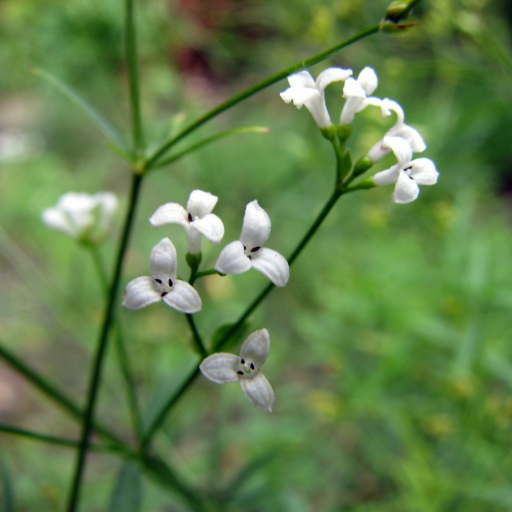
Plant Overview
Known as the Dyer's Woodruff, this delicate perennial is a quiet star of the European countryside. While it looks like a fragile, airy wildflower, it holds a colorful secret within its roots that made it a staple in historical textile arts for centuries. It is a leaner, more sun-loving cousin to the popular Sweet Woodruff, often found gracing limestone slopes and dry meadows.
🔍 How to Identify
- 🌸 Starry Blooms: Features clusters of tiny, four-petaled white flowers that create a "cloud-like" effect over the foliage in late spring.
- 🌿 Whorled Foliage: The narrow, needle-like leaves are arranged in circular "whorls" of four to six around a distinctly square, upright stem.
- 🥕 Reddened Roots: If you were to peak beneath the soil, you would find slender, creeping rhizomes that have a natural orange or reddish tint.
🏡 In Your Garden
- ⛰️ Alkaline Specialist: This plant is a "calciphile," meaning it absolutely loves chalky or limestone-rich soil. It is an excellent choice for rock gardens where other plants might struggle with high pH levels.
- 🌤️ Sun Endurance: Unlike its shade-loving relatives, Dyer's Woodruff is quite happy in full sun to partial shade. It is remarkably drought-tolerant once its root system is established, making it a "set and forget" addition to wilder garden borders.
⚠️ Safety & Toxicity
- ✅ General Safety: Asperula tinctoria is generally considered non-toxic to humans and is safe to handle without gloves.
- 🐾 Pet Caution: Like many members of its family, it contains coumarins. While not high-risk, it is best to keep curious pets from grazing on it in large quantities, as it could cause mild stomach upset.
✨ Fun Fact
The specific name tinctoria comes from the Latin word for "dyeing." Before synthetic pigments existed, the roots of this plant were harvested and boiled to produce a permanent red dye for wool and linen, serving as a wild alternative to the more famous "Madder" plant!

Detailed Care Instructions
To grow Asperula tinctoria, also known as dyer's woodruff or dyer's bedstraw, follow these steps:
- Climate and soil requirements: Asperula tinctoria prefers well-draining soil with a slightly acidic to neutral pH (around 5.8 to 7.0). It thrives in full sun to partial shade and can tolerate a range of temperatures.
- Collect seeds or purchase starter plants: You can obtain Asperula tinctoria seeds from plant nurseries or reputable online seed suppliers. Alternatively, you can also purchase starter plants from a nursery.
- Start seeds indoors (optional): If you have seeds, you can start them indoors about 6-8 weeks before the last expected frost date. Sow the seeds in seed-starting trays filled with a seed-starting mix, barely covering the seeds with the soil. Keep the soil consistently moist and provide warmth (around 70°F or 21°C) until the seedlings emerge.
- Transplanting outdoors: Once the danger of frost has passed and the seedlings have developed their true leaves, you can transplant them outdoors. Choose a location with the right amount of sunlight and well-draining soil.
- Planting spacing: Asperula tinctoria plants should be spaced about 12 to 18 inches apart to allow for proper growth and airflow.
- Watering and maintenance: Keep the plants well-watered, especially during periods of drought. Mulching can help retain moisture and suppress weeds. Regularly remove any spent flowers to encourage continuous blooming throughout the season. If the plants start to look leggy or overgrown, you can lightly trim them back to promote bushier growth.
- Harvesting: Asperula tinctoria is primarily grown for its dye properties. The best time to harvest the plant is when it is in full bloom. Cut the flowering tops and dry them in a well-ventilated area. Once dried, you can use it for dyeing materials such as fabric or crafting.
Remember, Asperula tinctoria is considered an herbaceous perennial, which means it may die back in colder climates but regrow in the following growing season.

Place in a bright room that is sun drenched almost all day. Or directly in a south-facing window.

To water Asperula Tinctoria plant, you can follow these steps:
1. Determine the watering schedule: Asperula Tinctoria prefers moist soil but can't tolerate overwatering. It is recommended to water the plant when the top inch of the soil feels dry to the touch.
2. Choose the right time of day: Watering in the morning is generally the best time, as it allows the plant to absorb the moisture throughout the day and minimizes the risk of fungal diseases caused by excess moisture sitting on the leaves overnight.
3. Preparing the watering container: Fill a watering can or any suitable container with room temperature water. Avoid using cold water directly from the tap, as it can shock the plant's roots.
4. Watering technique: Hold the watering container close to the base of the plant, just above the soil. Pour the water gently and slowly to allow it to soak into the soil rather than running off the surface. Aim to thoroughly moisten the entire root ball without causing waterlogging.
5. Observe drainage: Asperula Tinctoria plant prefers well-draining soil. If the water starts pooling on the soil surface or doesn't seem to be absorbing quickly, it may indicate that the soil is compacted or poorly draining. In such cases, consider adjusting the soil mix, adding organic matter, or creating drainage channels.
6. Avoid overwatering: It is crucial to avoid providing excessive moisture to the plant, as it can lead to root rot or other fungal diseases. Always check the moisture level in the soil and allow it to dry out partially between watering sessions.
7. Monitor the plant's response: Pay attention to any signs of water stress or overwatering, such as wilting leaves, yellowing foliage, or a sour/musty smell from the soil. Adjust the watering frequency accordingly to provide optimal moisture for the Asperula Tinctoria plant's health.
Remember that environmental factors such as temperature, humidity, and sunlight intensity can influence the watering needs of the plant. Regularly evaluate the soil moisture and adjust your watering routine accordingly to provide the ideal growing conditions for the Asperula Tinctoria plant.
To fertilize the Asperula Tinctoria plant, follow these instructions:
- Start by selecting a balanced, slow-release granular fertilizer specifically formulated for flowering plants.
- Read the instructions on the fertilizer packaging to determine the proper dosage and frequency.
- Apply the fertilizer evenly around the base of the plant, taking care not to let it touch the stems or leaves.
- Gently work the fertilizer into the top layer of soil using a hand cultivator or rake.
- Water the plant thoroughly after applying fertilizer to help it penetrate into the root zone.
- For optimal results, fertilize the Asperula Tinctoria plant in early spring or late winter before the onset of new growth.
- Repeat the fertilization process as directed on the fertilizer packaging, typically once every four to six weeks during the growing season.
- Monitor the plant's response to fertilization. If it shows signs of over-fertilization, such as yellowing leaves or wilting, reduce the frequency or strength of the fertilizer.
- Avoid fertilizing the plant during periods of drought or extreme heat, as this may cause stress to the plant.
- Regularly observe the plant for any signs of nutrient deficiencies or excesses. Adjust the fertilizer application as needed to maintain optimal plant health.
The ideal soil composition for Asperula Tinctoria plants should be well-draining and rich in organic matter. It should have a slightly acidic to neutral pH level, ranging between 6.0 and 7.5. This plant thrives in soils that are loamy or sandy, providing good drainage and preventing waterlogging. Additionally, it is important for the soil to retain some moisture to support the plant's growth and development.
To create the optimal soil for Asperula Tinctoria, you can incorporate a mixture of organic compost or aged manure, which will enrich the soil with essential nutrients. This will provide a fertile ground for the plant's roots to establish and grow. It is also beneficial to add some perlite or coarse sand to improve drainage and prevent soil compaction.
In terms of texture, a slightly loose soil structure is preferred, as it allows the roots to penetrate easily and facilitates healthy nutrient uptake. However, the soil should not be excessively loose or sandy, as it may cause water to drain too quickly and lead to dehydration of the plant.
Regularly amending the soil with organic matter and maintaining proper moisture levels will ensure optimal growth and overall health for Asperula Tinctoria plants.
To propagate Asperula tinctoria, you can use the following steps:
- Start by selecting a healthy mother plant from which you will take cuttings. Ensure that the plant is disease-free and has robust growth.
- Prepare a clean, sharp pair of pruning shears or scissors. It's important to use clean tools to avoid spreading any potential pathogens or diseases.
- Identify suitable stems for propagating. Look for young, healthy stems that are not too woody or too soft. Ideally, select stems that are about 4-6 inches (10-15 cm) long.
- Make a clean cut just below a leaf node, where the leaves meet the stem. Leaf nodes are the areas where new growth emerges from the stem. This is where roots will eventually develop.
- Remove the lower leaves from the stem, leaving just a few sets of leaves near the top. This will help reduce the moisture loss from the stem while it roots.
- If desired, you can dip the cut end of the stem into a rooting hormone powder or gel. This is an optional step but can help promote root growth.
- Fill a small pot or seed tray with a well-draining potting mix. You can use a mix of peat moss, perlite, and vermiculite or purchase a pre-made mix suitable for starting cuttings.
- Create holes in the potting mix using a pencil or your finger, spaced about 2-3 inches (5-8 cm) apart.
- Insert the prepared cutting into the hole, gently firming the soil around it to hold it in place. Ensure that at least one or two sets of leaves are above the soil level, while the rest should be buried. This will allow the cutting to root properly.
- Water the newly planted cuttings thoroughly, ensuring that the soil is evenly moist but not soaking wet. Avoid over-watering, as it can lead to rot or fungal issues.
- Place the pot or tray in a warm, bright location but avoid direct sunlight. A temperature of around 70-75°F (21-24°C) is optimal for root development.
- Mist the cuttings with water regularly, ensuring that the leaves stay hydrated. This will create a humid environment around the cuttings and promote root growth.
- Over the following weeks, monitor the cuttings for signs of new growth and root development. You may gently tug on the stem to check if there is resistance, indicating the roots have formed.
- Once the cuttings have rooted and show signs of strong growth, you can transplant them into individual pots or directly into your garden. Be gentle when transplanting to avoid damaging the delicate roots.
By following these steps, you can successfully propagate Asperula tinctoria from cuttings and enjoy the plant's unique beauty.








