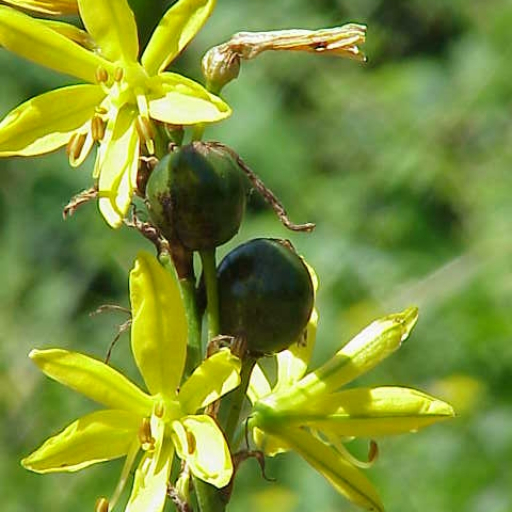
Plant Overview
Known as the King’s Spear or Yellow Asphodel, this striking Mediterranean perennial has been a fixture of European gardens and myths for centuries. In ancient Greek lore, the fields of the underworld were said to be blanketed in asphodels, where ordinary souls spent eternity. Today, it is prized for its architectural elegance and its ability to turn a dry, sun-baked garden into a golden sanctuary.
🔍 How to Identify
- 🌟 The Flowers: Densely packed, star-shaped yellow blossoms emerge on tall, unbranched spikes. Look closely, and you’ll see a subtle green stripe running down the back of each petal.
- 🌿 The Foliage: Unlike many lilies, its leaves are very thin, bluish-green, and grass-like. They spiral densely around the base and travel partway up the flower stalk.
- 🕯️ The Silhouette: True to its nickname, the plant grows in a rigid, vertical "spear" shape, often reaching up to 3 feet in height, making it a perfect structural accent for the back of a flower bed.
🏡 In Your Garden
- ☀️ Sun-Drenched Roots: The King’s Spear is a Mediterranean native, meaning it thrives in the hottest parts of your garden. It craves "lean" soil—if the soil is too rich or wet, the plant may become floppy or suffer from root rot.
- ⏳ Patience is Key: This plant is famous for its slow start. It focuses on building a deep, fleshy root system before it puts on a major show. Because of these deep roots, it hates being moved; choose its permanent "forever home" carefully to avoid transplant shock.
- 🐝 Pollinator Magnet: While the flowers smell faintly of honey, they are particularly irresistible to bees and butterflies, making it an excellent choice for a wildlife-friendly "dry garden."
⚠️ Safety & Toxicity
- 🟢 Generally Safe: The Yellow Asphodel is not considered significantly toxic to humans or common household pets like cats and dogs.
- ✋ Handle with Care: While safe, it is always best practice to discourage pets or children from chewing on garden plants, as the fibrous leaves can cause mild stomach upset if ingested in large quantities.
✨ Fun Fact
In ancient times, the roots of the King's Spear were roasted like potatoes and eaten with salt and oil. While we don't recommend it as a snack today, it served as a vital food source during times of famine in the Mediterranean region!

Detailed Care Instructions
To grow Asphodeline Lutea (also known as yellow asphodel) successfully, you can follow these steps:
- Select a suitable location: Asphodeline Lutea prefers full sun to partial shade. Choose a sunny spot in your garden with well-draining soil.
- Prepare the soil: Work the soil to a depth of about 12 inches (30 cm) and amend it with organic matter like compost or well-rotted manure to improve drainage and fertility.
- Planting: Dig a hole that is slightly larger than the root ball of the plant. Place the plant in the hole, ensuring that the top of the root ball is level with the soil surface. Backfill the hole with soil and gently firm it around the plant.
- Watering: Water the plant thoroughly after planting, and then maintain regular watering throughout the growing season. Asphodeline Lutea prefers moderately moist soil but is tolerant of drought once established.
- Mulching: Apply a layer of organic mulch around the plant to conserve moisture, suppress weeds, and insulate the roots.
- Fertilizing: Asphodeline Lutea generally doesn't require regular fertilization. However, you can apply a balanced slow-release fertilizer in early spring to promote healthy growth.
- Pruning: Deadhead the faded flowers regularly to encourage continuous blooming. In late fall, cut back the foliage to the ground to prepare the plant for winter.
- Winter care: Asphodeline Lutea is hardy in USDA hardiness zones 7-9. In colder regions, provide 2-3 inches (5-7.5 cm) of mulch around the base of the plant to protect it from freezing temperatures.
- Dividing: Every few years, you can divide larger clumps of Asphodeline Lutea to maintain their vigor. Dig up the clump in early spring or fall, separate the individual plants, and replant them in well-prepared soil.
With proper care and suitable growing conditions, your Asphodeline Lutea plants should thrive and produce tall spikes of yellow flowers during the summer months.

Place in a bright room that is sun drenched almost all day. Or directly in a south-facing window.

Asphodeline Lutea plant prefers to grow in well-drained soil and requires moderate watering in order to thrive. Choose a soil mix that is rich in organic matter and has good drainage. When watering, it is important to avoid over-watering as this can lead to root rot. Water the plant deeply but infrequently, and ensure that the soil is allowed to dry out slightly before watering again. When watering, it is best to water the soil rather than the plant itself, as this will help to prevent fungal disease. Finally, make sure the plant receives adequate sunlight and is kept in a warm and dry location. With the right care, Asphodeline Lutea plant can grow into a beautiful and healthy specimen that will provide many years of enjoyment.
To fertilize this plant, use a balanced fertilizer that contains equal amounts of nitrogen, phosphorus, and potassium. Apply the fertilizer once a month during the growing season, which is typically spring and summer. Follow the package instructions to determine the appropriate amount of fertilizer to use for the size of your plant. Water the plant thoroughly after applying the fertilizer to help the nutrients soak into the soil. Avoid applying fertilizer during the dormant season, which is typically fall and winter.
Asphodeline Lutea prefers well-draining soil that is rich in organic matter. The ideal soil pH range for this plant is between 6 and 7.5. When planting, it is recommended to mix in some sand or gravel to improve drainage. This plant is tolerant of dry conditions, so it is important to avoid overwatering and ensure that the soil does not become waterlogged. A sandy loam soil will be suitable for this plant as it can drain easily.
To propagate this plant, first carefully remove offsets (young plants that have grown from the parent plant) from the base of the plant. Gently detach them with a sharp knife or garden shears, making sure to not damage the parent plant.
Prepare well-draining soil mix using perlite, sand, and peat moss, in equal proportions. Then, plant the offsets into individual pots, burying them up to the base of the leaves.
Water the new plants lightly and place them in a bright, warm location. Keep the soil moist but not overly wet, as excessive moisture can cause rot.
After a few weeks, the new plants will grow roots and show new growth. Once they are established, they can be transplanted to their permanent location in the garden.








