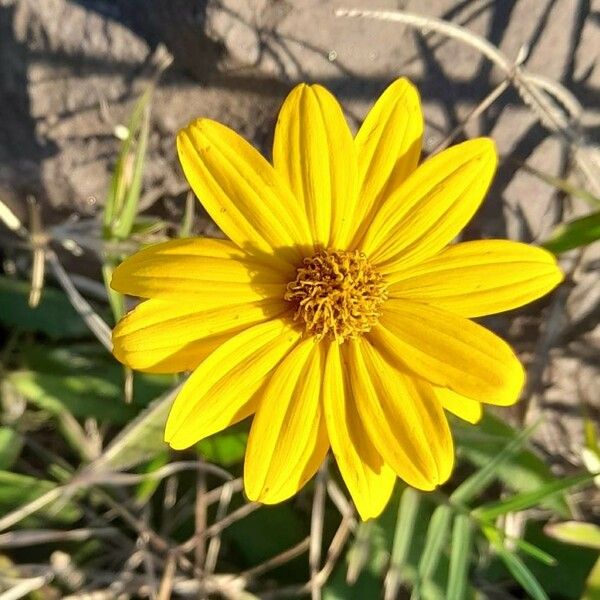
Plant Overview
Often called the Madagascar Aspilia, this vibrant member of the daisy family is a hidden gem from the biodiverse landscapes of Madagascar. With its cheerful, sun-drenched yellow blooms, it looks like a wild sunflower shrunken down to garden size. Beyond its beauty, it belongs to a genus world-renowned for its medicinal history and its fascinating relationship with wildlife.
🔍 How to Identify
- 🌼 Rayed Florets: It produces classic daisy-like composite flowers with bright yellow outer petals surrounding a dense, golden-orange central disc.
- 🍃 Lance-Shaped Leaves: The foliage is typically dark green, elongated, and pointed (lanceolate), often featuring a slightly rough or "sandpapery" texture on the surface.
- 🌿 Shrubby Stature: It grows as a perennial herb or sub-shrub, reaching a modest height that makes it perfect for filling gaps in tropical-themed borders.
🏡 In Your Garden
- ☀️ Sun Seeker: This plant is a true child of the tropics; it craves bright, direct light to produce its best flowers. In shadier spots, the stems may become "leggy" as they stretch toward the sun.
- 🪴 Soil Nuance: It prefers well-draining, slightly acidic soil. Because it originates from regions with distinct wet and dry seasons, it is surprisingly resilient once established, provided it isn't left in standing water.
⚠️ Safety & Toxicity
- 🌿 Mild Irritant: While not considered high-risk, the sap of many Aspilia species can cause mild skin irritation (dermatitis) in sensitive individuals. It is always best to wear gloves when pruning.
- 🐾 Pet Safety: There is limited data on Aspilia pascalioides specifically, but as a general rule for Asteraceae (daisy family) plants, ingestion can lead to mild digestive upset in cats and dogs.
✨ Fun Fact
Members of the Aspilia genus are famous in the world of biology for "Zoopharmacognosy." Wild chimpanzees in Africa have been observed swallowing the leaves of related Aspilia species whole—not for food, but to use the rough leaves to physically "scour" parasites out of their intestinal tracts!

Detailed Care Instructions
- Check the soil moisture level before watering the plant.
- The ideal soil moisture level for Aspilia Pascalioides is when the top layer of soil (about 2 inches) is dry.
- Use room temperature water to avoid shocking the plant's roots.
- Water the plant at the base of its stem, near the soil, and avoid getting water on the leaves.
- Water slowly and evenly to allow the soil to absorb the water and prevent water runoff.
- Do not overwater the plant, as it can lead to root rot and other diseases.
- Take care not to water the plant too frequently or too sparingly, as this can also cause problems for the plant's health.
- Additionally, ensure that the plant is housed in a container or location that allows for proper drainage.
Aspilia Pascalioides plant requires a well-draining, light soil that is rich in organic matter. A soil mix with a pH range of 5.5-6.5 is recommended. A combination of peat moss, perlite, and vermiculite will provide the necessary drainage and aeration while maintaining moisture retention. The addition of composted manure or organic fertilizer will enhance soil fertility and provide the necessary nutrients for healthy plant growth. Avoid using heavy clay soils or those that have not been well-drained, as this can lead to root rot and other issues. A regular regimen of fertilization and watering according to the plant's needs will help to maintain healthy and vigorous growth.








