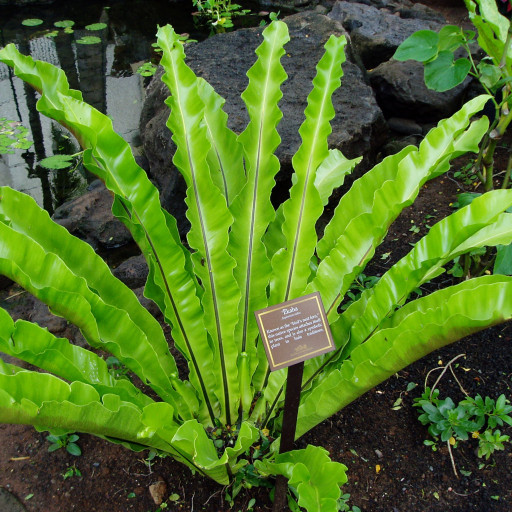
Plant Overview
Often mistaken for its more common cousin, the Asplenium nidus, the Japanese Bird’s Nest Fern is a lush, architectural wonder that brings a piece of the ancient East Asian forest into your home. With its uniform, sword-like fronds emerging from a central "nest," it creates a striking symmetrical silhouette that looks almost prehistoric. In its native habitat, it is an epiphyte, often perching high on tree branches and catching falling organic debris to feed itself.
🔍 How to Identify
- 🌿 The Rosette: The fronds grow in a tight, circular pattern, creating a central bowl shape that looks remarkably like a bird’s nest.
- 🍃 Frond Texture: The leaves are vibrant apple-green, leathery, and sword-shaped with smooth, slightly undulating edges that feel waxy to the touch.
- 🕸️ The Fuzzy Heart: The center of the plant (the "nest") is covered in dark, hair-like scales. This is the growth point where new fronds, known as fiddleheads, slowly unfurl.
🏡 In Your Garden
- 💧 The Crown Rule: While this fern loves moisture, you should never pour water directly into the "nest" or center of the plant. Stagnant water in the crown causes the plant to rot from the inside out; always aim your watering can at the soil.
- ☁️ Humidity Hunter: Because it naturally grows in humid forests, it thrives in environments like bright bathrooms. If your home is dry, placing the pot on a tray of pebbles and water will keep the leaf tips from turning brown and crispy.
- 🏺 Potting Nuance: It prefers a well-draining, chunky mix—such as a blend of orchid bark and peat—rather than heavy garden soil. This mimics the loose leaf litter it would naturally grow in on a tree trunk.
⚠️ Safety & Toxicity
- ✅ Non-Toxic: The Asplenium antiquum is a "green light" plant for households with curious residents.
- 🐾 Pet & Child Friendly: This species is considered non-toxic to cats, dogs, and humans. It lacks thorns or irritating saps, making it one of the safest decorative choices for a family home.
✨ Fun Fact
The name "Spleenwort" (the family this fern belongs to) comes from an ancient "Doctrine of Signatures." Because the spore patterns on the back of the leaves were thought to look like a physical spleen, doctors in the Middle Ages believed the plant could cure ailments of that specific organ!

Detailed Care Instructions
| Color | No Flowers, Lush Green Foliage |
| Soil Ph | 5-5.5 |
| Lighting | Part Sun |
| Toxicity | Non-Toxic |
| Soil Type | Peat-Based Potting Mix |
| Bloom Time | Growth Can Be Rapid During The Spring And Summer; Year Round If Conditions Are Ideal |
| Plant Type | Perennial In Warm Climates |
| Mature Size | Fronds Grow To 20 To 59 Inches Long And 4 To 8 Inches Broad. |
| Native Area | East Tropical Africa And Tropical Asia |
| Sun Exposure | Filtered Or Indirect Light |
| Hardiness Zones | 11-12 |
To grow an Asplenium Antiquum plant, also known as the Bird's Nest Fern, follow these steps:
- Choose the right location: Bird's Nest Ferns thrive in bright but indirect light. Avoid placing them in direct sunlight, as it can scorch their delicate fronds. Place the plant near a north or east-facing window or any location that provides filtered or indirect sunlight.
- Temperature and humidity: The Bird's Nest Fern prefers moderate temperatures between 60-75°F (15-24°C). It also enjoys high humidity levels, so mist the leaves regularly or place a tray filled with water near the plant to increase humidity. Avoid placing the fern in a drafty area.
- Watering: Keep the soil consistently moist but not waterlogged. Water the plant when the top inch of soil feels dry to the touch. Watering once every week or two is generally sufficient. Ensure good drainage, as the plant's roots can rot if left in standing water.
- Soil and potting: Use a well-draining potting mix that retains moisture, such as a blend of peat moss, perlite, and sand. Choose a pot with drainage holes to prevent waterlogged roots. Repotting should be done every two years or when the plant outgrows its current container.
- Fertilization: Fertilize the Bird's Nest Fern once a month during the growing season (spring to fall) with a balanced liquid houseplant fertilizer diluted to half strength. Avoid overfertilizing, as it can damage the plant.
- Pruning: Trim off any dead or yellowing fronds with clean and sharp pruning shears. Regularly removing damaged or old fronds promotes healthy growth.
- Humidity tray: As Bird's Nest Ferns thrive in high humidity, placing the pot on a tray filled with pebbles and water can enhance humidity levels around the plant.
- Propagation: Propagate the fern by dividing its root ball during repotting. Gently separate the offshoots, ensuring that each division has its own roots and fronds. Plant the divisions in separate pots with fresh potting mix.
- Pest control: Keep an eye out for common houseplant pests such as spider mites and mealybugs. If noticed, treat them promptly with insecticidal soap or neem oil spray as per the product instructions.
By following these steps, you can successfully grow and care for an Asplenium Antiquum plant in your home.

Place in a window with dappled sun or a spot in the middle of a room. Or directly in a window facing west or east.

To properly water this plant, first, you must ensure that the soil is moist but not waterlogged. It is essential to avoid overwatering, as this type of plant prefers slightly drier conditions. Watering once a week or as needed is recommended. This plant should be watered from the base, avoiding wetting the foliage. You can either water it by adding water to the saucer beneath the plant pot and letting the plant absorb it, or by carefully watering the soil directly at the base of the plant. The use of filtered or distilled water is recommended since tap water can contain various chemicals that may harm the plant. Additionally, be sure to avoid any standing water, as it can lead to root rot and other issues.
To fertilize the plant, use a balanced liquid fertilizer diluted to half strength and apply it to the soil once per month during the growing season (spring and summer). Avoid over-fertilizing, as this can lead to salt buildup in the soil and harm the plant. If the plant shows signs of nutrient deficiency, such as yellowing leaves, increase the fertilizer application frequency slightly.
Asplenium Antiquum plant thrives well in well-drained soil that is rich in nutrients. The ideal soil for this plant should be a combination of organic matter and perlite. The soil should be slightly acidic with a pH level of between 5.5 and 6.5. It is important to note that this plant does not tolerate saturated soil and soil that is too dry. Therefore, ensure that the soil is moist but well-drained at all times. To maintain the soil quality, you can add organic fertilizers during the growing season. Additionally, you can top-dress the soil with organic matter to help it retain water and improve soil fertility. It is important to monitor the soil moisture level and adjust watering accordingly.
To propagate this plant, you will need to harvest the spores from the underside of mature fronds. Wait until the fronds have turned brown and the spores are ripe. Then, gently shake the frond over a piece of paper to collect the spores.
Next, prepare a potting mix of equal parts peat moss and coarse sand. Wet the mixture until it is moist, but not soaking wet. Sprinkle the spores evenly over the surface of the potting mix.
Cover the pot with plastic wrap and place it in a warm, bright location with indirect light. Keep the potting mix moist by misting it regularly with water.
After a few weeks, tiny green fronds will begin to emerge from the potting mix. Once they have grown large enough to handle, carefully transplant them into individual small pots filled with the same potting mix.
Keep the young plants in a bright location with indirect light and water them regularly to keep the soil moist. With proper care, your plants will grow into healthy, mature specimens that can be transplanted into larger pots or into the ground.
Common pests of the bird's-nest fern include Scale insect, mealybugs, spider mites, aphids, thrips. Make a habit of checking your bird's-nest fern frequently for pests so that any infestations can be caught and managed early.








