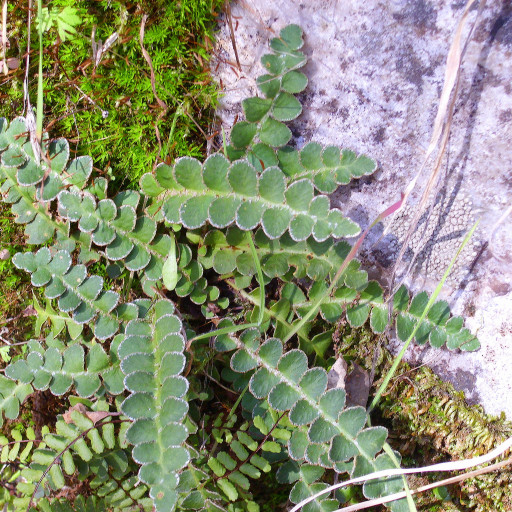
Plant Overview
Known affectionately as the Rustyback or Miltwaste, this resilient little fern is a master of the "resurrection" trick. Unlike its thirsty forest cousins, the Rustyback thrives in the harsh, dry environment of old stone walls and limestone cliffs. In ancient folklore, it was believed to have the power to shrink a swollen spleen, earning it the medieval name "Miltwaste" (milt being an old word for spleen).
🔍 How to Identify
- 🌿 Leathery Fronds: The leaves are thick, opaque, and divided into rounded, alternating lobes that give it a zigzag appearance.
- 🍂 Rusty Scales: The most iconic feature is the underside of the frond, which is densely covered in overlapping scales that turn a rich, rusty-brown color as the plant matures.
- 🌀 Curled Habit: During dry weather, the plant curls its fronds inward, hiding its green upper surface and exposing only the brown scales to protect itself from dehydration.
🏡 In Your Garden
- 🧱 The Wall Dweller: This is not a plant for a standard flower bed. It is a "lithophyte," meaning it prefers to grow in the cracks of limestone walls, rockeries, or stony crevices where drainage is near-instant.
- ☀️ Lime Lover: It craves alkaline conditions. If you are planting it in a garden, adding a bit of crushed limestone or old mortar rubble to its nook will make it feel right at home.
- 💧 Drought Specialist: It is one of the few ferns that can handle direct sun and long periods of drought. If it looks shriveled and dead during a heatwave, don't pull it out—it is simply sleeping and will turn green again after the first rain.
⚠️ Safety & Toxicity
- ✅ Non-Toxic: The Rustyback is generally considered safe and non-toxic for humans, cats, and dogs.
- 🧤 Handing Advice: While it isn't poisonous, the dense scales on the underside can be slightly dusty or irritating to those with very sensitive skin or respiratory allergies if handled in large quantities.
✨ Fun Fact
The Rustyback is "poikilohydric," a scientific term meaning it can lose nearly all its body water and survive in a desiccated state for months. When water finally touches it, the cells rehydrate and the fern "wakes up" and expands in just a few hours!

Detailed Care Instructions

Place in a window with dappled sun or a spot in the middle of a room. Or directly in a window facing west or east.

Asplenium Ceterach is a type of fern plant that requires regular watering to thrive. To water this plant, you will need to wait until the soil is dry to the touch before watering it. When watering, pour water evenly over the soil until it appears moist but not waterlogged.
It is important not to overwater the Asplenium Ceterach plant, as this can lead to root rot and other problems. Between waterings, it is recommended to allow the soil to dry out slightly before watering again.
In addition to watering, it is important to provide adequate drainage for the Asplenium Ceterach plant. This can be achieved by ensuring the pot or container has drainage holes and by using a well-draining soil mix.
Overall, providing the right amount of water and drainage for the Asplenium Ceterach plant will help ensure it stays healthy and vibrant.
Without the need of fertilizer, these plants can thrive and bloom. If a plant requires fertilization, it will display indicators of nutrient insufficiency, such as yellowing leaves. It is safe to apply slightly diluted fertilizers in these circumstances. Over fertilizing, on the other hand, should be avoided because excess nutrients might cause plant mortality. Slow-release fertilizers are therefore advised for these plants.
You may use All Purpose Plant Food for your Rusty-Back
Asplenium ceterach plant requires damp, well-drained soil that is rich in nutrients. It should be planted in a slightly acidic to neutral soil with a pH of around 6.0-7.0. The soil should contain organic matter, such as compost or leaf mold, to improve the soil structure and provide the plant with essential nutrients. The soil should also have good water retention capacity, but not be waterlogged, as this can cause root rot. Asplenium ceterach plants prefer slightly shaded conditions and can grow well in rock crevices or on walls, so a soilless mix, such as peat moss, perlite, and vermiculite, can be used if the plant is grown in a container or on a vertical surface. Overall, the soil for Asplenium ceterach should be fertile, well-drained, slightly acidic to neutral, and rich in organic matter.
Common pests of the rusty-back include Scale insect, mealybugs, spider mites, aphids, thrips. Make a habit of checking your rusty-back frequently for pests so that any infestations can be caught and managed early.








