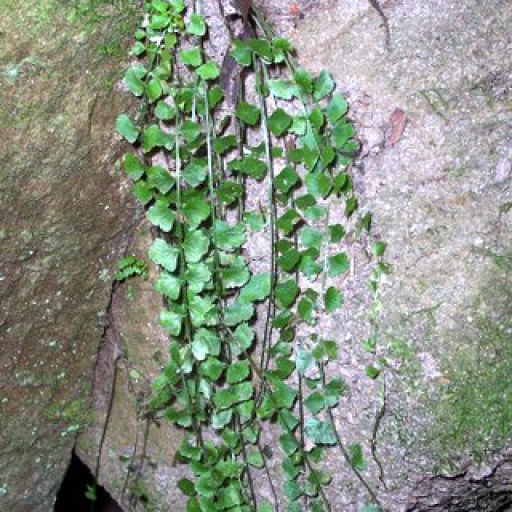
Plant Overview
Known affectionately as the Necklace Fern or the Fan-leaved Spleenwort, this delicate native of Australia and New Zealand is a true "wanderer." It gets its name from its long, slender fronds that look like beaded necklaces draped over rocks or forest floors. Unlike many upright ferns, this species is a master of the low-profile, often found "walking" across damp crevices in search of the perfect shady spot.
🔍 How to Identify
- 🌿 The Fronds: These are incredibly long and narrow, often arching or trailing along the ground, reaching up to 10–12 inches in length.
- 🍃 Fan-Shaped Pinnae: The leaflets (pinnae) are distinctively fan-shaped or wedge-shaped with slightly toothed edges, resembling a tiny hand-held fan.
- 🧶 The "Walker" Tip: The most unique feature is the bare, whip-like tip at the end of each frond, which often develops a tiny new plantlet (bud) when it touches moist soil.
🏡 In Your Garden
- 🧱 Crevice Dweller: In the wild, it thrives in the cracks of rocks and old walls. In your home, it performs best in a gritty, well-draining potting mix or even tucked into a vertical "living wall" where its roots can breathe.
- 💧 Humidity over Wet Feet: While it craves a humid environment, the Necklace Fern is prone to crown rot if left in soggy soil. It prefers a "damp but airy" lifestyle, making it a perfect candidate for a closed terrarium or a rocky grotto in a shade garden.
- 🧗 The "Walking" Habit: Because the tips of the fronds root into the ground to create baby plants, it can slowly spread across a surface, creating a beautiful, emerald-green carpet over time.
⚠️ Safety & Toxicity
- ✅ Non-Toxic: Good news for pet owners and parents! The Necklace Fern is generally considered non-toxic to cats, dogs, and humans.
- 🧤 Delicate Handling: While safe, the plant is physically fragile. Its thin stems can snap easily if brushed against frequently, so place it somewhere it won't be bumped by passing foot traffic.
✨ Fun Fact
The Asplenium flabellifolium is a "proliferous" fern. This means it has the rare ability to reproduce asexually by growing miniature clones of itself directly from the tips of its leaves! This survival strategy allows it to "walk" across rock faces and colonize areas where seeds (spores) might struggle to take root.

Detailed Care Instructions

Place in a window with dappled sun or a spot in the middle of a room. Or directly in a window facing west or east.

Asplenium Flabellifolium is a type of fern that thrives in a subtropical or tropical climate. Proper watering is essential to maintain the plant's lush green foliage and ensure its overall health.
To water Asplenium Flabellifolium, use a watering can or a hose with a gentle spray nozzle. The plant prefers moist soil, but it should not be watered excessively. Allow the top layer of soil to dry out slightly before watering again.
Be sure to water the plant at its base and avoid getting water on the leaves. This can prevent fungal diseases and keep the plant looking fresh and healthy.
In addition to watering, Asplenium Flabellifolium also benefits from regular fertilization and pruning. A balanced fertilizer should be applied once a month during the growing season. Pruning should be done to remove any dead or damaged fronds and promote new growth.
By following these watering and care tips, Asplenium Flabellifolium can thrive and add a touch of natural beauty to any indoor or outdoor space.
Asplenium Flabellifolium plant is a type of fern that requires well-draining soil that is rich in nutrients. It prefers soil that is slightly acidic to neutral, with a pH ranging from 6.0 to 7.0. The soil should be loamy and have good water-holding capacity. To achieve this, it is recommended to mix together equal parts of peat moss, perlite, and coarse sand to create a well-aerated soil mix. It is important to ensure that the soil is not too compact, as this can lead to poor drainage and root rot. Re-potting the plant every two years with fresh soil can also help promote healthy growth.








