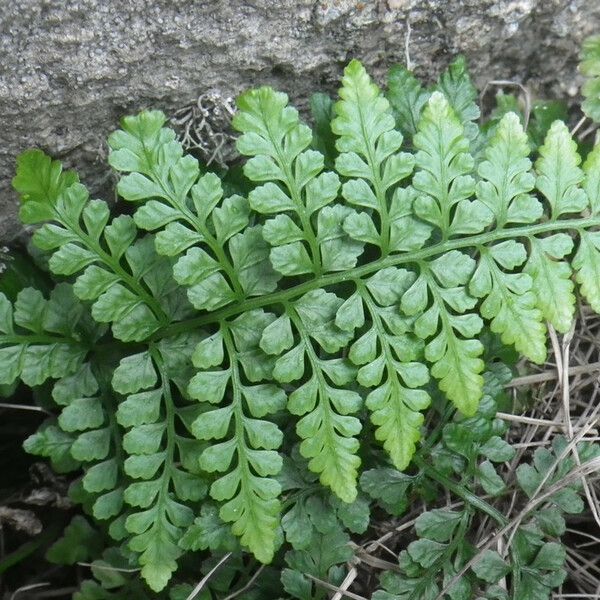
Plant Overview
Known as the Lanceolate Spleenwort, this elegant fern is a rugged coastal specialist that adds a touch of ancient woodland charm to rocky landscapes. Thriving in the salt-misted air of Mediterranean and Atlantic cliffs, it has earned a reputation for being a "cliff-hanger," often found tucked into the damp, shady crevices of old stone walls and granite outcrops.
🔍 How to Identify
- 🌿 The Fronds: These are "bipinnate" (twice-divided), giving them a delicate, lacy appearance. They generally have a lance-like or oval outline, tapering towards the tip.
- 🎨 The Color: Look for a deep, glossy forest green on the upper surface, which contrasts beautifully with the dark, reddish-brown color found at the very base of the stem (stipe).
- 🧬 The Sori: On the underside of mature leaves, you will see linear, rust-colored rows of spores. These are the "seeds" of the fern, arranged in the classic pattern that defines the Spleenwort family.
🏡 In Your Garden
- 🪨 The Perfect Perch: Unlike many garden plants, this fern hates "wet feet." It thrives best when tucked into vertical spaces, such as a dry-stone wall or a rockery, where water can drain away instantly from its roots.
- ☁️ Microclimate Needs: It is a lover of humidity and shade. In a home or garden setting, it appreciates being sheltered from harsh, drying winds and direct afternoon sun, which can quickly scorch its delicate leaflets.
⚠️ Safety & Toxicity
- ✅ Status: Generally considered non-toxic.
- 🐾 Details: This fern is safe for households with curious cats, dogs, and children. While not meant for consumption, it does not possess the high levels of toxins found in some other fern species, making it a "pet-friendly" choice for rock gardens.
✨ Fun Fact
The name "Spleenwort" dates back to the "Doctrine of Signatures," an ancient belief that plants which resembled human organs could heal them. Because the spore patterns on these ferns were thought to look like the human spleen, they were used in medieval medicine to treat various internal ailments!

Detailed Care Instructions
To grow Asplenium obovatum, also known as the spoon-leaved bird's nest fern, you can follow these steps:
- Choose a suitable location: This plant thrives in bright, indirect light, so find a spot that receives filtered sunlight or shade. Avoid placing it in direct sunlight as it can scorch the leaves.
- Provide the right temperature and humidity: The ideal temperature range for this fern is between 60-75°F (15-24°C). It prefers high humidity levels, so consider placing it near a humidifier, a pebble tray filled with water, or mist the leaves regularly.
- Select well-draining soil: Use a mixture of peat moss, perlite, and sand to create a well-draining soil. This fern prefers slightly acidic soil with a pH range of 5.5-6.5.
- Water properly: These ferns like consistently moist soil but not waterlogged conditions. Water when the top inch of soil becomes dry, and ensure there is good drainage to prevent root rot. Avoid letting the plant sit in standing water.
- Fertilize occasionally: Feed the fern with a balanced houseplant fertilizer once a month during the growing season (spring and summer). Dilute the fertilizer according to the manufacturer's instructions.
- Prune as needed: Remove any dead or yellowing fronds to keep the plant looking tidy. New growth will emerge from the center of the plant.
- Propagate if desired: You can propagate Asplenium obovatum by dividing the plant during repotting. Carefully separate the root clumps and re-pot each division into its own container.
- Repot when necessary: Asplenium obovatum grows slowly and may only require repotting every two to three years. Repot it into a slightly larger container with fresh potting soil.
By following these steps, you can successfully grow Asplenium obovatum and enjoy its beautiful spoon-shaped fronds.

Place in a window with dappled sun or a spot in the middle of a room. Or directly in a window facing west or east.

To properly water Asplenium Obovatum, it is crucial to follow a few guidelines:
1. Observe the soil: Before watering, check the moisture level of the soil. Asplenium Obovatum prefers moist but not waterlogged soil. Insert your finger about an inch into the soil to determine if it feels dry. If it does, proceed to the next step.
2. Use room temperature water: When watering, it is best to use room temperature water. This helps to prevent shocking the plant's roots and ensures better absorption.
3. Water the soil evenly: Instead of spraying the foliage, direct the water to the soil surrounding the plant. This approach helps prevent diseases caused by excess moisture on the leaves and also aids root absorption.
4. Apply a sufficient amount of water: Ensure that you provide enough water to reach the entire root zone. Saturate the soil thoroughly but avoid overwatering, as this can lead to root rot.
5. Allow proper drainage: Be sure that the plant is potted in a container with drainage holes. This ensures that excess water can freely escape and prevents water from stagnating around the roots.
6. Monitor watering frequency: Asplenium Obovatum typically prefers moderately moist soil rather than consistently wet or dry conditions. Adjust the frequency of watering based on the plant's needs, the surrounding environment, and the specific requirements of the potting mix.
Remember, it is always better to underwater than to overwater Asplenium Obovatum. Regularly check the soil's moisture level and adjust your watering accordingly. It is important to provide a stable and suitable environment for the plant to thrive.
To fertilize Asplenium obovatum plant, follow these instructions:
- Choose a balanced, water-soluble fertilizer with an NPK ratio of 20-20-20 or similar composition.
- Dilute the fertilizer according to the manufacturer's instructions. Generally, a concentration of 1/4 to 1/2 strength is suitable for foliage plants like Asplenium obovatum.
- Water the plant thoroughly with plain water before fertilizing. This helps to prevent fertilizer burn and ensures even distribution of nutrients.
- Pour the diluted fertilizer directly onto the soil around the base of the plant. Avoid getting the fertilizer on the leaves or fronds to prevent potential damage.
- Repeat this process every 4-6 weeks during the growing season, which typically spans spring to fall. Reduce or stop fertilization during winter months when the plant enters a period of dormancy.
- Monitor the plant's response to fertilization. If you notice any signs of over-fertilization, such as yellowing leaves or browning leaf tips, reduce the concentration or frequency of fertilizing.
- In addition to regular fertilization, make sure the plant receives appropriate light, moisture, and humidity levels to promote healthy growth.
Remember to follow the above steps, adjusting for your specific Asplenium obovatum plant's needs.
Asplenium Obovatum, a type of fern, requires a specific type of soil to thrive. The ideal soil for this plant should be well-draining and rich in organic matter. It should have a slightly acidic to neutral pH level, preferably between 6.0 and 7.0.
To achieve the proper soil composition, you can start with a base of high-quality potting mix. This mix should contain a balance of organic materials such as peat moss, compost, and perlite or vermiculite. These materials will increase drainage and aeration within the soil.
To further enhance the soil quality for Asplenium Obovatum, you can add additional organic matter such as leaf mold or well-rotted manure. This will provide essential nutrients and improve moisture retention without causing waterlogging.
It is important to note that Asplenium Obovatum is sensitive to excessive moisture, so the soil should not stay excessively wet. To avoid waterlogging, ensure that the soil has good drainage, and consider adding coarse sand or gravel to the mix.
A suitable soil composition for Asplenium Obovatum should feel loose, light, and crumbly. It should have good water retention capabilities while allowing excess water to drain away. Regularly check the moisture levels by inserting your finger an inch or two into the soil; if it feels dry at that depth, it's time to water the plant.
By providing the proper soil conditions, you can create an optimal growing environment for your Asplenium Obovatum plant, ensuring its health and vitality.
To propagate Asplenium obovatum plants, you can follow these steps:
- Start by selecting a healthy parent plant that is free from diseases or pests. Ensure that the plant is mature and has strong fronds.
- Prepare a suitable planting medium for the new plants. Asplenium obovatum prefers a well-draining mixture that is rich in organic matter. A combination of peat moss, perlite, and sand can be used to create an ideal mix.
- Take a close look at the parent plant and locate the offsets or plantlets growing around the base of the main plant. These are the parts that will be used for propagation.
- Using a clean and sharp pair of scissors or gardening tool, carefully detach the offsets or plantlets from the parent plant. Be gentle to avoid damaging the roots or the main plant.
- Once separated, plant each offset or plantlet into an individual pot or container. Ensure that the pot has drainage holes to prevent waterlogging.
- Fill each pot with the prepared planting medium, leaving enough space for the roots to grow. Gently press the soil around the offsets to secure them.
- Place the pots in a location that receives bright indirect sunlight. Avoid direct sunlight as it can scorch the plants. Maintain a temperature of around 70-75°F (21-24°C) for optimal growth.
- Water the newly planted offsets thoroughly but avoid overwatering. The soil should be moist but not soggy. Check the soil's moisture level regularly and water when it begins to dry out.
- Mist the plants occasionally to increase humidity, as Asplenium obovatum prefers higher humidity levels. Alternatively, you can place a tray of water near the plants to increase humidity around them.
- Monitor the growth of the new plants and provide them with regular care. Protect them from extreme temperatures, drafts, and keep them away from heaters or air conditioning units.
- After a few weeks, the offsets should start developing their own root systems and new fronds. At this stage, you can consider transplanting them into larger pots or into a suitable outdoor location if the climate permits.
Remember to provide proper care and maintenance to the newly propagated Asplenium obovatum plants to ensure their healthy growth and development.








