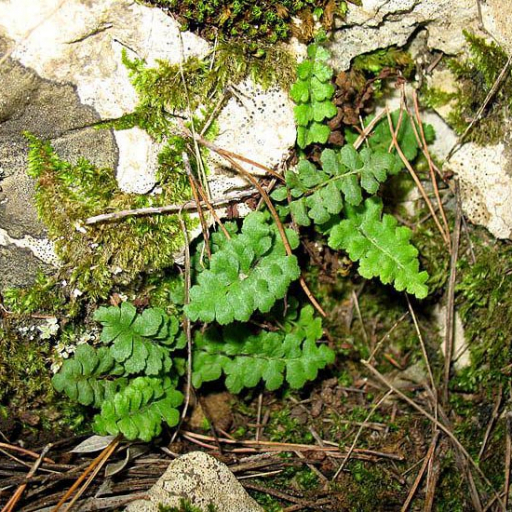
Plant Overview
Named after the famous 14th-century Italian poet Petrarch, this tiny "rock star" is a resilient fern that defies the typical "shade and moisture" rule. Petrarch’s Spleenwort is a Mediterranean native that thrives in the sun-drenched, rocky crevices of limestone cliffs. It is a master of survival, often found clinging to ancient stone walls and ruins where other plants would wither.
🔍 How to Identify
- 🌿 The Fronds: Small, delicate fronds (usually 5–15 cm) that are grayish-green and pinnate. They often grow in a tight, tufted rosette shape.
- ✨ Sticky Texture: If you touch the leaves, they feel slightly tacky. This is due to dense, glandular hairs that help the plant retain moisture in dry environments.
- 🖤 Dark Stems: The base of the leaf stalk (stipe) is a distinct dark mahogany or blackish-brown, transitioning to green toward the tip.
🏡 In Your Garden
- 🧱 The Vertical Life: This fern is a lithophyte, meaning it literally grows on stone. In a garden setting, it hates being buried in traditional soil; instead, tuck it into the gaps of a dry-stone wall or a limestone rockery.
- ☀️ Drought & Sun Nuance: Unlike its tropical cousins, Petrarch’s Spleenwort is remarkably drought-tolerant once established. It craves "cool feet and a warm head"—it likes its roots tucked into a cool rock crack while its leaves enjoy filtered sunlight.
- 🧪 Alkaline Lover: It is a "calcicole," meaning it specifically requires calcium-rich environments. If your soil is too acidic, this fern will struggle to survive.
⚠️ Safety & Toxicity
- ✅ Non-Toxic Status: Petrarch’s Spleenwort is generally considered safe and non-toxic to humans, dogs, and cats.
- 🧤 Touch Sensitivity: While not poisonous, the sticky glandular hairs can sometimes pick up dust or pollen, which might mildly irritate those with sensitive skin or allergies if handled excessively.
✨ Fun Fact
Petrarch, the poet for whom the plant is named, lived in Vaucluse, France, for many years. This specific fern is a local icon of that region, growing abundantly among the same limestone cliffs where Petrarch composed his famous sonnets to Laura.

Detailed Care Instructions
Growing Asplenium petrarchae, commonly known as Petrarch's spleenwort, can be an enjoyable and rewarding process. This fern prefers conditions that mimic its natural habitat, which typically includes shaded rocky areas or woodland environments. Here are some steps to guide you through growing Asplenium petrarchae:
1. Choosing the Right Location:
- Shade: This fern thrives in partial to full shade. Avoid direct sunlight, which can scorch the leaves.
- Humidity: Asplenium petrarchae prefers higher humidity levels, similar to what you would find in woodland environments.
2. Soil Requirements:
- Well-Drained Soil: The plant does best in soil that drains well. A mix of standard potting soil with some added sand or fine gravel can help improve drainage.
- Acidic to Neutral pH: Slightly acidic to neutral soil is ideal. You can test your soil and amend it if necessary.
3. Planting:
- Propagation: Asplenium petrarchae can be propagated by spores or division. Spore propagation is more challenging and time-consuming, so many opt to buy a young plant or divide an existing plant.
- Planting Depth: Plant at a depth similar to how it was in its pot. The crown of the plant should be just above the soil surface.
4. Watering:
- Consistent Moisture: Keep the soil consistently moist but not waterlogged. Overwatering can lead to root rot.
- Water Quality: Use rainwater or distilled water, especially in areas with hard tap water, to avoid excess minerals that can harm the plant.
5. Fertilizing:
- Light Feeding: Ferns generally do not need heavy fertilization. A balanced, diluted liquid fertilizer applied monthly during the growing season (spring and summer) should be sufficient.
6. Temperature:
- Cool to Temperate: This fern prefers cooler temperatures, ideally between 60-75°F (15-24°C). Protect it from freezing temperatures and extreme heat.
7. Humidity:
- High Humidity: If you live in a dry climate, consider increasing humidity around the plant by misting it regularly, placing a humidity tray nearby, or using a humidifier.
8. Maintenance:
- Pruning: Remove any dead or damaged fronds to encourage new growth and keep the plant looking tidy.
- Pest Control: Keep an eye out for common pests like aphids or spider mites. Treat infestations promptly with insecticidal soap or neem oil.
9. Container Growing (Optional):
- If you're growing Asplenium petrarchae in a container, ensure it has adequate drainage holes. A terracotta pot can help with moisture regulation.
10. Companion Planting:
- Companion Plants: Asplenium petrarchae pairs well with other shade-loving plants like hostas, heucheras, and other ferns.
By following these steps and paying close attention to the specific needs of Asplenium petrarchae, you can cultivate a healthy and attractive fern that will enhance your garden or indoor plant collection.

Place in a window with dappled sun or a spot in the middle of a room. Or directly in a window facing west or east.

Asplenium petrarchae, a type of fern, appreciates a delicate balance when it comes to watering. Here's a detailed guide on how to water this plant:
1. Check the Soil Moisture:
- Before watering, always check the moisture level of the soil. Stick your finger about an inch into the soil. If it feels dry at that depth, it's time to water.
2. Watering Frequency:
- Water the plant consistently, keeping the soil evenly moist but not waterlogged. Generally, you should water it once the top inch of soil has dried out.
- In the growing season (spring and summer), you may need to water more frequently, perhaps once a week. During the dormant period (fall and winter), reduce watering frequency.
3. Watering Method:
- Water gently at the base of the plant, ensuring it reaches the root system. Avoid splashing water on the fronds, as this can encourage mold growth or lead to spotting.
- Use a watering can with a fine spout to provide a more controlled flow of water.
4. Water Quality:
- Rainwater or distilled water is preferable, as tap water may contain chlorine or fluoride, which can be harmful to the plant over time. If you must use tap water, let it sit out overnight to allow some of the chemicals to dissipate.
5. Drainage:
- Ensure the pot has good drainage to prevent water from stagnating around the roots. Excess water should be able to drain out through holes in the bottom of the pot. An ideal potting mix includes organic matter like peat, which helps retain moisture while providing adequate drainage.
6. Humidity:
- This plant thrives in high humidity. If your indoor environment is dry, consider placing a humidifier nearby, misting the plant regularly, or setting the pot on a tray filled with pebbles and water, ensuring the bottom of the pot is above the water level.
7. Signs of Overwatering and Underwatering:
- Overwatering can lead to root rot, evident by yellowing leaves and a mushy stem base.
- Underwatering can result in crispy, brown frond tips. Adjust your watering schedule based on these signs.
8. Seasonal Adjustments:
- During warmer months, the plant's water needs increase due to higher evaporation rates and active growth.
- In the cooler months, reduce watering, as the plant's growth slows and it requires less moisture.
By closely monitoring the soil and environmental conditions and adjusting your watering practices accordingly, you can keep your Asplenium petrarchae healthy and thriving.
Asplenium petrarchae can benefit from regular fertilization to thrive. Here are some guidelines to help you:
- Type of Fertilizer: Use a balanced, water-soluble fertilizer that is designed for houseplants or ferns. An N-P-K ratio of 20-20-20 or 10-10-10 is generally suitable.
- Dilution: Dilute the fertilizer to half the recommended strength on the package. Ferns, including Asplenium petrarchae, are generally sensitive to fertilizers, and a more dilute solution reduces the risk of fertilizer burn.
- Frequency: Fertilize the plant every 4-6 weeks during the growing season, which typically spans from spring to early fall. This helps support its growth and health during its active period.
- Dormant Period: Reduce or stop fertilizing during the winter months when the plant's growth naturally slows down. This helps prevent a buildup of salts in the soil and reduces stress on the plant.
- Application: Water the plant before applying the fertilizer to ensure the soil is moist. This helps prevent root burn. After watering, apply the diluted fertilizer solution evenly across the soil.
- Monitoring: Always monitor the plant for any signs of over-fertilization, such as yellowing leaves or leaf burn. If you notice these signs, flush the soil with water to wash out excess fertilizer salts.
By following these instructions, you should be able to provide the necessary nutrients for your Asplenium petrarchae to flourish.
Asplenium petrarchae is a type of fern that thrives in specific soil conditions to ensure optimal growth and health. When selecting the soil, consider the following aspects:
- Type: A well-draining, yet moisture-retentive soil is ideal. Ferns generally prefer soil that is not waterlogged but retains some moisture.
- Composition: The soil should be rich in organic matter. Adding components like peat moss, leaf mold, or compost will enhance its organic content, providing essential nutrients.
- Texture: A slightly loamy or sandy soil works best. This ensures good drainage while still retaining some moisture. A mix of 30% sand, 30% peat or compost, and 40% garden loam can be an ideal starting point.
- pH Level: Slightly acidic soil with a pH range of 5.5 to 6.5 is preferred. You can test the soil pH using a home testing kit and adjust accordingly with amendments if necessary.
- Aeration: Ensure the soil is well-aerated to prevent water stagnation around the roots. Adding perlite or coarse sand can help improve aeration and drainage.
By paying attention to these soil characteristics, you will create an optimal growing environment for Asplenium petrarchae, facilitating healthy growth and development.
Propagating Asplenium petrarchae can be an enriching experience. Here’s a detailed guide:
Methods of Propagation
- Spore Propagation
- Division
Spore Propagation
- Collection of Spores:
- Identify mature fronds on the plant that have sori (spore-containing structures) typically on the underside.
- Place a paper or envelope under the fronds and gently tap to release the spores. It's essential to do this in a dry environment to prevent mold.
- Identify mature fronds on the plant that have sori (spore-containing structures) typically on the underside.
- Preparation of Growing Medium:
- Use a sterilized mixture of peat moss and sand or a specialized fern propagation mix.
- Fill a shallow tray with this medium.
- Use a sterilized mixture of peat moss and sand or a specialized fern propagation mix.
- Sowing the Spores:
- Evenly distribute the collected spores over the surface of the growing medium.
- Do not cover the spores with soil as they need light to germinate.
- Evenly distribute the collected spores over the surface of the growing medium.
- Creating a Humid Environment:
- Cover the tray with clear plastic or place it inside a clear plastic bag to maintain humidity.
- Ensure the setup is in a well-lit area but away from direct sunlight which can scorch the delicate spores.
- Cover the tray with clear plastic or place it inside a clear plastic bag to maintain humidity.
- Germination and Growth:
- Keep the medium consistently moist by misting with water.
- In a few weeks to a few months, the spores will develop into prothalli (heart-shaped gametophytes).
- As small fernlets appear, they can be carefully pricked out and potted individually into small containers with a similar growing medium.
Division
- Keep the medium consistently moist by misting with water.
- Selecting the Plant:
- Choose a healthy, well-established plant for division.
- Choose a healthy, well-established plant for division.
- Preparing the Plant:
- Remove the plant from its pot or gently dig it up from the ground.
- Shake off excess soil to expose the root system.
- Remove the plant from its pot or gently dig it up from the ground.
- Dividing the Rhizome:
- Identify natural divisions or offsets in the plant.
- Using a clean, sharp knife or garden shears, carefully separate these sections ensuring each division has a portion of the rhizome and several fronds.
- Identify natural divisions or offsets in the plant.
- Replanting:
- Plant each division into a pot with a well-draining growing medium similar to its original medium.
- Water thoroughly and place the new plants in a humid environment, away from direct sunlight, until they establish roots and show new growth.
Care after Propagation
- Plant each division into a pot with a well-draining growing medium similar to its original medium.
- Watering: Keep the soil consistently moist but not waterlogged.
- Light: Provide bright, indirect light.
- Humidity: Maintain high humidity levels; misting can help.
- Feeding: Use a diluted balanced fertilizer during the growing season, but avoid over-fertilizing young plants.
Tips
- Be patient, especially with spore propagation, as it can be a slow process.
- Ensure your tools and growing medium are sterile to avoid fungal infections.
Propagating Asplenium petrarchae via spores or division allows you to expand your collection and can lead to rewarding results with proper care and patience.








