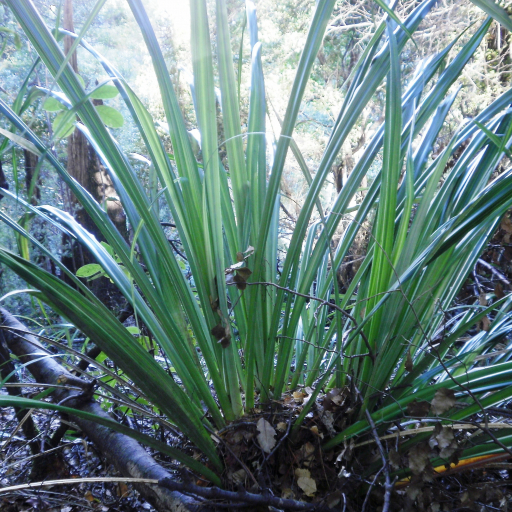
Plant Overview
Often called the "Bush Lily" or "Kakaha," Astelia fragrans is one of New Zealand’s most iconic forest floor treasures. This architectural beauty creates a dramatic, silvery-green fountain of foliage that adds a touch of the prehistoric to any landscape. Unlike its sun-loving cousins, this plant thrives in the dappled light of the bush canopy, where its sweetly scented flowers perfume the humid forest air.
🔍 How to Identify
- 🍃 Sword-like Foliage: Broad, arching leaves that can reach up to 2 meters long, featuring a distinct, deep midrib that gives them a structural "V" shape in cross-section.
- ✨ Silvery Sheen: The leaves are coated in tiny, microscopic scales that catch the light, giving the plant a metallic or frosted appearance, especially on the underside and near the base.
- 🌼 Clustered Blooms: In spring, it produces panicles of small, creamy-yellow flowers that emit a heavy, honey-like fragrance, followed by clusters of fleshy orange or yellow berries.
🏡 In Your Garden
- 💧 Moisture Seeker: While it looks like a desert yucca, the Bush Lily actually prefers consistently moist, well-draining soil rich in leaf mold or organic matter to mimic the damp forest floor.
- 🌳 The Shade Solution: This is a "set it and forget it" plant for those tricky dark corners of the garden; it handles deep shade remarkably well but may lose its vibrant silvery luster if forced into direct, scorching afternoon sun.
⚠️ Safety & Toxicity
- ✅ Generally Safe: Astelia fragrans is not considered toxic and is generally safe to have in gardens frequented by children and domestic animals.
- 🐾 Pet Curiosity: While the bright orange berries were historically eaten by indigenous populations, they can cause mild stomach upset in curious cats or dogs if consumed in large quantities.
✨ Fun Fact
The name Astelia comes from the Greek words "a" (without) and "stele" (a trunk), referring to its growth habit as a stemless cluster. Its Māori name, Kakaha, refers to the incredibly strong fibers found in the leaves, which were historically used to weave high-quality traditional garments and durable baskets.

Detailed Care Instructions
To grow an Astelia Fragrans plant, also known as the Bush Flax, you need to follow these steps:
- Choose a suitable location: Astelia Fragrans plants thrive in well-draining soil and prefer full sun to partial shade. Ensure the chosen spot receives adequate sunlight during the day.
- Prepare the soil: The soil should be fertile, humus-rich, and well-draining. You can amend the soil with organic matter like compost or well-rotted manure to improve its quality.
- Planting: Dig a hole slightly larger than the root ball of the plant. Place the plant in the hole, ensuring that the top of the root ball is level with or slightly above the soil surface. Backfill the hole with soil and gently firm it around the base of the plant.
- Watering: Water the newly planted Astelia Fragrans thoroughly to settle the soil. Ensure that the plant receives a moderate amount of water and keep the soil evenly moist, but not waterlogged. Do not let the plant dry out completely.
- Mulching: Apply a layer of organic mulch around the base of the plant to help retain moisture in the soil, suppress weed growth, and regulate soil temperature.
- Maintenance: Astelia Fragrans plants require minimal maintenance. Remove any dead or damaged foliage promptly and cut back any overgrown or untidy leaves.
- Fertilizing: You can feed the Astelia Fragrans plant with a slow-release fertilizer during the growing season. Follow the product instructions for application guidelines.
- Pruning: Astelia Fragrans plants generally do not require extensive pruning. However, you can trim any dead or damaged leaves to maintain the plant's appearance.
- Winter Care: In colder climates, Astelia Fragrans plants may require protection during the winter. Mulch around the base of the plant to protect the root system from freezing temperatures. Alternatively, consider growing the plant in a container and moving it indoors during winter if necessary.
- Propagation: Astelia Fragrans plants can be propagated by dividing the clumps in early spring. Dig up the plant and carefully separate the clumps into smaller sections, ensuring each section has healthy roots and shoots. Replant the divisions in suitable locations as individual plants.
Remember to research any specific requirements for your particular variety of Astelia Fragrans, as care instructions may vary slightly.

Place in a window with dappled sun or a spot in the middle of a room. Or directly in a window facing west or east.

To water this particular plant, it is important to provide regular moisture to its roots without allowing it to become too saturated. It is best to water deeply and thoroughly, allowing the water to soak down to the plant's roots, and then allow the soil to dry out slightly before watering again. Overwatering can lead to root rot and other fungal issues, so it's important to monitor the soil moisture regularly. Additionally, using a well-draining soil and providing adequate drainage through the container or planting bed can help prevent excessive moisture buildup.
Astelia Fragrans plant requires a balanced fertilizer with equal parts nitrogen, phosphorus, and potassium. Fertilize the plant during its active growth period, which is typically in spring and summer. Dilute the fertilizer according to the manufacturer's instructions and apply it to the soil around the plant's base. Avoid getting the fertilizer on the foliage or stems. Water the plant after fertilizing to help the nutrients penetrate the soil. Do not over-fertilize, as this can damage the plant and lead to nutrient deficiencies.
Astelia Fragrans is a plant that requires a well-draining soil with good aeration and moisture retention capabilities. It thrives in soils that are rich in organic matter and slightly acidic in pH. The ideal soil for Astelia Fragrans should have a pH range of 5.5 to 6.5.
One of the best soil types for Astelia Fragrans is a loamy soil. Loamy soils are a combination of sand, silt, and clay in varying proportions. They usually have good drainage and aeration capabilities, and they also retain moisture well. When preparing soil for Astelia Fragrans, it is important to add organic matter such as compost or well-rotted manure to the soil to improve its structure and fertility.
It is also essential to ensure that the soil is free of any pathogens or pests that could harm the plant. Before planting, it is advisable to sterilize the soil by using a soil sterilizer or by baking it in an oven. This will kill any harmful organisms that may be present in the soil.
Lastly, it is essential to ensure that the soil is well-draining to prevent waterlogging, which can lead to root rot and other plant diseases. This can be achieved by adding sand or perlite to the soil to improve its drainage and aeration capabilities.
Astelia Fragrans can be propagated through division of its rhizomes. Rhizomes are underground stems that grow horizontally and produce both shoots and roots. To propagate, carefully dig up the plant and separate the rhizomes into sections, making sure each section has at least one shoot and a cluster of roots. Plant the sections in well-draining soil and keep slightly moist until new growth appears. It is easier to divide the plant in spring or fall, when it is not actively growing, as opposed to summer when the plant is actively growing. Propagating through seeds is also possible, but it is a longer and more difficult process. Seeds need to be harvested when ripe and then sown in a potting mix. The potting mix should be kept moist and in a warm, well-lit spot until seedlings emerge. Once a seedling or division has established roots and foliage, it should be transplanted to its permanent location in a shaded spot in the garden.








