Plant Overview
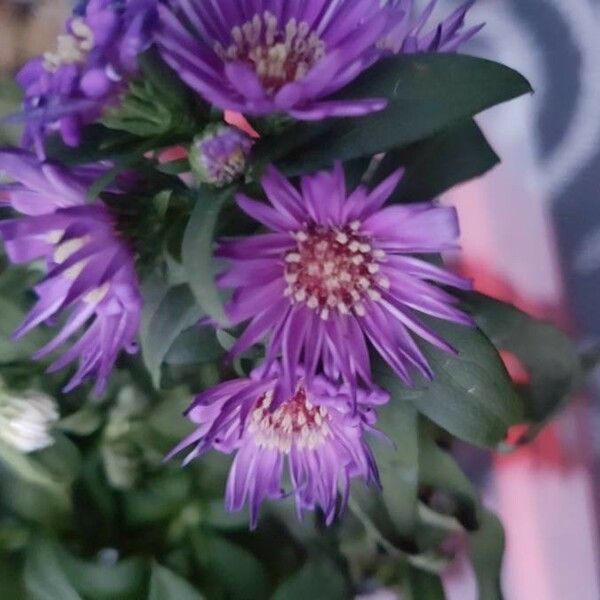
Often called the Three-nerved Aster, this hardy perennial is a staple of East Asian landscapes, from the misty mountains of Japan to the rolling hills of China. It is a late-season superstar, beloved by gardeners for providing a final, vibrant burst of lavender-blue when most other flowers have already faded for the winter.
🔍 How to Identify
- 🍃 The Namesake Leaves: The most defining feature is the leaf structure; look for three prominent longitudinal veins (nerves) running from the base to the tip of each lance-shaped leaf.
- 🌸 Composite Blooms: It produces clusters of classic daisy-like flowers. These feature delicate ray florets in shades of pale violet or blue, surrounding a bright golden-yellow central disc.
- 🌿 Growth Habit: This plant has a sturdy, upright, and bushy architecture. The stems are slightly rough to the touch and can become quite woody at the base as the season progresses.
🏡 In Your Garden
- 🐝 Pollinator Fuel: Because it blooms in late summer and autumn, it acts as a vital "filling station" for butterflies and bees who are preparing for winter or migration.
- ⛰️ Mountain Resilience: Reflecting its wild origins on forest edges and slopes, it is incredibly cold-hardy. It thrives in well-draining soil and isn't particularly "fussy" about nutrient levels, making it perfect for low-maintenance borders.
- ✂️ The Chelsea Chop: To prevent the plant from becoming too "leggy" or flopping over, many gardeners prune the stems back by half in early summer to encourage a more compact, floriferous shape.
⚠️ Safety & Toxicity
- ✅ Pet & Human Friendly: Aster trinervius is generally considered non-toxic to humans, cats, and dogs.
- 🧤 Mild Irritation: While not poisonous, the rough texture of the leaves and stems can occasionally cause mild skin irritation for those with sensitive skin. Wearing gloves during heavy pruning is recommended.
✨ Fun Fact
In traditional East Asian herbalism, the roots and leaves of the Three-nerved Aster have been used for centuries in teas and decoctions, historically believed to help soothe chronic coughs and reduce internal inflammation.

Detailed Care Instructions

Place in a bright room that is sun drenched almost all day. Or directly in a south-facing window.

Some plants require more regular watering than others, which should be done every few days. It's critical to maintain the soil moist all of the time. The water requirements of the same plant placed in pots with varying sizes will differ. Because the water in the smaller pot evaporates faster than the water in the larger pot, it will require more watering. Regardless of pot size, the surface should constantly be maintained moist.








