Plant Overview
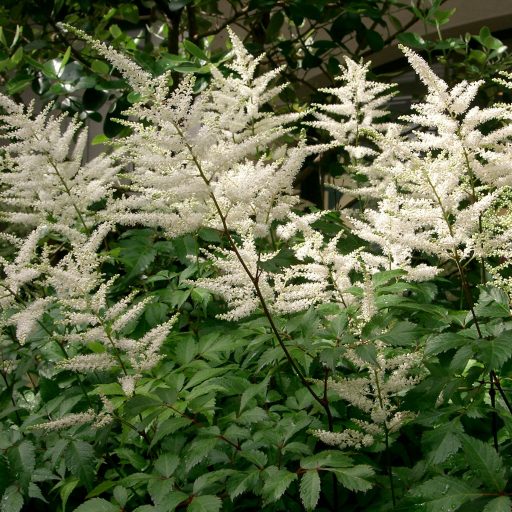
Known as the "False Spirea" or the "Silver Spear," Astilbe japonica is the undisputed royalty of the shade garden. Native to the damp ravines and woodland edges of Japan, these perennials are cherished for their elegant, fern-like foliage and their stiff, pyramidal flower plumes that seem to glow in the dim light of a forest floor. They are the perfect solution for those "difficult" dark corners of the yard where other flowers refuse to bloom.
🔍 How to Identify
- 🌿 Lacy Foliage: The leaves are deeply incised, serrated, and resemble a delicate fern. They often emerge with a bronze tint before turning a deep, glossy green.
- 🪶 Plumed Panicles: Unlike the loose clusters of other species, A. japonica produces very tight, triangular flower spikes that stand bolt upright.
- 🌸 Textured Blooms: If you look closely, the "fluff" of the flower is actually hundreds of tiny, individual blossoms packed together, creating a feathery, cloud-like appearance.
🏡 In Your Garden
- 💧 The Thirst is Real: While many shade plants are tough, Astilbe is a "diva" when it comes to water. It has a shallow root system and will develop crispy, brown leaf edges almost immediately if the soil dries out.
- 🍂 Organic Appetites: These plants are heavy feeders that crave "forest floor" conditions. They perform best when tucked into soil rich with compost or leaf mold, which mimics their native woodland habitat.
- ✂️ Winter Interest: Don't be too quick to prune! Even after the flowers fade and turn chocolate-brown in autumn, the dried stalks provide beautiful architectural structure and visual interest during the snowy months.
⚠️ Safety & Toxicity
- ✅ Pet & Child Friendly: Great news for families! Astilbe japonica is generally considered non-toxic to dogs, cats, and horses.
- 🧤 Low Irritation: While it isn't poisonous, the serrated leaves can be slightly scratchy, so wearing gloves during heavy pruning is always a good practice for those with sensitive skin.
✨ Fun Fact
The name "Astilbe" actually comes from the Greek words a (without) and stilbe (brightness). This is a bit of a botanical joke; it refers to the fact that the individual leaves are matte and dull, which only serves to make the brilliant, shimmering flower plumes stand out even more!

Detailed Care Instructions
| Humidity | Normal |
| Lighting | Shade |
| Difficulty | Medium |
| Temperature | 18°C - 24°C |
| Hardiness Zones | 3 - 9 |
To grow Astilbe Japonica plants, follow these steps:
- Choose the right location: Astilbe plants prefer partial shade or filtered sunlight. Select a location with well-draining soil that is rich in organic matter.
- Prepare the soil: Amend the soil with compost or well-rotted manure to improve its fertility and drainage. Remove any weeds or grass from the planting area.
- Planting: Dig a hole that is slightly larger than the plant's root ball. Place the plant in the hole, ensuring that the crown (the area where the stems meet the roots) is level with the soil surface. Backfill the hole with soil and firmly press it down around the plant.
- Watering: Water the newly planted Astilbe thoroughly to settle the soil. Keep the soil consistently moist, especially during hot and dry periods. Avoid overwatering, as it can lead to root rot.
- Mulching: Apply a layer of organic mulch, such as wood chips or leaf litter, around the base of the plant. This helps retain moisture, suppress weeds, and regulate soil temperature.
- Fertilizing: Apply a balanced slow-release fertilizer in early spring when new growth emerges. Follow the manufacturer's instructions for application rates.
- Deadheading: Remove spent flowers to encourage the production of new blooms and maintain a tidy appearance. Cut the flower stems back to the base of the plant once they have finished blooming.
- Dividing: Astilbe plants benefit from division every 3-4 years to prevent overcrowding. Dig up the clump in early spring or fall, and carefully separate the individual plants. Replant the divisions in prepared soil and water thoroughly.
- Winter care: In cold climates, mulch around the base of the Astilbe plant to protect it from freezing temperatures. Avoid cutting back the foliage until spring, as it provides insulation for the roots.
By following these guidelines, you can successfully grow Astilbe Japonica plants and enjoy their beautiful flowers year after year.

Place in a window with dappled sun or a spot in the middle of a room. Or directly in a window facing west or east.

Astilbe Japonica plant prefers moist soil and requires consistent watering to thrive. To water this plant, you should provide a good soaking to the soil around the base of the plant, rather than watering the foliage directly. It's important to avoid overwatering, as this can lead to root rot. You can test the soil by sticking your finger into it, and if it feels dry, it's time to water. Additionally, make sure to water in the morning or evening to prevent evaporation and reduce stress on the plant.
Astilbe Japonica plants benefit from regular fertilization during their active growth periods. Use a balanced fertilizer, such as a 10-10-10 or 20-20-20, at a rate of approximately 1/4 to 1/2 pound per 100 square feet of soil. Apply the fertilizer in late winter or early spring, before new growth emerges. To avoid burning the plants, water them thoroughly before and after fertilization. You can also supplement the fertilizer with organic matter, such as compost or aged manure, to improve soil fertility and moisture retention. Additionally, astilbes benefit from mulching around the base of the plant to conserve moisture and protect the roots from temperature fluctuations.
Astilbe Japonica plants prefer well-draining soil that is rich in organic matter. The soil should be slightly acidic with a pH between 5.5 and 6.5. A soil that is too alkaline can lead to yellowing leaves and poor growth. It is important to ensure that the soil stays consistently moist but not waterlogged. Adding compost or other organic matter can help improve soil fertility and drainage. When planting Astilbe Japonica, it is important to ensure that the root ball is well-covered with soil and that the plant is not planted too deeply.
Astilbe Japonica can be propagated using division. Dig the plant up carefully and separate the root clumps into smaller sections with at least one shoot and healthy roots attached. Repot or replant the divisions in a well-draining soil mixture and water thoroughly. Propagation can be done in spring or fall when the plant is dormant. With proper care, the new divisions will grow and thrive.








