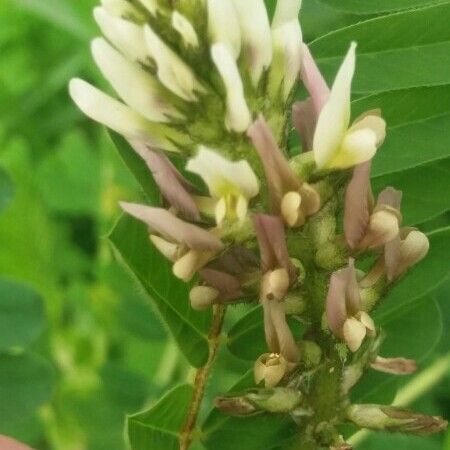
Plant Overview
Often called the Swedish Coffee-vetch, this Mediterranean traveler has a history as rich as the drink it inspired. During times of scarcity in 18th-century Europe, its seeds were roasted and brewed as a popular coffee substitute, earning it a permanent spot in historical herbal lore. It is a resilient legume that feels right at home in sun-drenched, rocky landscapes.
🔍 How to Identify
- 🌿 Feathered Foliage: The leaves are "pinnate," meaning they look like delicate green feathers made up of 7 to 15 pairs of small, oblong leaflets.
- 🍦 Creamy Blooms: It produces dense clusters of small, pea-like flowers that range from a pale creamy white to a soft buttery yellow.
- 🫛 Curved Pods: After flowering, it develops distinctive long, brownish seed pods that are slightly curved and covered in fine, pressed hairs.
🏡 In Your Garden
- ☀️ Sun Seeker: This plant is a true Mediterranean native; it thrives in full sun and can handle intense heat that would make other garden plants wilt.
- 🧱 Soil Preferences: It prefers "lean" soil—think sandy, gravelly, or limestone-rich. Because it has a deep, stubborn taproot, it hates being moved once it’s settled, so choose its permanent home carefully.
- 🌱 Nitrogen Fixer: Like many members of the pea family, it actually improves the soil it grows in by "fixing" nitrogen, making it a great companion for neighboring plants that need a nutrient boost.
⚠️ Safety & Toxicity
- ☕ Seeds Only: While historically used as a coffee substitute, the seeds must be properly dried and roasted. Raw consumption is not recommended.
- 🐾 Pet Safety: While not famously "deadly" like some of its Astragalus cousins (known as Locoweeds), it is best to keep it away from curious pets and livestock, as many species in this genus can accumulate selenium or contain alkaloids that cause digestive upset.
✨ Fun Fact
In the 19th century, Astragalus boeticus was commercially cultivated in Sweden (hence the nickname) specifically to provide an affordable caffeine-free alternative for people who couldn't afford imported coffee beans!

Detailed Care Instructions
To grow Astragalus boeticus, also known as Bodrum Milk Vetch, you can follow these steps:
- Climate and Soil Requirements: Ensure that you are in a suitable climate for growing Astragalus boeticus. It prefers warm, dry climates with well-draining soil.
- Planting Location: Choose a sunny spot in your garden that receives at least 6 hours of sunlight per day. Ensure that the soil is well-draining by amending it with sand or gravel if necessary.
- Seed Germination: Astragalus boeticus can be grown from seeds. Soak the seeds in warm water overnight before planting. This will help to break their dormancy and improve germination rates.
- Planting: Sow the seeds directly into the prepared soil, about 1 inch deep. Space the seeds around 6-12 inches apart.
- Watering: Water the seeds thoroughly after planting and maintain moist soil until germination occurs. After germination, reduce the frequency of watering as Astragalus boeticus prefers drier conditions.
- Maintenance: Keep the area around the growing plant free from weeds, as they can compete for nutrients and water.
- Pruning: Once the plants have reached a height of around 6 inches, you can pinch off the top growth to promote bushier and more compact growth.
- Harvesting: Astragalus boeticus produces small yellow flowers in late spring to early summer, followed by seed pods. Harvest the seed pods when they turn brown and dry on the plant. Simply collect the pods and allow them to dry further before removing the seeds for propagation or storage.
- Propagation: You can propagate Astragalus boeticus by collecting the seeds and sowing them in the next growing season.
- Pests and Diseases: This plant is relatively resistant to pests and diseases. However, watch out for aphids, spider mites, or fungal issues. If any problems arise, use appropriate organic or chemical treatments.
Remember to check with local gardening sources or consult with a nursery to ensure that Astragalus boeticus is suitable for your specific gardening region.

Place in a bright room that is sun drenched almost all day. Or directly in a south-facing window.

1. Determine the water requirements - Astragalus boeticus plant requires moderate watering. It prefers moist soil but can also tolerate some degree of drought.
2. Check the soil - Before watering, check the soil moisture level. Insert your finger about an inch into the soil. If it feels dry, it's time to water.
3. Watering frequency - Water the plant once a week during warm and dry weather. Reduce watering frequency to once in two weeks during the cool season.
4. Watering amount - Water the plant until the soil is moist but not waterlogged. Overwatering can lead to root rot.
5. Watering method - Use a watering can or hose to water the plant thoroughly. Do not pour water over the leaves as this can promote fungal growth.
6. Avoid waterlogging - The plant should have proper drainage to prevent waterlogging. Ensure that the pot has drainage holes at the bottom.
7. Mulching- Adding mulch around the roots can help retain moisture in the soil, which reduces the frequency of watering.
8. Observe the plant - Observe the plant regularly to ensure it's not getting too much or too little water. Wilted leaves may indicate that the plant needs watering, but yellowing leaves can indicate overwatering.
To fertilize this plant, apply a balanced fertilizer with equal amounts of nitrogen, phosphorous, and potassium. Apply the fertilizer twice a year, in early spring and again in late summer. Water your plant before and after fertilization to ensure the fertilizer is absorbed properly. Avoid over-fertilizing, as this can lead to nutrient burn and damage to the plant.
Astragalus Boeticus plants prefer a well-draining soil mix that is slightly sandy or loamy. It is important to ensure that the soil is not waterlogged, as this can lead to root rot. A mix of potting soil, sand, and perlite can provide the ideal growing medium for Astragalus Boeticus plants. Additionally, adding some compost or organic matter to the soil can help provide essential nutrients for healthy growth. This plant thrives in slightly alkaline soils with a pH level between 7.0-8.0. Regularly checking the pH level of the soil and adjusting it accordingly can help maintain optimal growing conditions for Astragalus Boeticus plants.
To propagate this plant, you will need to collect the seeds which are enclosed in a pod. Once you have collected the seeds, you can plant them in well-draining soil. The best time to plant is in the early spring when temperatures are cool. You can also plant them in the fall, but they may not germinate until the following spring.
Make sure the soil is moist, but not waterlogged. If you are planting the seeds in a container, make sure it has drainage holes. Cover the seeds with a thin layer of soil and water them gently.
Keep the soil evenly moist until the seeds germinate. This may take several weeks. Once the seedlings have developed their first set of true leaves, you can transplant them into individual pots.
When the plants have grown a bit larger, you can transplant them into your garden. Make sure to choose a sunny location with well-draining soil. Water the new plants well and cover them with a thin layer of mulch to help retain moisture.
It may take several years for the Astragalus Boeticus plant to reach maturity and begin producing seeds. However, once they do, you can collect the seeds and repeat the propagation process.








