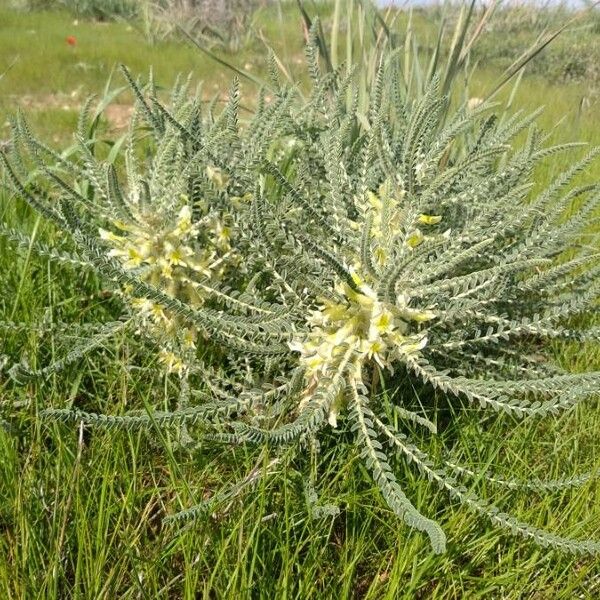
Plant Overview
Known as a resilient survivor of the North African deserts, Astragalus gombo is a specialized member of the vast "Milk Vetch" family. It thrives where most plants wither, displaying delicate blooms against the harsh, sandy backdrops of the Sahara and surrounding arid regions. While it may look like a humble wildflower, it is a master of water conservation and a vital part of its fragile ecosystem.
🔍 How to Identify
- 🌿 Pinnate Foliage: The leaves are composed of multiple pairs of small, oval leaflets arranged along a central stalk, giving the plant a soft, feathery texture that helps it catch morning dew.
- 🌼 Pea-like Blooms: It produces clusters of pale yellow or cream-colored flowers. These have the classic "papilionaceous" shape (looking like a butterfly) typical of the legume family.
- 🏜️ Prostrate Growth: To survive high winds and intense sun, it often grows in low, sprawling clumps, hugging the ground to maintain a cooler microclimate around its base.
🏡 In Your Garden
- 🏜️ The "Neglect" Specialist: If you are growing this in a Mediterranean or xeriscape garden, the most important rule is to avoid overwatering. It requires exceptionally well-draining, sandy soil and will rot almost immediately if kept in heavy, damp clay.
- 🌱 Deep Taproot: Astragalus gombo develops a long, stubborn taproot early in its life to reach deep-seated water. Because of this, it "hates" being transplanted; once you've tucked it into the ground, moving it is likely to be fatal for the plant.
⚠️ Safety & Toxicity
- 🐾 Caution Recommended: Many species in the Astragalus genus are known as "Locoweeds" because they contain alkaloids that can be toxic to livestock, causing neurological issues if consumed in large quantities.
- 🚫 Not for Consumption: While some Astragalus species are used in herbalism, Astragalus gombo is not a culinary plant. Keep it out of reach of curious pets and livestock to prevent potential "locoism" (poisoning).
✨ Fun Fact
Astragalus gombo is a natural soil chemist! Like other legumes, it has a symbiotic relationship with bacteria in its roots that allows it to "fix" nitrogen from the atmosphere. This actually improves the quality of the desert sand for future plants that follow in its footsteps.

Detailed Care Instructions








