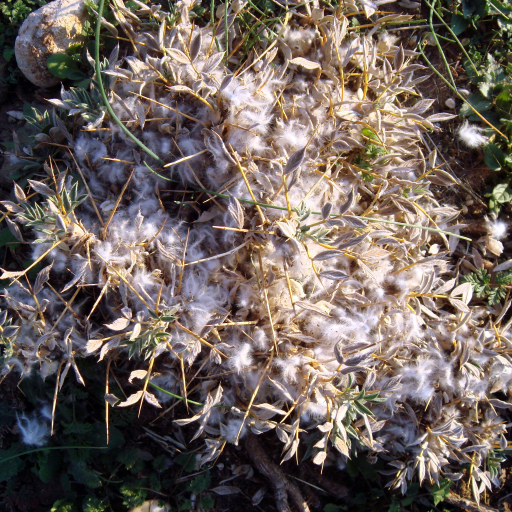
Plant Overview
Known affectionately as the Hook-podded Milkvetch, Astragalus hamosus is a resilient traveler from the Mediterranean and Western Asia. This low-growing member of the pea family is famous for its curious, curved seed pods that look like miniature green hooks or anchors scattered across the ground. While it may look like a common weed to the untrained eye, it has been a staple in traditional herbal kits for centuries, often referred to as "Husk-e-Asmani" in various regional markets.
🔍 How to Identify
- ⚓ The Seed Pods: The most striking feature is the long, cylindrical pods that curve sharply like a fishhook. They are typically smooth and can grow up to several centimeters long.
- 🍃 Pinnate Foliage: The leaves are arranged in pairs along a central stem, typical of the legume family, giving the plant a soft, feathery appearance.
- 🟡 Pale Flowers: It produces small, inconspicuous clusters of pale yellow or creamy-white flowers that emerge from the leaf axils.
- 🌱 Growth Habit: This plant prefers to stay close to the earth, often forming a sprawling mat of greenery rather than reaching for the sky.
🏡 In Your Garden
- ☀️ Sun Seeker: This plant is a specialist in dry, rocky environments. If you find it in your garden, it’s likely telling you that your soil is well-draining and gets plenty of direct sunlight.
- 🏗️ Soil Architect: Like many of its cousins, it is a nitrogen-fixer. It actually improves the soil it grows in by pulling nitrogen from the air and storing it in its roots, acting as a natural fertilizer for neighboring plants.
- 🚫 Deep Roots: It develops a sturdy taproot early in life. This makes it incredibly drought-tolerant, but it also means it "hates" being moved—once it’s planted, it’s best to leave it where it is.
⚠️ Safety & Toxicity
- 🔸 Caution Advised: While certain cultures use the pods of Astragalus hamosus in traditional medicine, the genus Astragalus is broad and includes species known as "locoweeds."
- 🐾 Pets & Livestock: Many Astragalus species can accumulate selenium from the soil or contain alkaloids that are toxic to grazing animals. It is best to keep this plant away from curious pets and children to avoid any risk of stomach upset or more serious toxicity.
✨ Fun Fact
The name hamosus comes directly from the Latin word hamus, which means "hook." In ancient times, the unique shape of its pods led people to believe it could "hook" or pull out illnesses from the body, following the "Doctrine of Signatures"—the old belief that plants resemble the body parts they are meant to heal!

Detailed Care Instructions
To grow Astragalus Hamosus, also known as hairy milkvetch, follow these steps:
- Seed Selection: Choose high-quality seeds from a reputable source. Look for fresh seeds that are free from damage or disease.
- Soil Preparation: Astragalus Hamosus prefers well-drained sandy or loamy soil with a pH range of 6 to 8. Prepare the soil by removing any weeds or large debris and loosen the soil to a depth of about 6 inches. Mixing in organic matter, like compost, can improve the soil structure.
- Sowing Seeds: Sow the seeds directly into the prepared soil in early spring or fall. Sprinkle the seeds over the soil surface, aiming for a spacing of about 12 inches between plants. Lightly press the seeds into the soil, ensuring good soil-to-seed contact.
- Watering: After sowing the seeds, water the area thoroughly to help settle the soil and provide initial moisture. Keep the soil consistently moist but not waterlogged during the germination period and early plant growth. Once established, Astragalus Hamosus is drought-tolerant and requires less watering.
- Sunlight: Place the planting site in a sunny location, as Astragalus Hamosus prefers full sunlight for optimal growth. Ensure that the plants receive at least 6 hours of direct sunlight each day.
- Temperature and Climate: Astragalus Hamosus is a hardy perennial plant that can tolerate a range of temperatures. However, it grows best in temperate climates with mild winters and warm summers.
- Mulching: Apply a thin layer of organic mulch, such as straw or wood chips, around the plants to help conserve moisture, suppress weed growth, and maintain a consistent soil temperature.
- Maintenance: Remove any weeds that appear near the plants regularly to prevent competition for nutrients and space. Since Astragalus Hamosus is a legume, it has the ability to fix nitrogen from the air into the soil, reducing the need for additional fertilization.
- Harvesting: Depending on the desired use, harvest the plant when the seeds or roots are mature. The seeds can be collected and stored for future propagation, while the roots may be harvested for medicinal purposes.
Remember to check with local authorities regarding any restrictions or regulations on growing Astragalus Hamosus, as it may be a protected or invasive species in some regions.

Place in a bright room that is sun drenched almost all day. Or directly in a south-facing window.

To water this perennial plant, it is recommended to check the soil moisture level before watering. One way to check soil moisture is by sticking your finger into the soil up to the second knuckle; if the soil feels dry, it's time to water. Another helpful tool is a moisture meter, available at most gardening stores.
When watering, use a watering can or hose to slowly and thoroughly soak the soil around the base of the plant. Watering too quickly or vigorously can cause the water to run off and not be absorbed by the soil. Avoid getting water on the leaves of the plant, as this can promote fungal diseases.
It is important not to overwater the plant, as too much water can lead to root rot. Allow the soil to dry out slightly in between waterings, and reduce watering during cooler, less sunny months or if there has been significant rainfall.
In summary, check the soil moisture level before watering, water slowly and thoroughly, avoid getting water on the leaves, and do not overwater.
- Begin fertilizing in the spring, once the plant has emerged from its winter dormancy.
- Choose a balanced, slow-release fertilizer with equal portions of nitrogen, phosphorus, and potassium.
- Scatter the fertilizer around the base of the plant, taking care not to get any on the foliage.
- Water the plant thoroughly to help the fertilizer absorb into the soil.
- Repeat fertilization once every six weeks until midsummer.
- Avoid fertilizing after midsummer to prevent stimulating new growth that may not survive the winter.
Astragalus Hamosus plant requires well-draining soil that is not too rich in nutrients. It prefers a sandy or loamy soil texture with a pH range from slightly acidic to neutral (pH 6.5-7.5). The soil should be well-draining but should also retain some moisture for the roots to access. It is best to avoid heavy, clay soils that will hold too much water and may suffocate the roots. Adding organic matter such as compost, peat moss, or aged manure can help improve soil structure and moisture retention. The plant also tolerates poor soils but its growth may be stunted. Ensure the pot or planting hole is deep enough to accommodate the plant's taproot.
To propagate this plant, you will need to collect seeds that have matured and dried on the plant. In the fall, after the seed pods have turned brown, harvest the pods and harvest the seeds. The seeds should be stored in a dry, dark place until they are ready to be planted.
When it is time to plant the seeds, scarify them by lightly scratching the surface of the seed coat with sandpaper or a file to help with germination. You can also soak the seeds in water for a few hours to further break down the seed coat.
Plant the seeds in a pot with well-draining soil and cover with a thin layer of soil. Water the seeds and keep them in a warm location with plenty of light. Germination typically takes about two weeks.
Once the seedlings have grown large enough to handle, transplant them into individual pots or in a prepared garden bed. Provide them with regular water and fertilizer as they establish themselves.








